Flock Contract Cancelled: What Happens to Plate Data [2026]
A wave of municipal Flock Safety cancellations swept through 2026, with Rhode Island's Narragansett and Glocester town councils both voting to pull the plug in the first week of August. But cancelling a contract doesn't delete the scans already taken, doesn't claw back data that was shared out of state, and doesn't touch the far larger world of private plate capture at HOA gates, storefronts, parking lots and dashcams.

Something changed in 2026: town councils stopped debating automated license plate readers and started cancelling them. Between August 2021 and May 2026, 82 Flock contracts were terminated across 28 states, and 39 of those came in the first five months of 2026 alone. In the first week of August 2026, two Rhode Island towns went in four days apart.
If you live in one of those towns, the natural assumption is that the problem is now solved. The cameras come down, the scans stop, your movements stop being logged. That assumption is wrong in three specific ways, and each one matters more than the cancellation vote itself.
The scans already taken don't disappear on the day of the vote. The data your town already shared with other agencies stays shared, permanently and irretrievably. And the cameras coming off municipal poles are a small fraction of the cameras pointed at your plate — the HOA gate, the strip-mall parking lot, the storefront over the sidewalk, and the dashcam in the car behind you all keep recording, under no ALPR statute at all.
This guide covers what a cancellation actually changes, what it doesn't, and what it means if you're the one operating or publishing private camera footage — because that's where the privacy pressure is moving next.
Which Towns Cancelled Their Flock Contracts in August 2026?
Rhode Island produced the cleanest recent cluster. According to the ACLU of Rhode Island's Flock tracker, South Kingstown ended its contract on July 27, 2026, Narragansett followed on August 3, and Glocester voted on August 6. The ACLU counts at least 295 Flock cameras still operating in the state, and notes that most Rhode Island police departments can share that data with other states and federal agencies including ICE.
Narragansett's vote is the one worth studying. The Boston Globe reported the council voted 5-0 to end the Flock program even though the contract wasn't set to expire until 2027, accepting potential early termination fees rather than running out the term. That is not a budget decision dressed up as a privacy decision. A council that pays to exit early is telling you the political cost of keeping the cameras exceeded the financial cost of killing them.
Glocester's council voted 4-1 three days later, after a long public comment period, and did so despite its police chief citing roughly 50 successful outcomes attributed to the system. Both votes fit a pattern the trade press has been documenting all year: the technology's operational usefulness is no longer the deciding argument.
Why the Reversal Happened Now
Three drivers show up repeatedly in the cancellation coverage:
- Unauthorized data sharing. Agencies discovered their local scans had been queried by out-of-state and federal agencies through default-enabled national lookup features, often without the council that approved the contract ever being told.
- Officer misuse. Audit records have surfaced case after case of officers running plate searches on partners, exes and people they knew personally. We covered that pattern in depth in our breakdown of Flock camera vandalism and police data misuse.
- A national campaign with local arms. The ACLU's Get the Flock Out campaign supplies the template — the campaign cites roughly 120,000 Flock cameras nationwide and states that less than 1% of scanned vehicles are connected to any crime — while state affiliates work individual town councils. Rhode Island's four-day, two-town sequence is what that looks like on the ground.
Does Cancelling a Flock Contract Delete the Data Already Collected?
No — the cancellation itself deletes nothing. Deletion runs on a retention clock that was already ticking, and it only covers the vendor's own storage.
Flock's published evidence policy sets a standard retention period of thirty calendar days from the date of capture, after which customer data is hard deleted and no longer retrievable. That schedule is contract-configurable, and some jurisdictions run shorter windows while others run longer under state statute. The important part is that the thirty-day clock is indifferent to your council's vote. A scan taken the day before the cancellation ages out on its own schedule, not on the council's.
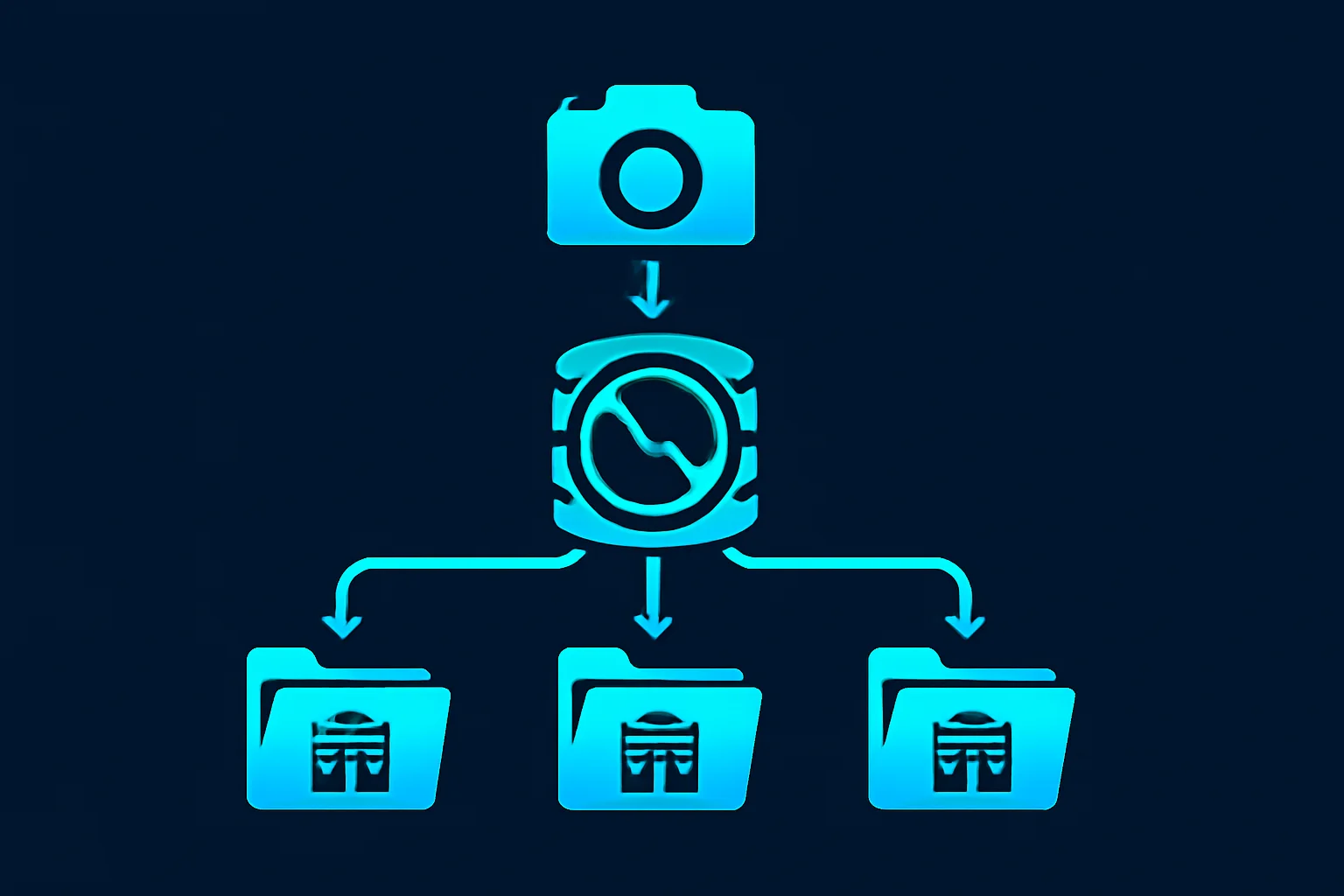
The gap is what happens to data that left the automatic pipeline before the clock ran out. Anything an officer saved to a case file, exported as evidence, or downloaded during an investigation is no longer governed by the vendor's lifecycle rule — it lives in a police evidence system under that department's own retention schedule, which is frequently measured in years. Flock's own documentation is silent on whether deletion propagates to copies held by third parties, and structurally it cannot: once a file is downloaded, the vendor has no reach into it.
So the accurate mental model is this. Cancellation stops the future. The last thirty days of raw scans decay on schedule. Everything that was already promoted into evidence is permanent for practical purposes.
Can Data That Was Already Shared Out of State Be Pulled Back?
Realistically, no, and this is the part that survives every cancellation vote.
When an agency shares ALPR data — through a national lookup feature, a regional sharing agreement, or a direct export — the receiving agency holds its own copy governed by its own rules. There is no revocation mechanism. The originating town cannot reach into another state's evidence system, and a contract termination does not create a legal obligation for the recipient to delete.
This is exactly why California legislated on the front end rather than the back end. Under SB 34, sharing ALPR data with out-of-state or federal agencies is unlawful, and the EFF documented that the state Attorney General had to issue formal guidance confirming that prohibition because dozens of agencies were sharing anyway. A statute that only kicked in after the transfer would be worthless, because the transfer is the irreversible step.
If you want the litigation side of this, our analyses of the California ALPR lawsuit over license plate privacy and the Kansas ALPR case treating plate tracking as GPS-style surveillance walk through the constitutional theories courts are currently testing. The short version is that the law is still catching up to a technology that has already distributed its output nationwide.
If the Town Cameras Are Gone, Who Is Still Recording My Plate?
Private operators — and there are far more of them than there are municipal contracts.
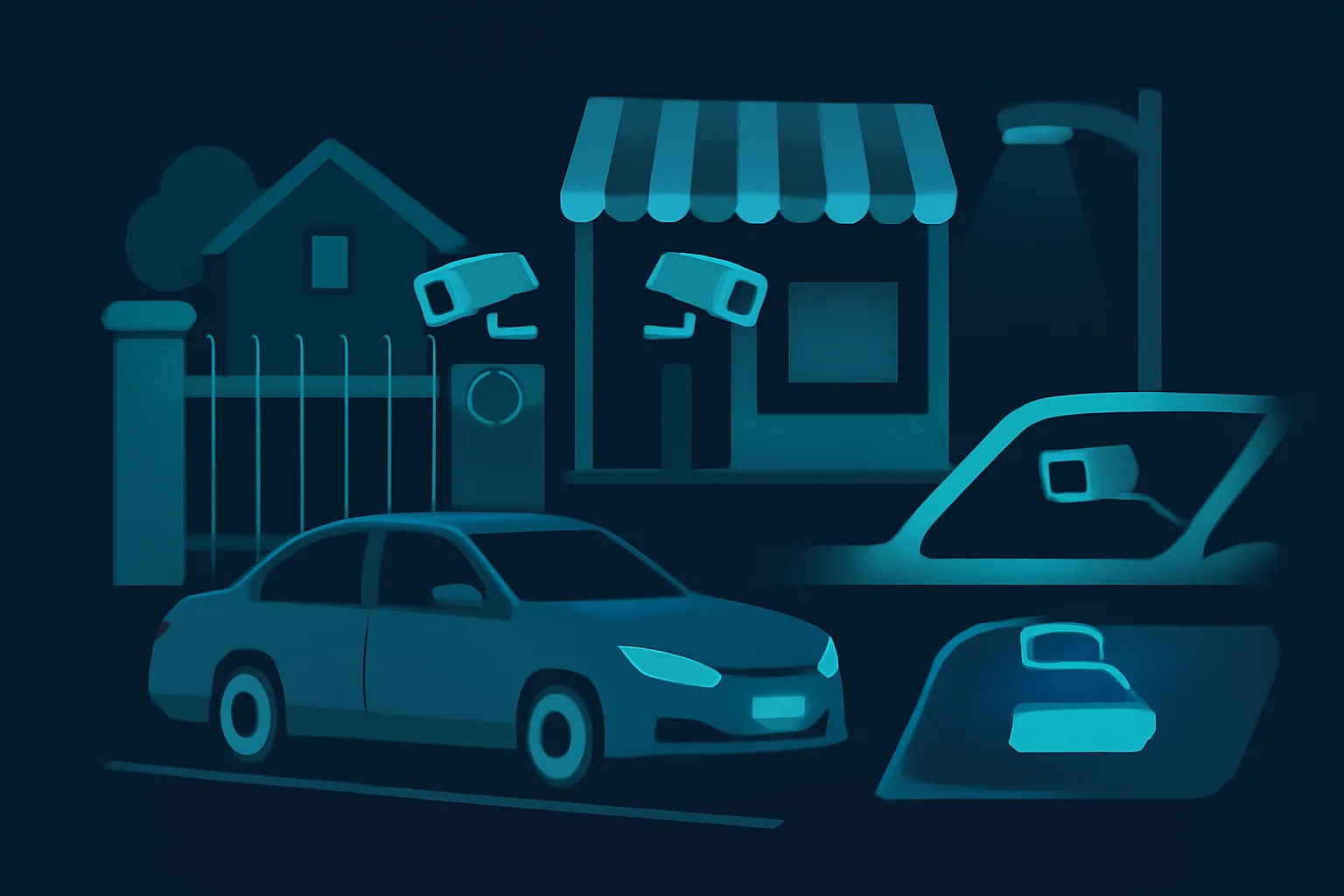
The Intercept's investigation found that more than 200 homeowners associations had bought and installed Flock plate readers, frequently through a sales motion that starts with the HOA and then brings the local police department in as a data consumer. Crucially, as that reporting notes, HOAs are private entities and therefore are not subject to public records requests or regulation — which means the transparency tools residents used to force municipal cancellations simply don't exist at the neighbourhood level. You cannot FOIA your HOA.
The EFF's street-level surveillance guide to ALPRs describes the same structure across the industry: private companies operate regional sharing networks, agencies without their own systems query data collected by others, and some private entities retain data indefinitely rather than on a thirty-day cycle. The same guide cites EFF's 2021 audit finding that only 0.05% of data collected by ALPRs across 63 California agencies was relevant to a public safety interest at the time of capture.
And that's before you count the cameras that aren't ALPR systems at all but capture perfectly readable plates anyway:
| Camera type | Typically regulated by ALPR statute? | Plate readable in footage? |
|---|---|---|
| Municipal Flock camera | Yes, where a state statute exists | Yes, indexed and searchable |
| HOA or apartment gate camera | Rarely | Yes |
| Retail or parking lot CCTV | No | Usually |
| Storefront camera over sidewalk | No | Often |
| Doorbell camera facing the street | No | Often |
| Consumer dashcam | No | Yes |
Every row below the first is outside the debate your town council just had, and every row can end up on Facebook or Nextdoor. If you want the baseline on what rights you actually have against fixed plate readers in the first place, start with our guide to Flock Safety cameras and your license plate privacy rights.
What Are the Rules for Private Camera Operators Who Publish Footage?
Recording is one legal question; publishing is a much sharper one, and it's the question private operators consistently get wrong.
A handful of US states do regulate private plate capture directly. New Hampshire's statute requires that plate records not be recorded or transmitted and be purged within minutes of capture unless a specific triggering event occurs, which effectively rules out private ALPR operation. Arkansas permits non-governmental use by private landowners and business owners on the condition that data is deleted after a fixed period. Most states have no such rule at all. Check your state before assuming you're clear.
Publication is where liability concentrates regardless of state. Three exposures are consistent:
- Data protection law. In the EU, UK and other GDPR-style regimes, a readable plate is personal data about an identifiable person, and publishing it requires a lawful basis you almost certainly don't have for a Facebook post. Our doorbell and security camera GDPR guide covers how the household exemption falls away the moment footage leaves your property.
- Defamation and misidentification. Posting a plate next to an accusation — "this is the car that stole my package" — turns a factual clip into a claim about a named person. If the identification is wrong, the plate is what makes the harm concrete and traceable.
- Platform policy. Facebook, Nextdoor and Reddit all enforce doxxing and harassment rules that bite well before any statute does. A plate is a persistent identifier that resolves to a home address through commercially available data, which is why moderation teams treat it as personal information.
We go deeper on that last point in can they post my license plate on social media, and on the operator-side workflow in why you should blur security footage before posting online.
How Do I Blur License Plates in Security Footage Before Publishing?
Three steps, in a browser, with no software installed.
Step 1: Export the Clip, Not the Whole Day
Pull the specific incident window from your NVR, camera app or dashcam rather than an entire recording session. Shorter clips process faster, keep you inside free-tier limits, and reduce how many uninvolved vehicles and bystanders you're handling in the first place. If you're working from a dashcam, our universal dashcam blur guide covers the export path for most major brands.
Step 2: Run Motion-Tracked Plate and Face Detection
Upload to BGBlur and let AI detection find the plates and faces. This is the step that manual editors get wrong: a vehicle moving through frame changes position, angle and scale every few frames, so a static blur rectangle drifts off the plate and exposes characters mid-clip. Motion tracking follows each detected region frame by frame, so a car crossing the whole frame stays covered end to end.
✅ Motion-Tracked Plate Blur
- Tracks per-object, not per-frame. Each detected plate keeps its own track through the clip, so overlapping vehicles don't swap coverage.
- Handles angle and scale change. Plates entering at a sharp angle and squaring up as the car turns stay masked throughout.
- Faces too, in the same pass. Pedestrians, delivery drivers and drivers visible through a windscreen get covered without a second export.
- No frame-by-frame keyframing. What takes 20–40 minutes of manual masking in a desktop NLE runs unattended.
Step 3: Blur Hard Enough to Be Irreversible, Then Batch the Rest
Use a high-strength blur that fully covers the plate region, not a light pixelation square. Plates are unusually easy to reconstruct because the character set is small and formats are constrained, which gives a reconstruction model very few candidates to choose between — the mechanics are in our guide to why weak blur fails GDPR's irreversibility standard.
If the incident produced several clips from several cameras, batch processing on the Business tier runs the whole set in one pass with consistent settings, which matters when you're handing an export to an insurer, a property manager or a police department. For a wider comparison of options, see our round-up of security and CCTV footage processing tools.
Who Needs This Most After a Municipal Cancellation
HOA and property managers: You now hold the cameras your town just decided it didn't want, with none of the public-records scrutiny and none of the retention rules. Any clip you circulate to a board, a resident mailing list or a neighbourhood group should have plates and faces removed before it leaves your hands.
Small business and storefront owners: Parking-lot and sidewalk-facing cameras capture uninvolved customers and vehicles continuously. Publishing a theft clip with a readable plate is the single most common way a legitimate security recording turns into a defamation problem.
Dashcam drivers and motovloggers: You are a mobile plate reader whether you meant to be or not. Every upload is a publication decision.
Neighbourhood watch and community group admins: You're the aggregation point. A single Facebook group can accumulate a searchable archive of plate-visible clips that no council ever voted on.
Local journalists and council watchdogs: Covering the cancellation story often means publishing footage of the cameras and the traffic around them. Blur the incidental plates so the story doesn't reproduce the harm it's reporting.
Pro Tips for Handling Plate-Visible Footage in 2026
- Blur before you share internally, not just publicly. Most leaks start as an unblurred file emailed to a board member or a group chat.
- Treat reflections and second-row vehicles as plates too. Detection catches them; a manual pass usually doesn't.
- Keep one unedited master offline. If the footage becomes evidence, you need the original — but the copy you circulate should always be the redacted one.
- Set a retention rule for your own recordings. Your town just argued about thirty days. Applying the same discipline to your own camera is a good-faith position if anyone ever asks.
- Blur faces in the same pass as plates. A partially redacted clip that hides the plate but shows the driver's face has not actually protected anyone.
Update — August 20, 2026: Gardner, Kansas is the latest addition to this list — see our coverage of Gardner's Flock camera cancellation and the 1,200-vendor data-access complaint that drove it.
The Bottom Line
The cancellation wave is real, and it's accelerating — 39 terminations in five months, then a Rhode Island cluster in a single week of August 2026. But a cancelled Flock contract is a decision about the future of one town's cameras. It doesn't reach the scans already exported into case files, it doesn't recall the copies that crossed state lines, and it doesn't apply to the HOA gate, the storefront awning or the dashcam behind you.
What actually changes is where the responsibility sits. When the municipal system goes away, the remaining plate capture is overwhelmingly private — operated by people with no ALPR statute forcing their hand, no audit log, and no public records obligation, but plenty of liability the moment they publish something identifiable.
That's a solvable problem, and it's solvable at the last step rather than the first. You don't have to stop recording. You have to stop publishing readable plates and faces. BGBlur does that in a browser with motion-tracked AI detection, batch processing for multi-clip exports, and uploaded footage deleted within 24 hours — so protecting the people in your footage doesn't mean handing it to another server that keeps it forever.
Drop your next security clip in before you post it. It takes less time than the council meeting did.