Forensic De-Pixelation: Why Weak Blur Fails GDPR 2026
Academic research on forensic de-pixelation has exposed a critical compliance gap: low-level pixelation and weak Gaussian blur applied to faces and license plates in video can be algorithmically reversed, failing GDPR Recital 26's irreversibility requirement. This post explains the research, identifies which blur methods are vulnerable, and details the GDPR-grade standards BGBlur applies by default.
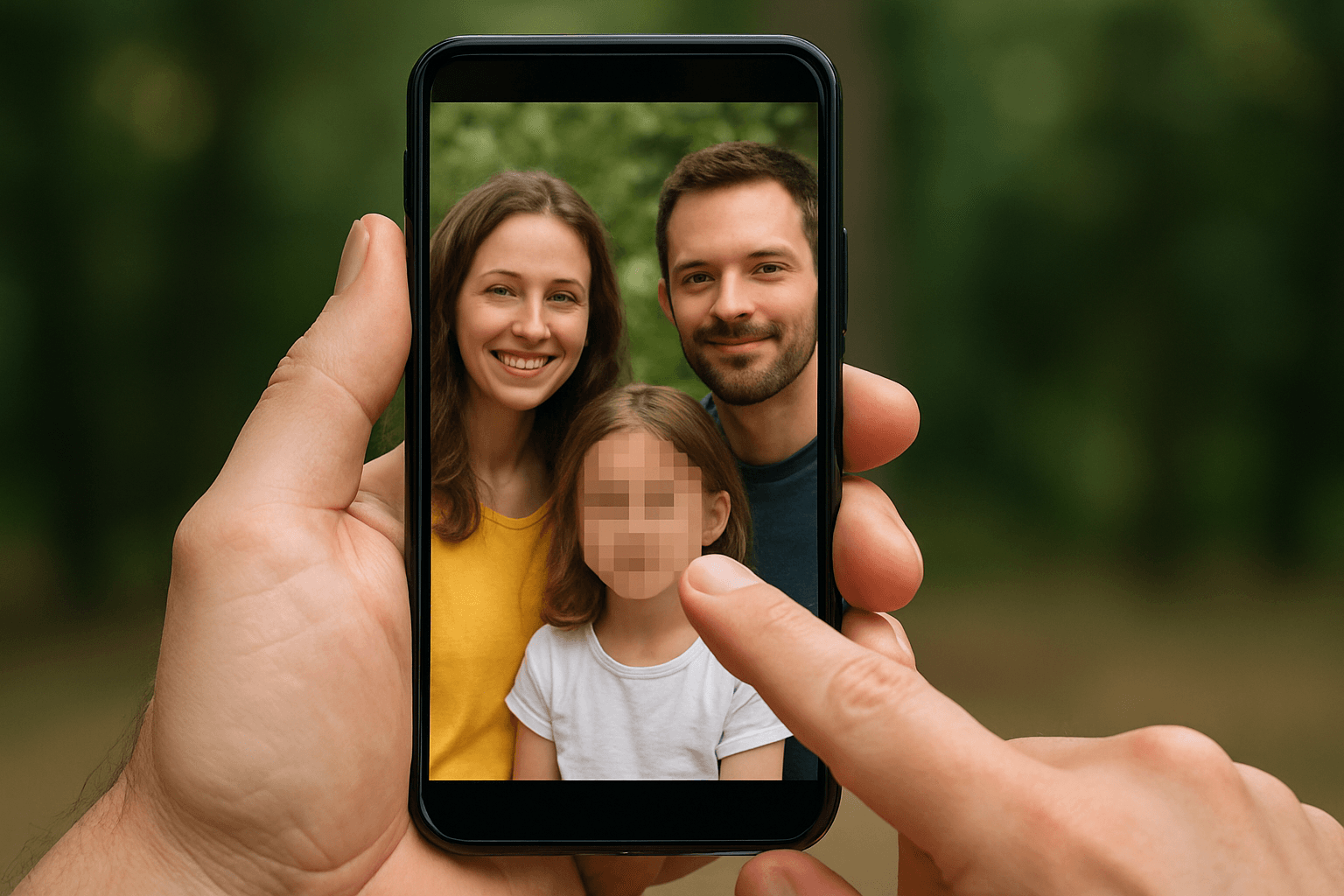
A quiet crisis has been building in video privacy compliance. For years, organizations publishing sensitive video — news organizations blurring witness faces, platforms censoring user-generated content, healthcare providers anonymizing patient footage — have relied on basic pixelation and low-strength blur as their primary anonymization method.
Research now shows that approach is legally fragile. Forensic de-pixelation using AI can reverse weak pixelation and reconstruct recognizable facial features from footage that appears anonymized. Under GDPR's Recital 26 requirement for irreversible anonymization, this means that millions of "compliant" videos in archives worldwide may not actually be compliant at all.
This guide explains the de-pixelation research, what GDPR's irreversibility standard actually requires, which anonymization methods are genuinely robust, and how to audit and upgrade your video anonymization practices in 2026.
The Forensic De-Pixelation Research Explained
PULSE and the Depixelization Problem
In 2020, researchers at Duke University published PULSE (Photo Upsampling via Latent Space Exploration), a landmark paper demonstrating that pixelated facial images could be "hallucinated" back into photorealistic high-resolution faces using AI. The system worked by searching the latent space of a generative model (StyleGAN) to find a high-resolution face that, when downsampled, matched the pixelated input.
PULSE's implications for video privacy were significant: faces pixelated at 8x8 or 16x16 blocks — the resolution commonly used by consumer video editors and even some professional redaction tools — could be reconstructed into recognizable faces with alarming fidelity.
Subsequent research extended these capabilities:
- Depixelization via diffusion models (2022-2024): Diffusion-based AI models demonstrated superior face reconstruction from pixelated video frames, outperforming GAN-based approaches in both realism and accuracy
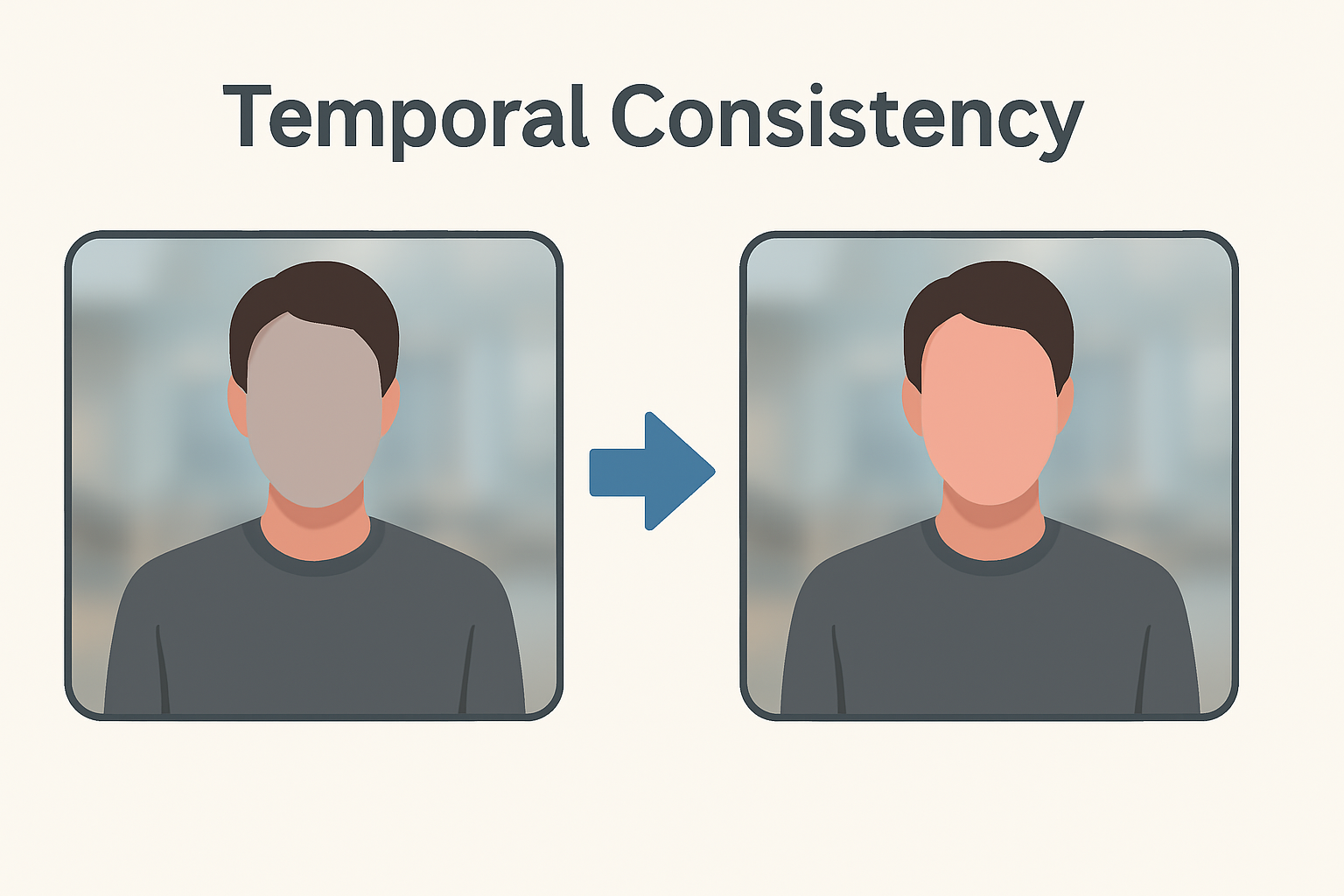
- Video-domain de-pixelation: Researchers showed that temporal consistency in video (the fact that a face appears across multiple frames) actually aids reconstruction, because multiple slightly-different pixelated views of the same face provide more information than a single still
- Commercial upscaling tools: Consumer AI upscaling products including Topaz Video AI and similar tools can partially reconstruct pixelated content as a byproduct of their enhancement functionality, lowering the technical barrier to de-pixelation attacks
What Resolution Threshold Is Vulnerable?
The research consensus points to the following vulnerability thresholds:
- 8x8 pixel blocks (coarse pixelation): Highly vulnerable. PULSE and successor models reconstruct recognizable faces with high probability from 8x8 pixelation
- 16x16 pixel blocks: Moderately vulnerable, especially with multiple frames available (as in video)
- 32x32 pixel blocks or 50%+ pixelation density: Substantially more resistant, though not provably irreversible against all current models
- Gaussian blur under radius 10px on 1080p footage: Vulnerable to AI deblurring with current tools
- Gaussian blur radius 15-20px on 1080p footage: Currently resistant to practical attack, though this threshold will shift as AI deblurring improves
The critical insight is that the threshold moves as AI capabilities advance. An anonymization standard that was adequate in 2020 may not be adequate in 2026 — and GDPR's forward-looking irreversibility standard requires organizations to account for technically feasible attacks, not just past ones.
What "Irreversible Anonymization" Means Under GDPR Recital 26
GDPR's data protection principles apply only to personal data. Information is personal data if it identifies or could identify a natural person. Recital 26 provides the escape route: truly anonymous information falls outside GDPR's scope.
But Recital 26 sets a demanding standard for true anonymization:
"The principles of data protection should therefore not apply to anonymous information, namely information which does not relate to an identified or identifiable natural person or to personal data rendered anonymous in such a manner that the data subject is not or no longer identifiable. This Regulation does not therefore concern the processing of such anonymous information, including for statistical or research purposes."
The key phrase is "no longer identifiable." Recital 26 continues:
"To ascertain whether means are reasonably likely to be used to identify the natural person, account should be taken of all objective factors, such as the costs of and the amount of time required for identification, having regard to the available technology at the time of the processing and technological developments."
This forward-looking clause is the compliance trap that weak pixelation falls into. If AI de-pixelation tools are commercially available and can reverse your anonymization at low cost and time, your pixelation is not irreversible anonymization under GDPR — it is merely pseudonymization, which still falls within GDPR's scope.
The Article 29 Working Party's Position
The Article 29 Working Party (now replaced by the European Data Protection Board) addressed anonymization techniques in Opinion 05/2014. It evaluated pixelation and blurring and concluded that their effectiveness "depends heavily on the parameters used and the nature of the underlying data." The WP29 explicitly noted that:
- Pixelation could fail if only applied weakly
- Blurring could fail if the blur radius is insufficient relative to the original image resolution
- Both techniques must be evaluated against "the state of the art" in re-identification attacks
As of 2026, "the state of the art" in re-identification attacks includes the AI de-pixelation research described above.
Which Blur Methods Are Vulnerable vs. Robust
| Anonymization Method | Vulnerability Level | GDPR Status (2026) | Notes |
|---|---|---|---|
| 8x8 pixelation | High | Non-compliant | Reversible with PULSE/diffusion models |
| 16x16 pixelation | Medium-High | Questionable | Vulnerable in video context (multi-frame) |
| 32x32 pixelation | Medium | Borderline | Depends on resolution and model access |
| 50%+ density pixelation | Low | Compliant for most cases | Currently resistant but monitor advances |
| Gaussian blur, radius <10px | High | Non-compliant | AI deblurring effective on 1080p+ footage |
| Gaussian blur, radius 10-15px | Medium | Borderline | Depends on original resolution |
| Gaussian blur, radius 15px+ (adaptive) | Low | Compliant | BGBlur default approach |
| Black box redaction | None | Compliant | Complete occlusion, irreversible |
| DNAT face replacement | None | Compliant | Synthetic identity, no biometric data |

The practical takeaway: if your anonymization method is pixelation at 16x16 or below, or Gaussian blur under radius 15px on 1080p footage, you are not meeting GDPR's irreversibility standard under current guidance and research.
DPA Guidance on Anonymization Standards
Data protection authorities across the EU have not been silent on this issue:
France's CNIL has published guidance (updated 2024) stating that anonymization assessments must be "dynamic" — organizations must re-evaluate their anonymization methods as technical attack capabilities evolve. The CNIL specifically mentions that methods considered adequate in earlier periods may no longer suffice.
Germany's BfDI has emphasized in its guidance that anonymization must account for "current and foreseeable technical means of re-identification." Given the public availability of AI de-pixelation research, foreseeable means now include the models described above.
The EDPB (European Data Protection Board) is currently developing updated guidance on anonymization (replacing WP29 Opinion 05/2014). Early signals from the EDPB consultation process suggest the new guidance will explicitly address AI-assisted re-identification attacks and raise the bar for what constitutes adequate anonymization.
Organizations in regulated industries — healthcare, law enforcement, broadcasting, research — should treat this evolving guidance as a compliance priority, not a future consideration.
Why BGBlur's Approach Is GDPR-Grade
BGBlur's video anonymization is designed with GDPR's irreversibility standard in mind, not just visual adequacy.
AI-Tracked High-Radius Gaussian Blur
BGBlur's default face blur uses AI motion tracking to maintain consistent, high-radius Gaussian blur across all frames where a detected face appears. Unlike static blur applied frame-by-frame, AI tracking:
- Ensures coverage follows the face through movement, reducing uncovered frames that could aid reconstruction
- Applies adaptive blur radius that scales with detected face size relative to video resolution
- Maintains temporal consistency so no single frame provides a less-blurred "leak" of facial information
For more on why temporal consistency matters in video anonymization, see our temporal consistency video anonymization guide.
DNAT Face Replacement Option
For users requiring the highest level of anonymization assurance — court evidence, medical research, journalism involving at-risk sources — BGBlur offers DNAT (De-identified Neural Appearance Transfer) face replacement.
DNAT replaces the original face with a synthetic face that:
- Preserves natural head movement, lighting, and expression (maintaining video naturalness)
- Shares no biometric data with the original subject (no facial geometry, no skin texture, no distinctive features)
- Is irreversible by definition — there is no original face to reconstruct because the synthetic face was generated, not derived
This is qualitatively different from blur: blur weakens the signal; DNAT replaces it with a completely different signal. Under GDPR Recital 26, DNAT-processed footage is genuinely anonymous, not merely pseudonymized.
For a detailed explanation of DNAT technology, see our guide to DNAT face replacement and synthetic identity protection.
No Biometric Data Retention
BGBlur processes video in-browser and deletes all uploaded files within 24 hours. The AI detection process does not generate or store biometric profiles of detected faces — it identifies regions to blur and applies the blur, without creating persistent biometric data. This means BGBlur's processing does not itself create a GDPR Article 9 biometric data processing event that would require consent or another legal basis.
Practical Checklist: How to Test If Your Blur Is Strong Enough
Before publishing video with anonymized faces, run through this compliance checklist:
Resolution check
- What is the original video resolution? (720p, 1080p, 4K?)
- Higher resolution requires higher blur radius to achieve equivalent privacy protection
- As a baseline: radius 15px minimum at 1080p; radius 25px+ at 4K
Blur type check
- Is pixelation being used? If so, what block size relative to the face region?
- Is Gaussian blur being used? What radius?
- Is DNAT or black box being used? (These pass automatically)
Coverage check
- Does the blur cover the entire face region in every frame where the subject appears?
- Are there frames where fast movement caused the blur to slip off the face?
- Does the blur extend slightly beyond the face to prevent hair and ear features from aiding reconstruction?
Practical reversibility test
- Apply your anonymization to a test face, then run the output through a consumer AI upscaling tool (Topaz, Remini, etc.)
- Can you recognize the subject in the upscaled output? If yes, your blur is insufficient
- This test is imperfect but provides a practical floor check
Archive audit
- When were your existing videos anonymized?
- Were they anonymized with tools that applied low-level pixelation?
- Do they need to be reprocessed with stronger anonymization before continued publication?
Comparison: Pixelation vs. Blur vs. DNAT vs. Black Box
| Method | Reversible? | GDPR Compliant? | Naturalness | Best For |
|---|---|---|---|---|
| Low pixelation (8x8) | Yes (AI) | No | Medium | Nothing compliant |
| High pixelation (50%+) | Unlikely | Probably | Low | Simple cases, low-risk content |
| Weak Gaussian blur (<10px) | Yes (AI) | No | High | Nothing compliant |
| Strong Gaussian blur (15px+) | No (currently) | Yes | High | Most use cases |
| Black box redaction | No | Yes | Low | High-security redaction |
| DNAT face replacement | No (by design) | Yes | Very High | Journalism, research, court evidence |
The practical recommendation for most publishers and compliance teams: upgrade from pixelation to AI-tracked high-radius Gaussian blur as a minimum, and use DNAT for high-sensitivity content where anonymization must be provably irreversible.
For a broader comparison of face anonymization approaches, see our detailed guide on face anonymization vs face blur and AI face anonymizer tools.
Action Steps for 2026 Compliance
Immediate (this quarter)
- Audit your existing video archive for content anonymized with pixelation or weak blur
- Test a sample of archived videos using consumer AI upscaling tools to check practical reversibility
- Identify the highest-risk content (medical, legal, witness protection, journalism) for priority reprocessing
Near-term (next 6 months)
- Update your anonymization policy to specify minimum blur radius or method requirements
- Replace pixelation-based tools with AI-tracked Gaussian blur (BGBlur's default) or DNAT
- Document your anonymization standard choices as part of your GDPR Article 30 processing record
Ongoing
- Monitor EDPB guidance updates on anonymization (new guidance expected in 2026-2027)
- Review your blur radius thresholds annually as AI deblurring capabilities advance
- Consider DNAT for any new high-sensitivity video content where maximum assurance is required
Conclusion
The forensic de-pixelation GDPR 2026 challenge is real: AI tools can reverse weak anonymization that was considered adequate just a few years ago. GDPR's Recital 26 irreversibility standard, read in light of current technical capabilities and DPA guidance, requires anonymization methods that go beyond simple pixelation or low-radius blur.
The good news is that GDPR-grade anonymization is achievable with current tools. BGBlur's AI-tracked high-radius Gaussian blur meets the practical irreversibility threshold for most use cases, and DNAT face replacement provides the strongest available assurance for content requiring provably irreversible anonymization.
Don't let a weak blur parameter become a GDPR liability. The standard has moved — and your anonymization tools need to move with it.
Update — August 29, 2026: The same "hidden, not deleted" flaw shows up in documents too — see how to unredact a PDF and why redaction fails for how a drawn black box over PDF text can be reversed the same way weak pixelation can.
Update — October 1, 2026: Why a light pixel effect may not be enough: Instagram's Pixel effect and what it leaves identifiable.