Can They Post My License Plate on Social Media? [2026]
Posting a visible license plate on social media sits in a legal gray zone that shifts sharply by country and context. This guide breaks down the US, UK, and EU rules, the real-world doxxing and cloning risks of an exposed plate, and how to protect yourself before or after a post goes viral.
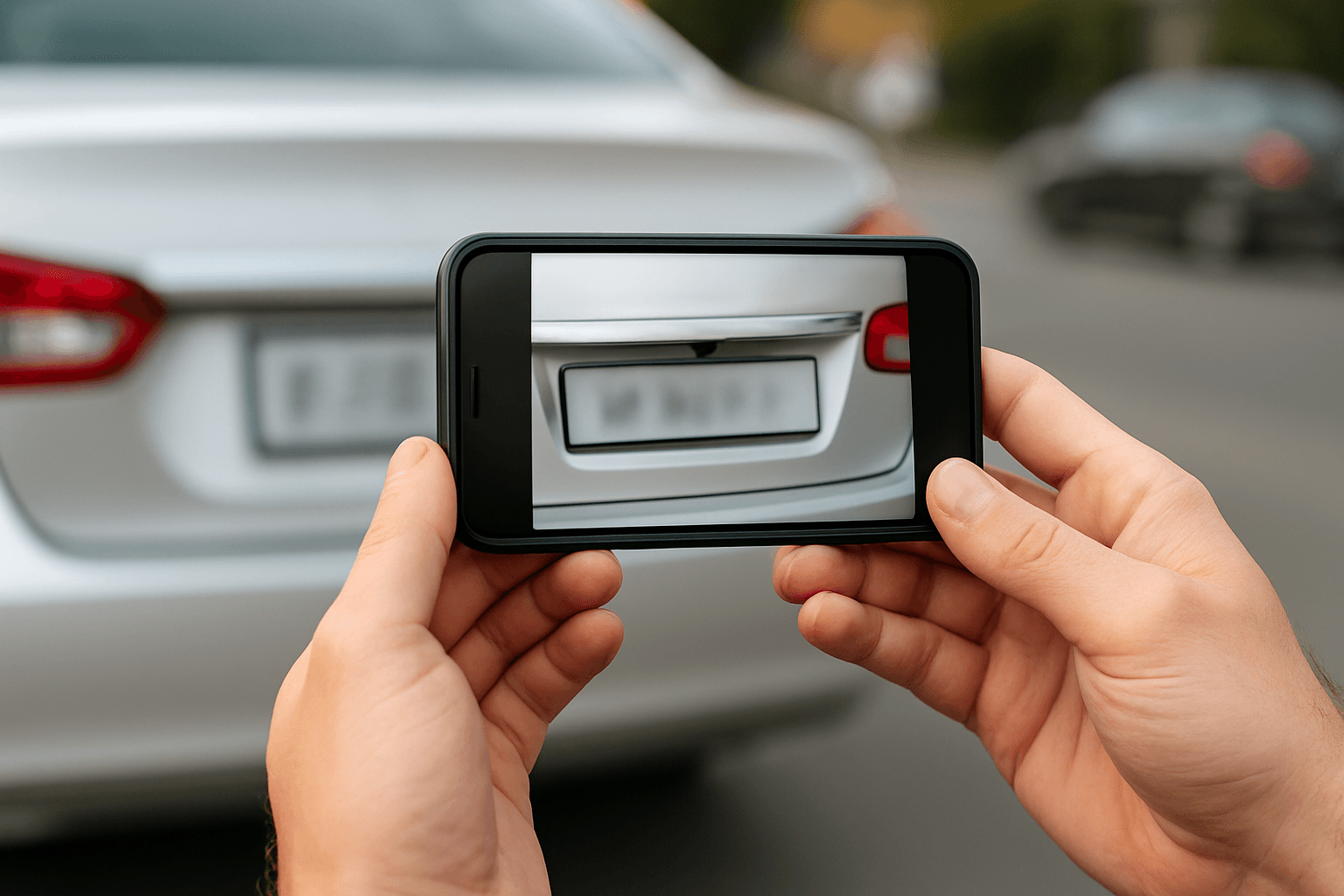
You're scrolling through Instagram and spot a video from a road rage incident — your car is front and center, plate fully visible, thousands of views. Or a neighbor posts a photo of your driveway with your plate exposed. Is that legal? Can they do that without your permission? And what happens to you if someone traces your plate?
The answer is more complicated than a simple yes or no — and it varies dramatically depending on where you live, who's posting, and why. This guide breaks down the legal reality in the US, UK, and EU, explains the real-world risks of an exposed plate, and shows you exactly how to protect yourself.
Why License Plates Are More Personal Than You Think
Most people assume a license plate is just a string of letters and numbers on metal — public by design, nothing to worry about. That assumption is wrong, and it's becoming more dangerous every year.
A license plate is a direct link to your identity. Through commercial lookup services (many of which are accessible for a few dollars or even free), your plate number can reveal:
- Your full legal name and home address — registered to the vehicle
- Vehicle make, model, and year — useful for profiling your income level
- Registration and insurance status — used in identity theft and insurance fraud
- Driving history and violations — accessible via data aggregators
When someone posts your plate on social media, they're not just posting a random number. They're handing a roadmap to your personal life to every person who sees that post — including people with bad intentions.
The second risk is permanence. Even if you get the post taken down, screenshots travel. The internet archives things. A viral post containing your license plate can be cached in dozens of places before you even know it exists.
What the Law Says: US, UK, and EU
United States — A Patchwork of State Laws
At the federal level, there is no single law that explicitly prohibits posting someone's license plate on social media. License plates are considered public information in the US because they're displayed on public roads. The logic: if you can see it driving by, it's "public."
But that simple logic breaks down fast when you add the internet:
California (CCPA) — California's Consumer Privacy Act treats license plate numbers as personal identifiers for commercial entities. Businesses that post content with visible plates and operate commercially in California may violate CCPA. California also has strict anti-stalking and harassment laws that can apply when plate exposure leads to someone being tracked.
New York — State privacy law protections for personally identifiable information have been applied to license plates in cases where posting the plate was used as a tool for harassment or doxxing. Courts have increasingly recognized the harm.
Illinois — The Biometric Information Privacy Act (BIPA), though primarily about biometrics, reflects Illinois's aggressive stance on personal data. Paired with existing harassment law, an exposed plate used to stalk someone can result in real civil liability.
Texas, Florida, and most other states — Posting a plate is generally not illegal on its own. However, if that plate is used to facilitate stalking, harassment, or swatting, the poster may share civil or even criminal liability for the consequences.
The key takeaway for the US: Posting your plate alone may be legal, but using or enabling someone else to use that plate to harm you is not. And if you're in California or involved in commercial content, the rules are stricter.
United Kingdom — GDPR Still Applies
Despite Brexit, the UK maintains the equivalent of EU GDPR through the UK Data Protection Act 2018. The Information Commissioner's Office (ICO) is clear: license plates are personal data because they can identify an individual (the registered keeper of the vehicle).
This means:
- Posting your plate without a lawful basis (consent, legitimate interest, legal obligation) technically violates UK data protection law
- The ICO can and does investigate complaints about online privacy violations
- Victims can file formal complaints with the ICO at no cost
- Courts have awarded damages in cases where plate exposure led to harassment
For content creators and businesses operating in the UK: if you post videos or photos with unblurred plates, you're exposing yourself to a data protection complaint.
European Union — GDPR Is Explicit
The EU's General Data Protection Regulation (GDPR) is the gold standard for privacy protection and it explicitly covers license plates. Under GDPR, a license plate is classified as personal data because it can identify the registered vehicle owner.
What that means in practice:
- Posting someone's plate without their consent or a legitimate legal basis is a GDPR violation
- This applies to any content that reaches EU audiences — including content made outside the EU
- Fines can reach €20 million or 4% of global annual turnover for serious violations
- Individuals have the right to request removal of content containing their plate
Germany, France, and the Netherlands have all seen enforcement actions related to privacy violations involving license plates in video content. The message from regulators is consistent: blur it or face consequences.
Canada, Australia, and Beyond
Canada's PIPEDA includes vehicle identification information under its personal information protections, making commercial posting of plates problematic for Canadian businesses.
Australia's Privacy Act 1988 covers license plates as personal information in commercial contexts. The Australian Information Commissioner has reinforced this in guidance on online content.
The Real-World Risks: What Actually Happens When Your Plate Goes Viral
Legal theory is one thing. Real-world consequences are another. Here's what actually happens when your plate ends up on social media:
Doxxing and Targeted Harassment
Road rage videos, neighbor disputes, and protest footage often end up online with plates fully visible. Bad actors in comment sections routinely run plates through lookup tools and post the results — your name, address, and sometimes phone number — in the comments or in separate posts. This is doxxing, and it escalates quickly.
License Plate Cloning
Criminals photograph plates from social media posts and create duplicate plates for use on stolen vehicles or in criminal activity. If your plate is cloned, you may start receiving parking tickets, toll violations, or notices of criminal investigations for events you had nothing to do with. Clearing your name requires lawyers, time, and money.
Stalking and Physical Danger
For domestic abuse survivors, public figures, journalists, and activists, an exposed plate is a real safety threat. Plate-to-address lookups are a documented tool used by stalkers. Law enforcement agencies have documented cases where social media-posted plates led directly to physical confrontations.
Insurance and Legal Complications
False violations on your driving record from a cloned plate can cause your insurance rates to spike. Disputing them takes months. Your insurer may not wait.
Platform Policies: What Facebook, TikTok, YouTube, and Instagram Actually Do
Social media platforms have their own rules that operate independently of law — and they're getting stricter.
Meta (Facebook & Instagram): Their privacy policies require consent for personally identifiable information in commercial content. Business accounts and sponsored posts face the strictest scrutiny. Repeated violations can result in account suspension and loss of ad monetization.
TikTok: Community guidelines specifically address personally identifiable information. Videos flagged for containing license plates have been removed. Creator Fund participants face enhanced requirements — violations can remove you from the monetization program.
YouTube: Community guidelines prohibit content that can be used to identify and harm someone. A channel strike for a privacy violation affects your entire monetization eligibility. Multiple violations = channel termination.
Twitter/X: Their privacy policy prohibits sharing private information without consent. Context matters — a plate in a news-worthy dashcam clip is treated differently than a plate posted alongside someone's home address.
The platforms' automated systems are getting smarter. AI-powered content moderation is increasingly flagging license plates in video content. Proactive blurring prevents removal before it happens.
How to Protect Your License Plate: Practical Steps
If Someone Has Already Posted Your Plate
- Screenshot everything — document the post with timestamps before reporting it
- Report to the platform — use the privacy violation / personal information reporting tool. Cite that your license plate number is personal data and you have not consented to its publication
- File an ICO complaint (UK) or contact your national data protection authority (EU) if the platform fails to act
- Contact the poster directly — in many cases, a polite direct message asking for removal works, especially if they didn't realize the implications
- Consult a lawyer if the plate exposure has led to harassment, fraud, or stalking — you may have civil claims
- File a police report if you're experiencing stalking, harassment, or plate cloning
Before You Post: Blur Your Plate in Seconds
The best protection is proactive. If you're posting dashcam footage, photos of your vehicle, street-level video, or any content where your plate or someone else's plate is visible — blur it first.
BGBlur's AI-powered license plate blur tool detects plates automatically in both photos and videos and applies a clean, professional blur in under a minute. There's no app to download — it works in your browser on iPhone, Android, and desktop.

The 3-step process:
- Upload your photo or video to BGBlur
- AI detects the license plate automatically — or you can select it manually for precision
- Download the protected version with the plate blurred
No personal data is stored. Videos are deleted from servers after processing. It's GDPR and CCPA compliant, and it takes less time than reading this paragraph.
Read our full guide on how to blur license plates in dashcam videos for step-by-step instructions across all major dashcam brands.
If you share footage of other people's vehicles — street photography, travel vlogs, property videos — see our guide on why you should blur license plates and faces in videos.
Who Is Most at Risk?
Some people face higher risk than others when plates are exposed online:
Domestic abuse survivors: A plate-to-address lookup can undo years of careful location protection. Blurring plates in any shared content is a safety necessity.
Content creators and dashcam posters: Your monetized content is subject to stricter privacy rules. Every visible plate in your footage is a potential violation.
Business fleet operators: Vehicle fleet tracking through exposed plates can reveal routes, schedules, and clients — competitive intelligence you don't want to hand out for free.
Public figures, journalists, and activists: High-profile individuals are prime targets for doxxers. Plate exposure is a commonly used first step.
Anyone involved in a road incident that goes viral: You may not have posted it — but someone else did, and now thousands of people have your plate. Learn your options for getting it removed.
Social media exposure is only one side of the license plate privacy problem. Automated license plate reader networks like Flock Safety raise a parallel, government-adjacent version of the same risk — see our guide on Flock Safety cameras and your license plate privacy rights for how warrantless ALPR tracking compares to the doxxing risks covered here.
Frequently Asked Questions
Is it illegal to post someone's license plate on social media in the US? At the federal level, there's no single law prohibiting it — plates are generally considered public information. But legality depends heavily on context and state law. California and other states with strong privacy laws treat plates as personal identifiers in commercial contexts. And if posting the plate facilitates harassment, stalking, or fraud, the poster may face civil or criminal liability regardless of state.
Can I get a post removed if my license plate is in it? Yes. Use the platform's privacy violation reporting tool and specify that your license plate number is personal data you have not consented to publish. In the EU and UK, your data protection rights are even stronger — you can file a formal complaint with your national data protection authority and compel removal.
What can someone actually do with my license plate number? More than most people realize. Commercial lookup services can return your name, home address, and vehicle details for under $10. This information is then used for doxxing, license plate cloning, insurance fraud, and in the worst cases, stalking. The threat is real and well-documented.
Does blurring a license plate in my video protect me legally? Yes — it removes the personally identifiable element from your content, eliminating GDPR and CCPA compliance concerns and reducing the risk of platform takedowns. It also protects you against contributing to any harm that an exposed plate could cause to its owner.
Is my own license plate safe to show online? Not really. Even showing your own plate exposes you to cloning risk and gives away location data that, combined with other social media information, can be used to profile you. Best practice: blur all plates in content you post publicly, including your own.
Does GDPR protect me even if the person who posted my plate is in the US? If the content is accessible to EU residents — which most public social media is — GDPR can apply to the data processor (the person who posted it), regardless of where they're located. Enforcement is more practical when the poster is in the EU, but EU residents have the right to file complaints regardless.
How do I blur a license plate quickly before posting? BGBlur is the fastest option — upload your photo or video, let the AI detect the plate automatically, and download the blurred version. No app required. It works on mobile and desktop and takes under a minute for most content.
Conclusion: Blur First, Post Safely
The legal landscape around license plates on social media is moving in one clear direction: toward stronger privacy protection. The EU has already drawn a firm line. The UK follows. US states are catching up. Platforms are tightening their enforcement. The cost of getting this wrong — for poster and subject alike — is rising.
If you're the subject of an unwanted post, you have rights and you have recourse. Report it, document it, and use official channels to demand removal.
If you're creating content, the simplest protection is also the fastest: blur every plate in every piece of content you publish. BGBlur's AI plate blur tool makes this a 60-second task, not a 60-minute one. It keeps your content compliant, keeps your audience safe, and keeps you out of legal trouble across every jurisdiction where your content might be seen.
Don't wait until the post goes viral. Blur it before it leaves your hands.
Update — July 6, 2026: Filming fireworks and block parties this year? See how to blur license plates and faces in 4th of July videos before you post.