China Recording Laws and Video Privacy Rights [2026]
If you've been secretly filmed in China, PIPL, the Civil Code, and criminal law all give you enforceable rights — from erasure requests to civil compensation. This guide covers the exact laws, penalties, and step-by-step actions to take, plus how AI background blur prevents the problem before it starts.
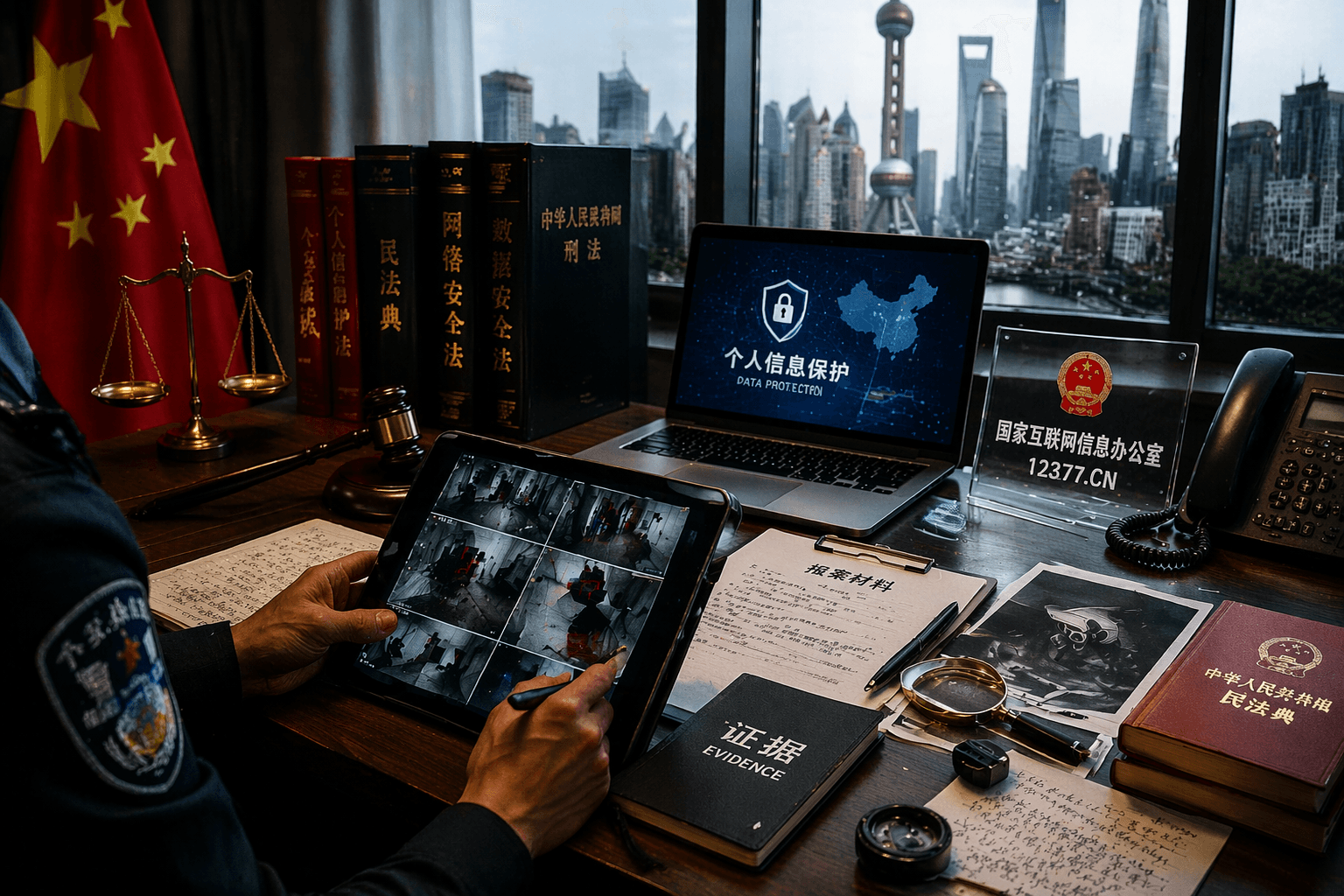
Finding out you've been filmed without your knowledge by a hidden camera in a hotel room, a stranger's phone, or a device planted somewhere you had every right to privacy is one of the most unsettling violations a person can experience. If you're in China and wondering what the law actually protects, the answer is more robust than most people realise but it also comes with frustrating gaps you need to understand. This guide covers your exact rights, the laws in force, what to do right now, and how video background blur tools can stop the problem before it even starts.
Update — August 7, 2026: If you were filmed by a "store review" or street-interview creator rather than a hidden camera, you're dealing with a different, faster-growing problem — mass-produced short-video content farms. See our guide on China's content farms filming strangers on the street for the specific court cases, penalties, and the 2025 CAC crackdown targeting this practice.
Is Secret Recording Illegal in China?
Yes but the legal response depends heavily on what was done with the footage, not just the act of recording. China doesn't have a single unified voyeurism statute. Instead, protection flows through overlapping laws covering personal data, civil rights, and criminal distribution. The gap between "someone filmed you without consent" and "someone shared that footage" has historically been wide under Chinese law, but that is actively changing.
Understanding where each law kicks in is the difference between knowing you have real recourse and feeling helpless. Here's exactly how each piece of legislation works.
PIPL — China's Most Powerful Privacy Law
The Personal Information Protection Law (PIPL), which came into force on November 1, 2021, is China's answer to Europe's GDPR. Video recordings, photographs, and audio that identify you are classified as personal information under PIPL. Anyone collecting, storing, or sharing that data without your explicit consent is in direct violation and this applies equally to individuals, companies, and foreign entities operating on Chinese users' data.
The penalties are genuinely severe. Minor violations attract fines up to ¥1,000,000 for individuals. Serious violations escalate to ¥50,000,000 or 5% of the violator's annual revenue — whichever is higher. The Cyberspace Administration of China (CAC) has demonstrated real willingness to enforce these rules: in 2022, DiDi was fined approximately ¥8 billion for PIPL violations, and in 2023, academic platform CNKI was fined ¥50 million for excessive data collection. These are enforcement actions, not warnings.
Other Laws That Protect You in China
PIPL doesn't work alone. Several additional laws create overlapping protections that give victims multiple routes to justice.
Administrative Penalties Law Voyeurism. Secretly filming someone in a private context, even if footage is never shared, is treated as an administrative offense carrying up to 10 days' detention and a fine. Critics correctly note these penalties are light which is exactly why the Supreme People's Court issued stronger crackdown guidance in December 2024 specifically targeting hidden camera operations.
Criminal Law Distribution and Sale of Footage. Once footage is distributed or sold, criminal law responds with serious force. Perpetrators face years in prison and substantial fines. In a 2024 case highlighted by China's Supreme People's Court, five individuals involved in a hotel hidden-camera ring received sentences ranging from several years to a decade in prison.
Civil Code Right to Privacy and Right to Portrait. China's Civil Code explicitly protects your right to privacy and your right to control your own image. These provisions let you pursue direct financial compensation independent of whether criminal charges are filed making civil litigation one of the most practical immediate options.
Cybersecurity Law and Data Security Law. These govern how platforms must handle personal information including video footage, giving regulators additional grounds to act against companies and services that host non-consensual recordings.
Where Chinese Law Still Falls Short
Honesty matters here. The act of secretly filming someone in a private space when footage is never shared still carries relatively light administrative penalties under current statutes. Criminal law only activates when footage is distributed, sold, or live-streamed. This gap has been publicly criticised by legal scholars in China, and the December 2024 Supreme People's Court guidance signals the judiciary wants tougher enforcement.
That said, hidden camera operations involving distribution are actively prosecuted. A Shandong case involving over 100,000 recordings from 300 hidden cameras ended with 29 arrests. The system responds when distribution is involved and PIPL plus the Civil Code are your strongest immediate tools regardless.
Your Exact Rights Under Chinese Law
Under PIPL and the Civil Code, you have several enforceable rights right now no court outcome required.
You have the right to erasure you can legally demand any recording of you be permanently deleted by any individual, company, or platform holding that data. You have the right to know you can demand disclosure of what footage exists and who holds it. You have the right to stop further sharing you can legally block any entity from transferring or distributing data about you. You have the right to civil compensation the Civil Code allows you to sue for damages based on your actual losses or the perpetrator's gains, with no criminal conviction required. And you have the right to complain to the CAC filing a formal complaint can trigger an official investigation and result in significant fines without you appearing in court at all.
What to Do Right Now Step by Step
Step 1: Preserve all evidence first. Screenshot every URL, post, and reference to the footage. Document platform names, usernames, and timestamps. Do not delete anything evidence preservation is the single most critical factor in Chinese criminal and civil proceedings.
Step 2: Report to the hosting platform. File a privacy violation report on WeChat, Weibo, Douyin, Bilibili, or whichever platform holds the footage. Major Chinese platforms are legally required to respond to removal requests, typically within 3 to 5 business days. For Baidu search results, submit a separate removal request through Baidu's personal information protection portal.
Step 3: File a police report. Visit your nearest Public Security Bureau and file a formal report. Explicitly mention PIPL and your right to image protection under the Civil Code. If footage has been distributed, state this clearly it moves the case into criminal territory immediately. Always request a copy of the report before leaving.
Step 4: File a PIPL complaint with the CAC. China's official network information reporting centre to file a formal complaint. The CAC can investigate and impose fines independently, running parallel to any police case and often moving faster for data-related violations.
Step 5: Consult a lawyer for civil action. China permits private litigation under the Civil Code and PIPL simultaneously with criminal proceedings. A lawyer specialising in personal information or privacy law can send formal deletion demands, advise on compensation claims, and represent you throughout. Legal aid is available through local judicial bureaus if cost is a concern.
Foreign nationals in China have equal rights under PIPL the law protects all natural persons within China's borders. Contact your embassy or consulate for legal referrals alongside these steps.
How Video Background Blur Stops the Problem Before It Starts
Dealing with a privacy violation after the fact is exhausting the reporting, the waiting, the uncertainty about whether footage gets fully removed. The smarter move is eliminating the risk before it reaches that point, which is exactly where video background blur technology proves its value.
Modern AI bg blur tools automatically detect and blur faces, backgrounds, license plates, and any identifying details in your videos in seconds with no technical knowledge required. Before you post anything on WeChat Moments, Douyin, Weibo, or any group chat, background blur in video editing makes sure only what you chose to share is actually visible.
Every video you share publicly carries hidden information your street, your building number, neighbourhood landmarks, faces of people nearby, and details of your daily routine. A single unguarded clip can expose your home address, your family, or where your children go to school. Video background blur removes all of that automatically before the video ever leaves your hands.
For content creators managing multiple clips, batch processing handles travel vlogs, family gatherings, and day-out footage simultaneously through cloud-based processing no software installation, results ready in minutes. And if you're already dealing with a privacy incident and need to share footage with police, lawyers, or a platform's reporting team, blur background video tools let you create a fully anonymised version with your details obscured. Always keep the original unedited file as primary legal evidence use the blurred version only for sharing purposes.
If you're looking to understand how background blur in video editing works technically including motion tracking and selective object blur, our guide on blurring faces in photos and video with AI walks through the full process in detail. For a deeper look at when synthetic face replacement is a better fit than blur for footage you plan to share publicly, see face anonymization vs. face blur.
Why Your Location and Plate Details Matter More Than You Think
Most people focus on face blur when thinking about video with blurred background and that's important. But street signs, shop fronts, building numbers, and neighbourhood landmarks visible in your background are often more dangerous than a visible face, because they're permanent and searchable. Someone who knows your neighbourhood from a single background frame can identify your building, your routine, and your commute pattern.
Vehicle license plates create a separate risk. Driveaway clips, car vlogs, and any outdoor footage captured near roads can expose your vehicle to tracking. AI bg blur tools detect license plates automatically alongside faces, ensuring your video privacy protection is complete rather than partial. This is particularly relevant for content shared in China, where location data carries additional sensitivity.
This is the same reasoning behind our guide on object and region blur for video privacy — creators sharing highly authentic, location-adjacent content need selective blurring of exactly the type of footage where background blur becomes non-negotiable for personal safety. If you're weighing China's PIPL against protections elsewhere, our comparison of India's DPDP Act video privacy rules covers a similarly evolving Asian framework.
Conclusion
China's legal framework for privacy violations anchored by PIPL, the Civil Code, and criminal statutes gives you real, enforceable rights when video background blur and privacy are at stake. The system responds, especially when footage has been distributed. Your immediate steps are evidence preservation, platform reporting, a police report, and a CAC complaint. Civil litigation runs parallel and doesn't require a criminal conviction.
But if you're asking what's better than knowing your rights after a violation it's making sure there's nothing to report in the first place. Whether you're creating content for social media or simply sharing footage with family and friends, using AI bg blur tools before you post is the single most effective privacy decision you can make. For anyone serious about controlling what they share and what stays private, background blur in video editing isn't optional it's essential.
Frequently Asked Questions
Is a hidden camera in a hotel room in China a criminal offence? Installing one currently falls under administrative law with light penalties. Once footage is recorded and distributed or sold, it crosses into criminal territory and courts have handed multi-year prison sentences in recent cases. The Supreme People's Court signalled in late 2024 it wants this prosecuted more aggressively.
Can I get footage removed from Chinese platforms without going to court? Yes. You can report directly to the platform, file a complaint with the CAC , and invoke your PIPL right to erasure all without initiating court proceedings. This is often the fastest route to removal.
Does PIPL apply if a foreign company handled my footage? Yes. PIPL has extraterritorial reach foreign organisations processing personal information of people inside China must comply and are required to designate a representative within China.
What if I was filmed in a public space rather than a private one? Public space filming is more legally complex. If your image was used commercially without permission, the Civil Code's right to portrait (肖像权) is your primary protection and remains enforceable.
Can I blur just part of a video background to protect specific details? Yes. Advanced video background blur tools support selective blurring of custom areas you can blur specific objects like license plates or address signage while keeping other background elements visible, giving precise control over your final output.
Is there free legal help for privacy violations in China? Yes. Local judicial bureaus (司法局) in every major city offer legal aid consultations. You can also contact the All China Lawyers Association (全国律师协会) for referrals to lawyers specialising in privacy and personal information cases.