Blur License Plates in Videos: GDPR Privacy Guide [2026]
License plate blurring in video is now a legal and platform-policy requirement, not just a courtesy. This guide covers the GDPR, CCPA, and PIPEDA rules that treat plates as personal data, the security risks of leaving them exposed, and how to blur plates automatically with BGBlur.
Introduction
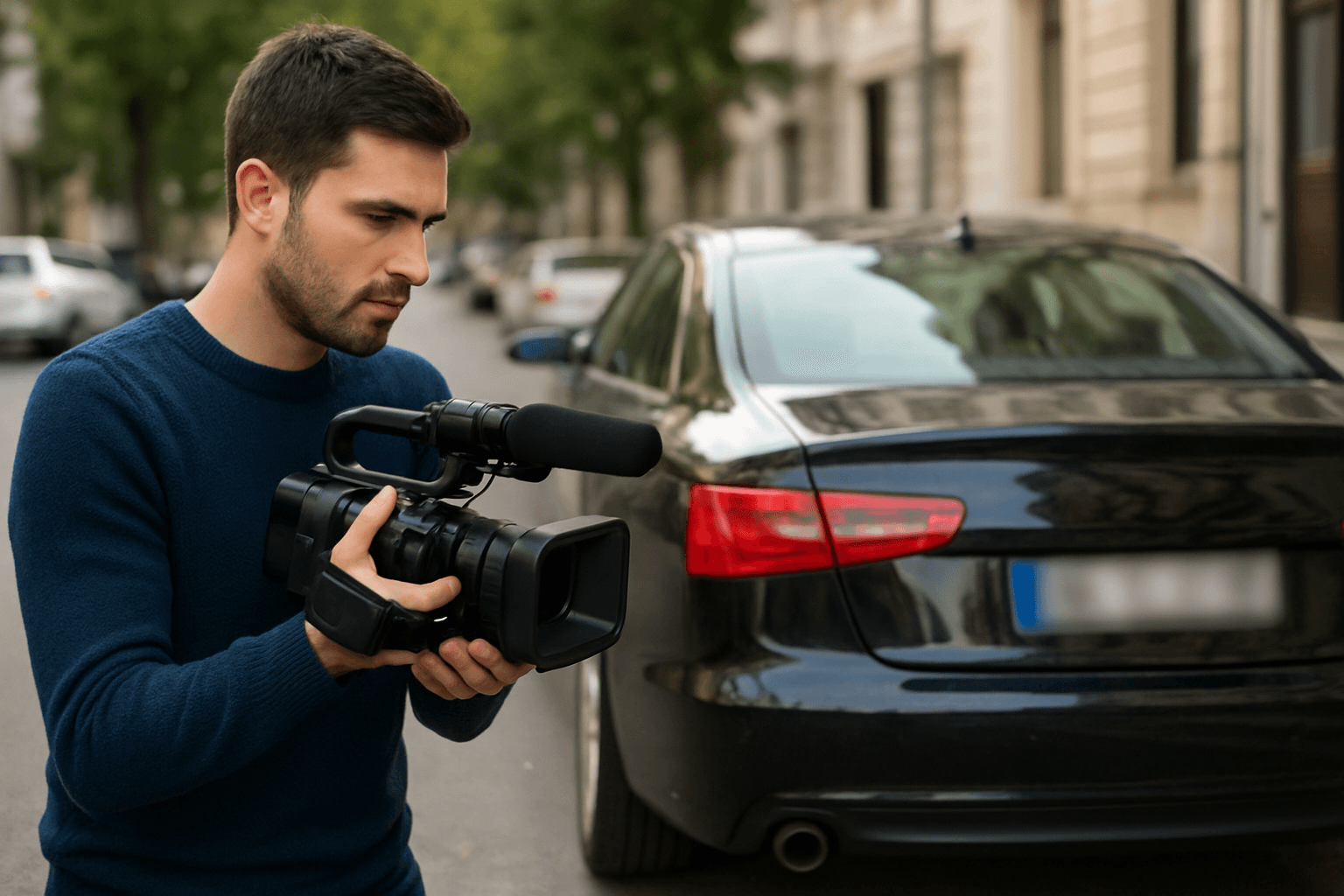
Video content creation has exploded across social media platforms, with billions of hours uploaded daily. However, many creators overlook a critical legal and ethical obligation: blurring license plates in their videos. This isn't just a courtesy—it's becoming a legal necessity that protects both creators and subjects from serious privacy violations and potential legal consequences.
Understanding why you need to blur license plates in videos encompasses legal compliance, ethical responsibility, and practical risk management that every content creator must address in today's privacy-conscious digital landscape.
| Question | Answer |
|---|---|
| Are license plates personal data? | Yes, under GDPR and increasingly under US state laws like CCPA |
| Maximum GDPR penalty? | Up to 4% of global annual turnover or 20 million euros |
| Do platforms enforce this? | Yes, YouTube, Instagram, and TikTok can restrict or remove content showing identifiable plates |
| Fastest fix? | Automatic AI blurring with BGBlur, no manual masking required |
| Is it free? | Yes, up to 200MB and 10 minutes per video on the free plan |
Legal Framework Requiring License Plate Blurring
GDPR and European Privacy Regulations
The European General Data Protection Regulation (GDPR) explicitly classifies license plates as personal data that requires protection under privacy law. Any video content showing identifiable license plates without explicit consent violates GDPR requirements, regardless of the creator's location if the content reaches European audiences.
GDPR violations carry substantial financial penalties, with fines reaching up to 4% of annual global turnover or €20 million, whichever is higher. Content creators distributing videos internationally must comply with GDPR standards to avoid these severe penalties.
Data processing lawfulness under GDPR requires either explicit consent from the license plate owner or legitimate interest justification. For most video content, obtaining consent from every visible vehicle owner proves impractical, making blurring the only viable compliance method.
North American Privacy Legislation
California's Consumer Privacy Act (CCPA) and similar state legislation increasingly treat license plates as personal identifiers requiring protection. These laws apply to businesses collecting or displaying personal information, including content creators generating revenue from their videos.
Canadian Personal Information Protection and Electronic Documents Act (PIPEDA) includes vehicle identification information under privacy protection requirements. Content creators serving Canadian audiences must implement appropriate privacy safeguards, including license plate blurring.
State-specific privacy laws continue expanding across the United States, creating a complex patchwork of requirements that make universal license plate blurring the safest approach for content creators operating across multiple jurisdictions. For a jurisdiction-by-jurisdiction breakdown, see our CCPA California video privacy guide and the full GDPR video content compliance guide.
Platform Policy Requirements
YouTube's community guidelines increasingly emphasize privacy protection, with license plate visibility potentially triggering content review and removal. Monetized channels face stricter scrutiny, with privacy violations potentially affecting monetization eligibility.
Instagram and Facebook privacy policies require consent for identifiable information in commercial content. Sponsored posts, brand partnerships, and monetized content showing license plates without proper privacy protection risk platform penalties and revenue loss.
TikTok's community guidelines specifically address personally identifiable information, with license plate visibility potentially resulting in content removal and account penalties. Creator Fund participants face enhanced privacy protection requirements.
Privacy Protection Necessities
Personal Information Exposure Risks
License plates directly link to comprehensive personal information through government databases, including full names, home addresses, phone numbers, and vehicle registration details. This information exposure creates immediate privacy vulnerabilities for vehicle owners who never consented to public disclosure.
Cross-referencing capabilities allow malicious actors to combine license plate information with other publicly available data, creating detailed personal profiles that enable stalking, harassment, and identity theft. Video content amplifies these risks by providing visual confirmation of vehicle ownership and location patterns.
Digital permanence means license plate information, once published in videos, remains accessible indefinitely through screenshots, downloads, and archived content. Even if original videos are removed, the privacy violation continues through cached and copied content.
Security Threats and Criminal Exploitation
License plate cloning represents one of the most serious security threats from exposed plate information. Criminals create duplicate plates using visible numbers from videos, attaching them to vehicles involved in illegal activities and leaving innocent owners to face legal consequences.
Targeted crimes become possible when license plate information reveals vehicle owner details combined with location data from video content. This information enables criminals to plan thefts, break-ins, or other targeted criminal activities against specific individuals.
Stalking and harassment risks escalate when license plate visibility enables determined individuals to identify and locate vehicle owners. This threat particularly affects content creators, public figures, and anyone involved in controversial topics or public disputes. Dashcam and driving footage carries the highest exposure since plates appear constantly; our dashcam privacy guide covers that use case specifically.
Ethical Responsibilities in Content Creation
Consent and Privacy Rights
Ethical content creation requires respecting the privacy rights of all individuals who appear in videos, including vehicle owners whose license plates become visible. Without explicit consent, showing identifiable license plates violates reasonable privacy expectations in public spaces.
Vulnerable populations require special consideration, with license plate visibility potentially creating additional safety risks for domestic violence survivors, law enforcement personnel, or individuals in witness protection programs. Content creators bear responsibility for protecting these vulnerable subjects.
Community standards increasingly expect privacy consciousness from content creators, with audiences evaluating creator credibility based on their demonstrated respect for privacy rights and responsible content creation practices.
Professional Standards and Industry Practices
Media industry standards universally include license plate blurring as standard operating procedure for news organizations, documentary producers, and commercial video creators. Following these established professional practices demonstrates content creator credibility and ethical awareness.
Insurance and liability considerations increasingly require privacy protection measures for professional content creators. Many professional liability insurance policies exclude coverage for privacy violations, making proactive blurring essential for risk management.
Brand partnership requirements often include privacy protection demonstrations, with sponsors requiring evidence of comprehensive privacy practices before engaging in commercial relationships with content creators.
Implementation Requirements with bgblur.com
Comprehensive AI-Powered Detection
bgblur.com's advanced AI detection system identifies license plates across various angles, lighting conditions, and partial obstructions without human oversight. This automated approach ensures comprehensive privacy protection that manual methods cannot consistently achieve.
Real-time processing capabilities enable immediate privacy protection without workflow delays. Cloud-based AI processing eliminates software installation requirements while ensuring access to continuously updated detection models that improve accuracy over time.
Batch processing functionality supports large-scale content creation workflows, allowing creators to protect multiple videos simultaneously while maintaining consistent quality and privacy standards across all content.
Quality Assurance and Professional Results
Professional-grade blur effects maintain visual quality while ensuring complete information obscurity. Unlike basic editing tools that create obvious editing artifacts, bgblur.com delivers natural-looking privacy protection that maintains content professionalism.
Consistency across all detected plates eliminates the visual irregularities common with manual editing approaches. Standardized blur intensity and coverage ensure uniform privacy protection regardless of video length or complexity.
Quality verification processes allow creators to review detection results before final processing, ensuring optimal privacy protection while maintaining creative control over their content presentation.
Workflow Integration Benefits
Seamless integration with existing content creation workflows eliminates privacy protection bottlenecks that could delay publication schedules. Efficient processing supports the rapid content creation cycles required for social media success.
Cost-effective solution eliminates the need for expensive editing software or professional editing services while delivering superior results compared to manual alternatives. Free processing makes privacy protection accessible regardless of creator budget constraints.
Scalability supports growing content creation needs, from individual creators to large media organizations requiring consistent privacy protection across extensive video libraries and regular upload schedules.
Future Legal and Technology Trends
Expanding Privacy Legislation
Global privacy law trends indicate continued expansion of license plate protection requirements across additional jurisdictions. Early adoption of comprehensive blurring practices provides competitive advantages as regulations become more stringent.
Enforcement mechanisms continue strengthening, with regulatory authorities developing more sophisticated detection and penalty systems for privacy violations. Proactive compliance protects against increasingly severe consequences for privacy law violations.
International harmonization efforts may establish universal standards for video privacy protection, making comprehensive license plate blurring standard practice for all video content regardless of distribution location.
Technology Integration Advances
AI detection accuracy continues improving through expanded training datasets and more sophisticated algorithms. Future systems will achieve near-perfect detection rates while minimizing false positives through enhanced contextual understanding.
Platform integration opportunities will streamline privacy protection directly within major social media and video platforms, eliminating file transfer requirements while maintaining professional-quality privacy protection standards.
Automated compliance verification systems may emerge to provide creators with documented evidence of privacy protection implementation, supporting legal compliance documentation and professional credibility requirements.
Frequently Asked Questions
Is it legal to show license plates in videos? It depends on jurisdiction and context. Under GDPR, license plates are personal data, so publishing identifiable plates without consent or a legitimate-interest basis can violate the law. In the US, laws like CCPA increasingly treat plates as personal identifiers for businesses and monetized content. Blurring is the safest default for anything distributed publicly or internationally.
Do I need to blur license plates on YouTube or TikTok? Platform policies do not always mandate it explicitly, but community guidelines increasingly flag or restrict content showing identifiable personal information, including license plates, especially for monetized channels. Blurring proactively reduces the risk of content review, removal, or demonetization.
What information can someone get from a license plate number? License plates link directly to government registration databases containing the owner's name, address, phone number, and vehicle details. Combined with other public data, this enables the kind of cross-referencing that supports stalking, harassment, or identity theft.
How does bgblur.com detect and blur license plates automatically? bgblur.com uses AI object detection trained specifically on license plates, identifying them across angles, lighting conditions, and partial obstructions, then uses motion tracking to keep the blur locked onto the plate as the vehicle moves. Processing happens in your browser and files are deleted within 24 hours. See our full guide to blurring faces in photos and video for the same workflow applied to faces.
Can I blur license plates for free? Yes. The free plan supports videos up to 200MB and 10 minutes long with automatic license plate detection, which covers most social clips and short dashcam segments.
Does blurring a license plate reduce video quality? No, not with AI-based tools. bgblur.com applies the blur as a targeted overlay on the detected plate region only, so the rest of the frame keeps its original resolution.
Conclusion
Blurring license plates in videos is no longer optional—it's a legal, ethical, and practical necessity for responsible content creation. The convergence of expanding privacy legislation, platform policy enforcement, and ethical content creation standards makes comprehensive license plate blurring essential for all video creators.
bgblur.com provides the professional-grade, AI-powered solution required to meet these evolving requirements efficiently and effectively. By implementing automated license plate blurring proactively, content creators protect themselves legally while building audience trust and professional credibility that supports sustainable content creation success.
The future of video content creation demands privacy consciousness as a fundamental practice, not an afterthought. License plate blurring represents a critical component of this privacy framework that enables creators to focus on content quality while maintaining the legal compliance and ethical standards necessary for long-term success in the digital content landscape.