Flock Safety Cameras & Your License Plate Privacy [2026]
Flock Safety's solar-powered cameras photograph every license plate that passes and build a searchable, warrantless vehicle-tracking database used by thousands of police departments. This guide explains how the cameras work, what the law actually says about your rights, and what you can do to protect yourself.
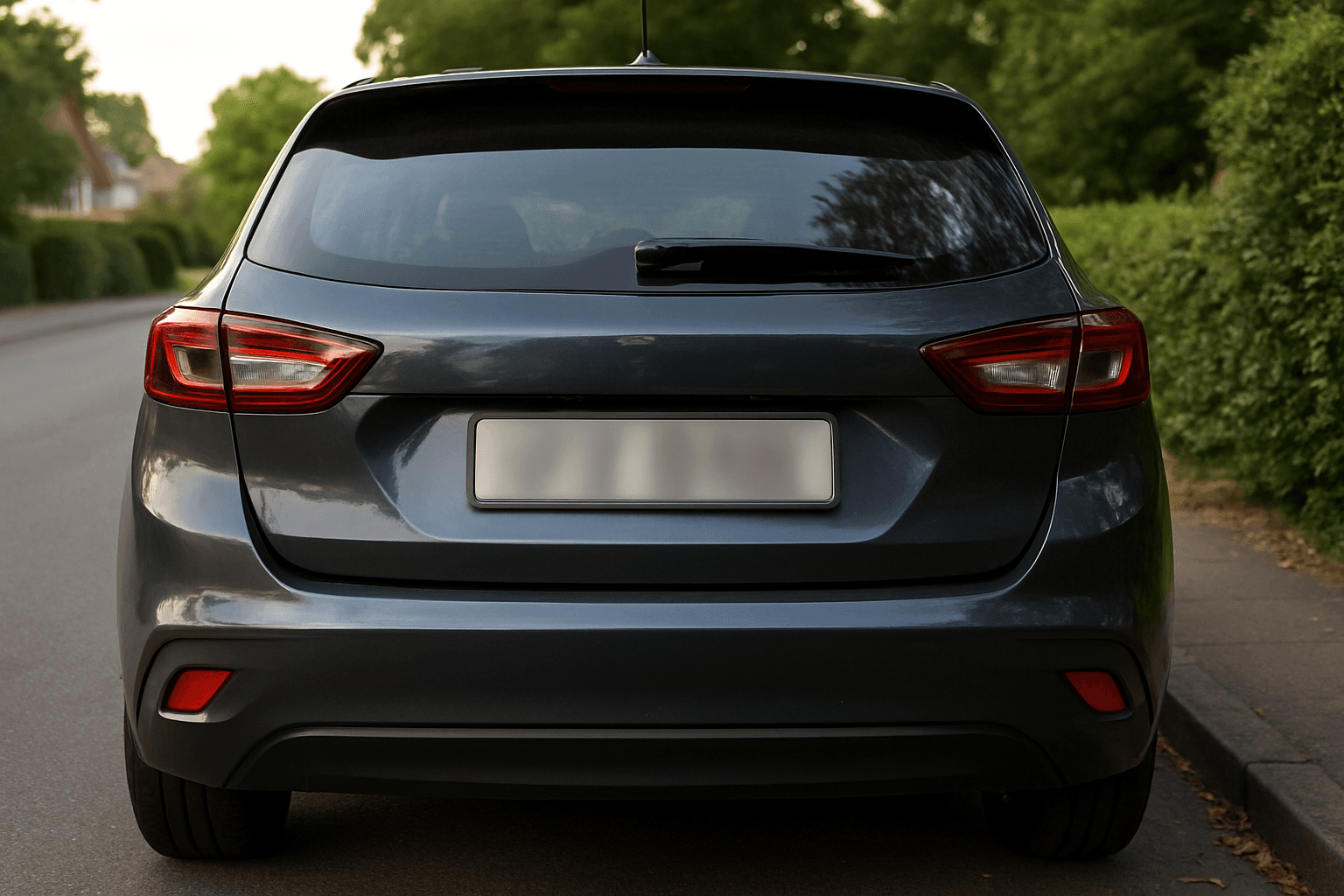
In neighborhoods and on roads across the United States, a new kind of camera has become increasingly common — and most people have no idea it's there. Flock Safety cameras are sleek, solar-powered poles mounted at neighborhood entrances, intersections, and parking lots. They do one thing: photograph every vehicle that passes, read its license plate, and add it to a searchable database.
No warrant. No consent. No opt-out.
Public reaction has been fierce. Thousands of people are asking what these cameras actually know about them, whether the surveillance is legal, and what they can do to protect themselves. This guide answers all of it — plainly, without the legal jargon.
What Is a Flock Safety Camera?
Flock Safety is a private company that sells automated license plate reader (ALPR) systems to homeowner associations, local governments, police departments, and private businesses. The cameras:
- Photograph every passing vehicle — front, back, or both, depending on placement
- Read the license plate using AI — with high accuracy even at speed
- Record vehicle descriptors — make, model, color, and in some cases the presence of roof racks, bumper stickers, or other identifying features
- Store the data in a cloud database — typically for a default retention period of 30 days, though this varies by customer agreement
- Make the data searchable by law enforcement — police can query the database for any plate, at any time, without a warrant
The core pitch: if something bad happens in your neighborhood, investigators can search the database and find out which vehicles were nearby. The concern: the same database tracks the movements of every innocent driver who passes — indefinitely, at scale, without their knowledge or consent.
How Many Flock Cameras Are There?
Flock Safety has grown rapidly. As of 2024, the company reported covering over 4,000 communities and working with more than 5,000 law enforcement agencies across the country. Their cameras are deployed in all 50 states.
Estimates suggest there are hundreds of thousands of individual cameras in operation. If you drive in a US suburb, you've almost certainly been photographed multiple times without knowing it.
Private entities — homeowner associations, apartment complexes, shopping centers — have deployed the majority of cameras. This matters legally: private entities are not subject to the same Fourth Amendment constraints as government actors, which means the data they collect occupies a legal gray zone that courts are still sorting out.
What Data Does Flock Actually Collect?
This is where most people are surprised. It's not just your plate number. Each Flock "snapshot" includes:
- License plate number (linked to your name, address, and registration via DMV databases)
- Timestamp and GPS location of the camera
- Vehicle make, model, and color
- Vehicle characteristics — hood ornaments, roof racks, stickers, damage (Flock calls this "vehicle fingerprinting")
- Direction of travel
Over time, as you pass the same cameras repeatedly, the system builds a pattern-of-life profile — where you go, how often, at what times. This is the core of what critics call mass surveillance: not any individual data point, but the aggregate picture that emerges from continuous tracking.
Law enforcement can query this data not just for their jurisdiction but across a national network of Flock cameras, creating what amounts to a nationwide vehicle tracking system.
Is It Legal to Track Your Plate Without a Warrant?
This is the most contested question in ALPR law right now, and the answer is complicated.
The Third-Party Doctrine Problem
Historically, US courts have applied the third-party doctrine: information you share with a third party (a phone company, a bank, a company whose cameras you pass) has no Fourth Amendment protection. You "assumed the risk" that the third party might share it with the government.
This doctrine was developed for simple records like phone logs. Courts are now wrestling with whether it applies to comprehensive location tracking at the scale that ALPR networks enable.
The Carpenter Decision Changes Things
In Carpenter v. United States (2018), the Supreme Court ruled 5-4 that accessing long-term cell phone location data without a warrant was unconstitutional, even though the data was held by a third party (the phone company). Chief Justice Roberts wrote that comprehensive location tracking is categorically different from simple record keeping — it reveals "the privacies of life."
Many legal scholars argue that ALPR network data is exactly the kind of comprehensive tracking Carpenter was designed to protect. The question is whether future courts will extend Carpenter to ALPR data. Several cases are working through the courts right now.
State-by-State Legal Landscape
While federal law remains unsettled, several states have passed laws governing ALPR use:
California — AB 1215 (2019) restricted facial recognition on body cameras. ALPR data from public agencies is subject to the California Public Records Act. Cities like Oakland and San Francisco have banned real-time ALPR surveillance by police without oversight.
Maine — Passed one of the strongest state ALPR laws, requiring warrants for certain types of access and limiting retention periods.
New Hampshire — Banned state police from using ALPR systems entirely.
New York — Multiple bills have been proposed limiting ALPR data retention and access. Active litigation ongoing.
Most states — No specific ALPR law. Law enforcement agencies can query privately operated networks like Flock's with no legal restrictions beyond their own department policies.
The legal patchwork means your rights vary enormously depending on where you drive.
Who Has Access to Flock Camera Data?
This is a question Flock Safety has faced significant scrutiny on. Their network model creates layers of access:
The camera operator (HOA, city, police dept) can search their own cameras.
Law enforcement agencies can request access from private operators and can query across a federated network — meaning a police department in one city can search cameras from a network in another jurisdiction.
Flock Safety itself has access to all data on its platform under its terms of service, including for product development and security purposes.
Third-party companies — Flock integrates with other criminal justice platforms, which may give additional parties access to data.
What Flock says it doesn't do: sell data to advertisers or insurance companies. Their terms of service prohibit many uses. But as critics point out, terms of service can change, companies can be acquired, and without legislative guardrails, the only limit is what the contract says today.
What Happens When Flock Gets It Wrong?
ALPR systems aren't perfect. Misreads happen. And when they do, the consequences fall on innocent drivers.
Documented cases include:
- Wrongful traffic stops — police pulled over drivers whose plates were misread, sometimes drawing weapons before realizing the mistake
- False crime associations — drivers flagged as connected to vehicles involved in crimes because of plate misreads or database errors
- Domestic abuse facilitation — police officers have accessed Flock data to track ex-partners, a documented pattern in multiple jurisdictions
- Insurance complications — errors in associated databases have caused insurance and registration problems for innocent vehicle owners
The consequences of a false match are not a minor inconvenience. Being pulled over at gunpoint based on a misread plate is a serious and frightening experience — one that falls disproportionately on people of color, who face higher rates of vehicle stops generally.
The Surveillance Math: What "30-Day Retention" Really Means
Flock's default retention period is 30 days. That sounds limited. But consider the math:
If you drive past 10 Flock cameras per day (a conservative estimate in a suburban area), that's 300 data points per month. At 30 days, the system holds 9,000 location records for a single vehicle. Multiply by millions of vehicles, and the scale of the surveillance infrastructure becomes clear.
Moreover, individual clients can configure longer retention. Some law enforcement clients retain data for 90 days, 6 months, or longer. The 30-day default is not a legal limit — it's a sales setting.
Public Response: Why People Are Angry
The public reaction to Flock cameras reflects something deeper than technical privacy concerns. People are angry because:
They weren't asked. Cameras are installed by HOAs, city councils, or individual businesses — often without any public vote, notice, or community input. One day they weren't there; the next day they are, logging every trip you take.
The benefit is unclear. Despite Flock Safety's case studies, independent research on whether ALPR networks actually reduce crime rates is mixed. Critics argue the surveillance infrastructure is being built based on the promise of crime reduction, not demonstrated results.
The asymmetry is stark. The government and private entities can compile detailed profiles of citizens' movements with no equivalent transparency. You don't know where the cameras are. You can't see your own data. You can't correct errors. You can't opt out.
The mission creep is predictable. Today's "license plate safety network" is tomorrow's tool for immigration enforcement, protest monitoring, or tracking political dissidents. History shows that surveillance infrastructure built for one purpose reliably expands to others.
Private data, public consequences. When a private HOA deploys a Flock camera and makes that data available to law enforcement, it creates a workaround to Fourth Amendment protections. You can't sue a HOA for constitutional violations the way you can sue the government.
Update — August 7, 2026: That anger has since turned into action on two fronts. Vandals have destroyed more than two dozen Flock cameras nationwide, while audit logs have revealed dozens of officers misusing the same data to stalk people they know personally. See our full breakdown of Flock camera vandalism and police data misuse in 2026.
What Can You Actually Do?
Your options are limited but not zero:
Know the Laws in Your State
Check whether your state has ALPR legislation. Privacy advocacy organizations like the ACLU maintain updated state-by-state guides. States with stronger laws give you more avenues for complaint and legal action.
Request Your Own Data
In states covered by open records or privacy laws, you may be able to request records of your own plate in a law enforcement database. The process varies by jurisdiction.
Engage Your Local Government
The most effective lever most people have is the political one. Many cities and counties have adopted or are considering ALPR oversight ordinances that require:
- Warrants for extended data access
- Shorter retention periods
- Audits of access logs
- Community notification before camera deployment
Showing up to city council meetings and supporting privacy-oriented legislation is how camera deployment policies get changed.
Support Litigation
Organizations like the ACLU, Electronic Frontier Foundation (EFF), and state-specific privacy groups are actively litigating ALPR cases. Financial support and public engagement with these cases matters.
Protect Your Plate Online
One thing you have direct control over: what you share publicly. If you post dashcam footage, driving videos, photos of your vehicle, or any content where your plate is visible, you're adding your own data to the surveillance ecosystem — and giving bad actors easy access to information that plate-reader databases are supposed to restrict.
BGBlur's AI license plate blur tool lets you remove your plate number from any photo or video before sharing, in seconds. No app download. Works on iPhone, Android, and desktop.

Why this matters in the Flock context: If your plate is exposed on social media, data brokers can combine it with information from ALPR databases to build richer profiles of your movements. Protecting your plate online is one layer of a broader privacy strategy.
Read our complete guide on why you should avoid showing your license plate online for the full picture of risks and protections.
For dashcam users specifically, our guide on how to blur faces and license plates in dashcam videos covers every major brand and model.
What Is the Future of ALPR Surveillance?
The trajectory of ALPR technology points in one direction: more cameras, more data, more integration.
Flock Safety and competitors are expanding to include:
- Real-time alerting — police receive instant notifications when a flagged plate is spotted, rather than searching historical data
- Vehicle fingerprinting — tracking vehicles even with obscured or misread plates, using other visual identifiers
- Integration with facial recognition — pairing plate data with camera images of drivers to add another layer of identification
- Predictive analytics — using movement patterns to flag "suspicious" behavior before any crime is alleged
Without legislative action, each of these expansions will be deployed with the same lack of community consent that characterized the original cameras.
The question being answered right now — in courts, city councils, and public debate — is whether the US will develop meaningful legal frameworks for ALPR surveillance or simply let the surveillance infrastructure grow unchecked until courts intervene.
How to Blur Your License Plate Before Posting: Quick Guide
If you're sharing dashcam footage, vehicle photos, or street-level video:
- Go to BGBlur — no account or app needed
- Upload your photo or video — supports all common formats, including dashcam video files
- AI detects the license plate automatically — or select it manually for precision control
- Download the protected version — plate is blurred, everything else untouched
The process takes under 60 seconds for most content and works on any device. It's a small step with real privacy implications — particularly if your content reaches a large audience.
Frequently Asked Questions
Are Flock Safety cameras legal? In most US jurisdictions, yes — at least under current law. There are no federal laws specifically regulating ALPR systems, and only a handful of states have passed meaningful restrictions. The constitutionality of warrantless law enforcement access to ALPR data collected by private entities is being actively litigated in multiple courts.
Can Flock cameras see inside my car? Standard Flock cameras are positioned to capture exterior vehicle details and license plates. They typically capture a wide-angle shot from the front or rear. Interior visibility depends on camera placement and angle, but the stated purpose is exterior vehicle identification, not interior surveillance.
How do I find out if there are Flock cameras in my area? There's no public, comprehensive map of Flock camera locations — which is itself part of the critique. Some local privacy advocates and journalists have mapped cameras in specific cities. Your local HOA or city government may be able to confirm whether they operate Flock cameras.
Can I request deletion of my plate data from Flock's database? Currently, there is no general opt-out or deletion mechanism for individuals. In states with strong privacy laws (like California under the CCPA), you may be able to submit a deletion request to Flock Safety directly. Whether and how they respond depends on their data processing role and your state's law.
Do Flock cameras work at night? Yes. Flock cameras use infrared illumination to capture plate data in low-light conditions. They operate 24/7.
Is there a difference between a Flock camera and a speed camera? Yes. Speed cameras measure vehicle speed and typically photograph vehicles only when they exceed the speed limit. Flock cameras photograph every vehicle that passes, regardless of speed or behavior, and exist purely for identification and tracking.
How does blurring my plate online help if Flock cameras already have my data? It addresses a different attack surface. Flock data is generally restricted to law enforcement queries (for now). Exposed plates on social media are accessible to anyone — data brokers, stalkers, identity thieves, plate cloners. They serve different threat models, and protecting against one doesn't protect against the other. A comprehensive privacy approach covers both.
Conclusion: Surveillance Without Consent Is Still Surveillance
The debate around Flock Safety cameras is ultimately a debate about the terms on which surveillance is acceptable in a democratic society. The cameras themselves are a technology — neither inherently good nor bad. What matters is the legal framework governing their use, the transparency of their deployment, and whether citizens have meaningful recourse when things go wrong.
Right now, that framework is inadequate. Cameras are going up faster than the laws governing them. Communities are being surveilled without consent. Errors are causing real harm to innocent people. And the long-term implications of building a comprehensive vehicle tracking infrastructure — without warrants, without oversight, without opt-outs — are only beginning to be understood.
Protecting yourself starts with understanding the landscape. It continues with engaging the political process, supporting meaningful legislation, and taking direct action where you can — including controlling what license plate information you make publicly available online.
BGBlur is a small but real piece of that: it takes under a minute to blur your plate before posting, and it keeps your vehicle's identity off the open internet where anyone can see it. Start there. Then go bigger.
Update — August 5, 2026: Businesses running ALPR systems like Flock's are now facing direct litigation risk of their own. See our breakdown of California's ALPR lawsuit wave following Bartholomew v. Parking Concepts for what the statute requires and where footage-publishing exposure fits in.
Update — August 6, 2026: A Kansas lawsuit filed July 31, 2026 goes further, arguing Wichita's Flock camera network is unconstitutional outright — the functional equivalent of a warrantless GPS tracking device. Read the Grimmett v. Wichita breakdown alongside the parallel Flock Safety and Motorola/Vigilant class actions over data sharing.
Update — August 6, 2026: Government-run ALPR networks aren't the only surveillance bystanders get caught in — private doorbell and home security cameras raise a parallel, GDPR-specific version of this issue in Europe. See our guide on doorbell camera GDPR bystander footage rules for retention limits and deletion-request obligations.
Update — August 12, 2026: Towns are now cancelling Flock contracts outright — 82 terminations across 28 states since 2021, including two Rhode Island councils in the first week of August 2026. But a cancellation doesn't delete the scans already taken or recall data shared out of state. Read what actually happens to plate data when a Flock contract is cancelled, and why the exposure shifts to unregulated private cameras.
Update — August 14, 2026: A crowdsourced counter-model reached the front page of Hacker News: SparrowMap points volunteer phone cameras at streets, keeps only government vehicles, and destroys every other plate on-device before anything is uploaded. See our full breakdown of SparrowMap's crowdsourced government-vehicle tracking and the legal debate it sparked.
Update — September 24, 2026: See our new guide on the Ring Familiar Faces lawsuit and doorbell face scanning.