COPPA 2026 Guide: Protect Kids Online with BGBlur Checklist
COPPA gives parents real legal power over how platforms collect and use their children's data, but most families never use it. This guide breaks down what COPPA actually covers, the 2025 rule updates, and how blurring kids' faces and identifying details before posting keeps you compliant.
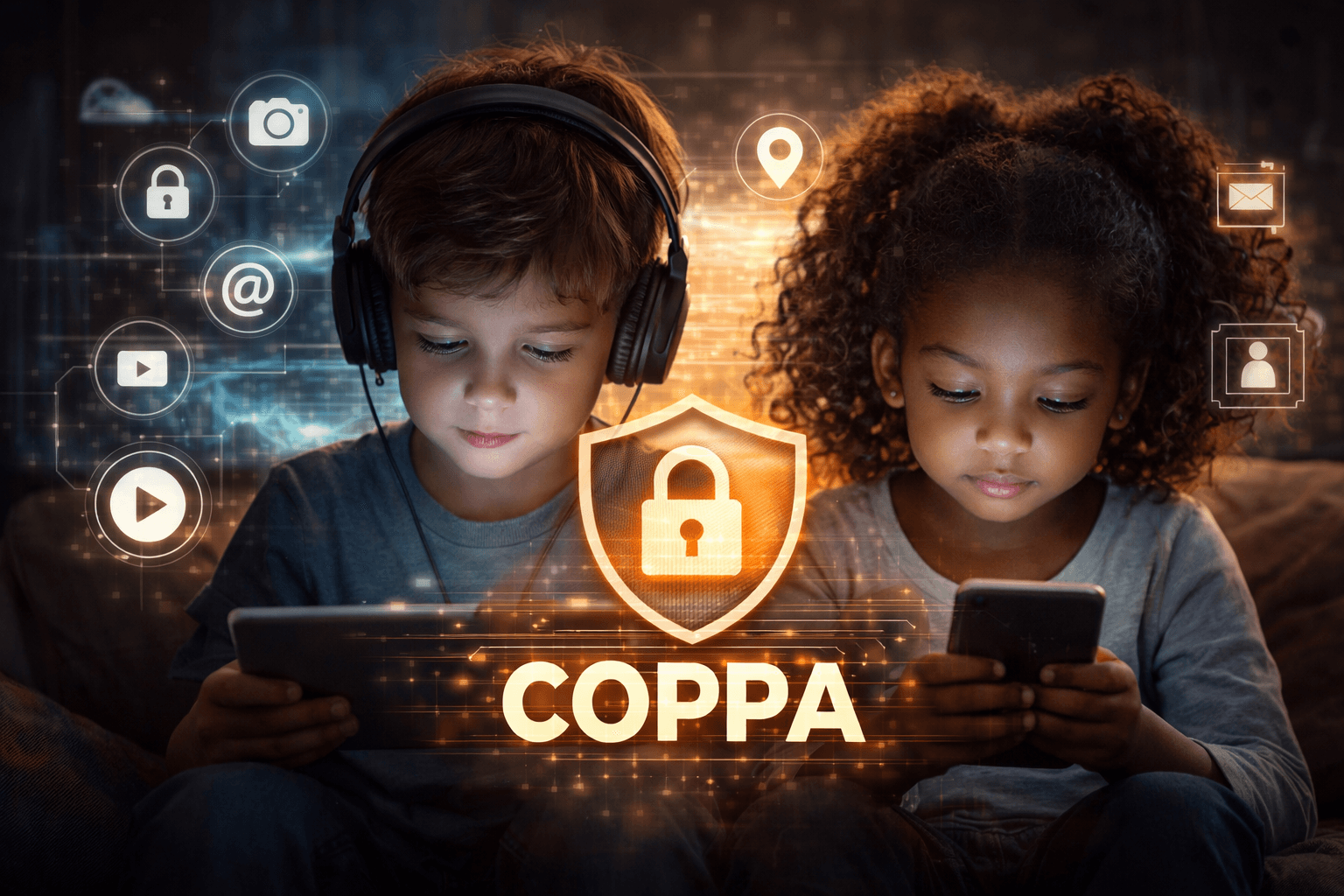
Every time your child opens an app, plays an online game, or watches a video on a kids' platform, data is being collected. Their name, their location, their device ID, their browsing behavior — quietly gathered, stored, and sometimes sold. Most parents have no idea this is happening. And most companies are counting on that.
That's exactly why COPPA — the Children's Online Privacy Protection Act — exists. And more importantly, it's why knowing about it isn't just useful. It's essential for every parent navigating the internet with a child under 13.
The Privacy Problem Nobody Talks About
Children are among the most vulnerable users on the internet. They don't read privacy policies. They don't understand what a "persistent identifier" means. They just want to play the game or watch the video.
But behind the scenes, platforms are building detailed profiles — tracking what your child clicks, how long they stay, and what they search for. This data gets used for targeted advertising, gets shared with third parties, and in worst cases, ends up in breaches that expose your child's personal information to complete strangers.
The damage isn't always immediate either. A child's data collected today can follow them for years — shaping the ads they see, the content they're fed, and in extreme cases, creating vulnerabilities that bad actors can exploit long after the original collection happened.
Children deserve better. And COPPA is the law that says so — but only if parents know it exists and know how to use it.
What Is COPPA and Why Was It Created?
The Children's Online Privacy Protection Act was originally passed in 1998, at a time when the internet was still relatively new. Even then, lawmakers recognized that children needed specific, dedicated protections online that general privacy laws simply didn't provide. The act placed strict rules on any online platform knowingly collecting data from children under 13 and gave parents meaningful legal rights they could actually enforce.
Since 1998, the internet has changed dramatically — and so has COPPA. The 2025 updates brought the act in line with modern digital realities, expanding the definition of personal data, tightening data retention rules, and strengthening the FTC's enforcement powers. Understanding these updates is critical because the threats facing your child online in 2026 look nothing like they did when this law was first written.
What COPPA Actually Protects
COPPA places real, enforceable rules on platforms that collect data from children. Here's what it demands from any app, website, or online service directed at children under 13 — or any platform that knows it's collecting data from that age group.
Verified Parental Consent is the cornerstone of the entire act. No app or website can collect your child's personal information without your explicit, confirmed permission. Not a buried checkbox at the bottom of a sign-up form. Not a pre-ticked box labelled "I agree." Real, verified consent from a parent or guardian.
Full Transparency is equally non-negotiable. Platforms must clearly disclose what data they collect, why they collect it, and who they share it with. Fine print games and deliberately confusing language are exactly what COPPA was designed to eliminate. A parent should be able to understand, in plain terms, what a platform is doing with their child's information.
Parental Rights to Control Data are one of the most powerful — and most underused — parts of the law. As a parent, you can review your child's data at any time, request its deletion, and stop further collection completely. These aren't favors a company is doing you. They are your legal rights, and a company refusing to honor them is breaking the law.
Strict Data Retention Rules, strengthened in the 2025 updates, now mandate that companies cannot hold onto your child's data indefinitely. Once the data is no longer needed for the purpose it was originally collected for, it must be deleted. This is a significant shift that closes a loophole many platforms were quietly exploiting.
A Broader Definition of Personal Data is another 2025 update that reflects how much more invasive modern data collection has become. The updated rules now include biometric data, government-issued IDs, and other sensitive identifiers alongside the traditional categories like names, email addresses, and location data. Because the internet of 2025 collects far more about your child than the internet of 1998 ever could.
Why Most Parents Still Don't Use COPPA Effectively
Knowing the law exists is only half the battle. The uncomfortable truth is that COPPA is most powerful in the hands of parents who actively use it — and most parents simply don't know they have these rights in the first place.
Part of this is by design. Companies that profit from data collection have little incentive to advertise the fact that parents can request deletion of everything they've gathered. Privacy policies are written to be long, technical, and discouraging. Consent processes are designed to be completed quickly without real understanding. The entire system is built to minimize the number of parents who actually exercise their COPPA rights.
The result is a law that exists on paper but gets underused in practice. Your child's data continues flowing to advertisers, data brokers, and third-party analytics companies — not because the law allows it without consent, but because most parents never knew to say no.
What Counts as Personal Information Under COPPA?
This is broader than most people realize, and understanding the full scope is important for appreciating what COPPA actually protects. Beyond the obvious — names and email addresses — personal information under this act includes photos and videos featuring your child, geolocation data that can reveal where your child lives, goes to school, or spends time, device identifiers and IP addresses that can be used to track behavior across platforms, cookies and persistent tracking technologies that follow your child from site to site, and after the 2025 update, biometric data and government-issued ID numbers.
This breadth matters because modern apps collect far more than just a name and an email. A free game app might be harvesting your child's device fingerprint, location history, and behavioral patterns simultaneously — and under COPPA, none of that is legal without your verified consent.
Why Businesses Must Take COPPA Seriously
COPPA isn't optional, and the FTC actively enforces it with penalties that companies genuinely feel. Civil penalties can reach up to $51,744 per violation per day — and for platforms collecting data from millions of children, that number escalates quickly. Major companies including Google, TikTok, and YouTube have already faced multi-million dollar fines that serve as a clear signal: cutting corners on children's privacy is expensive.
But beyond legal risk, there's a more fundamental reason responsible businesses comply: trust. Parents are becoming increasingly aware of how their children's data is being used. A single privacy violation, one data breach, one exposed profile of a minor — and the reputation damage is permanent. Businesses that genuinely respect children's privacy aren't just following the law. They're building something rare and valuable: a relationship with families built on actual trust rather than manufactured consent.
If you're building a product that touches any audience including children under 13, COPPA compliance isn't a legal checkbox to tick. It's the foundation of an ethical product.
How bgblur Helps You Protect Your Child's Privacy
Understanding your rights is important. But in practice, most parents don't have time to monitor every platform their child uses, audit every privacy policy, or track down data brokers who may have purchased their child's information. This is where tools like bgblur become genuinely valuable.
bgblur is built around a core belief that your privacy — and especially your child's privacy — should never be an afterthought. In a world where data collection happens silently and consent is often manufactured rather than genuine, bgblur gives parents back meaningful control.
Real-Time Privacy Monitoring means bgblur actively tracks what data is being collected when your child uses connected platforms, alerting you before a problem becomes a breach. You don't have to read every privacy policy yourself — bgblur does the watching for you.
Smart Consent Management simplifies the parental consent process that COPPA requires, making it clear exactly what you're agreeing to and what you can revoke at any time. No more confused checkboxes buried in terms of service documents.
Data Exposure Alerts are triggered if your child's information appears somewhere it shouldn't — a third-party database, an ad network, or a data broker. You find out immediately, not months later when the damage is already done.
COPPA Compliance Dashboard gives both families and businesses a clear view of compliance status, including updates reflecting the 2025 regulatory changes. You always know exactly where you stand.
Minimal Data, Maximum Safety reflects bgblur's own operating model. The platform itself collects only what's strictly necessary — nothing more. Privacy-first isn't just a feature. It's the foundation.
For parents who want to go further in protecting their family's digital footprint, understanding how to improve brand visibility without surrendering privacy is also worth exploring — particularly for families navigating social media alongside younger children.
If you're posting photos or videos that include your child — or other people's children — the simplest technical safeguard is blurring identifiable faces before you publish. Our guide to blurring faces in photos and videos with AI walks through the process in under a minute, and our comparison of face anonymization versus face blur explains which method fits which situation. Families in the EU should also be aware that GDPR sets its own, stricter rules around children's data — see our GDPR video privacy compliance guide for the details.
What You Can Do Right Now as a Parent
Knowing about COPPA means you can start using it today. Begin by reviewing the apps and platforms your child currently uses. Most have a privacy policy page — look specifically for their data collection disclosures and their contact process for parental requests.
Exercise your right to request data deletion for any platform where your child has an account or has used a service. Under COPPA, they are legally required to comply. If they don't, you can file a complaint directly with the FTC at ftc.gov — and the FTC takes these complaints seriously.
For new apps and services, make a habit of checking whether they have a clear, accessible parental consent process before allowing your child to use them. A platform that makes this difficult is already telling you something important about how seriously they take children's privacy.
Understanding your rights under COPPA also means knowing that you can stop data collection entirely at any time, not just at sign-up. If a platform you allowed a year ago is still collecting data you're no longer comfortable with, you can revoke that consent and demand deletion of everything collected since.
For broader context on how data privacy intersects with digital content creation — particularly relevant if your child is also a young creator — resources like how to get targeted leads from Instagram with smart commenting can help you understand the data landscape your child may be navigating.
Here's What It All Comes Down To
COPPA exists because children cannot protect themselves online. They need adults — parents, regulators, and responsible businesses — to do it for them. Following this act isn't bureaucratic box-ticking. It's a commitment to protecting the most vulnerable users on the internet from systems specifically designed to exploit their lack of awareness.
The law gives you real power. The 2025 updates made that power stronger. But a law that you don't know exists and don't know how to use protects no one.
Your child's privacy matters. The tools and the rights are already in place. The only thing left is to use them.
Frequently Asked Questions
What is COPPA and who does it apply to?
COPPA applies to websites, apps, and online services that are either directed at children under 13 or that knowingly collect personal data from them. If a platform has reason to believe a user is under 13, COPPA rules apply with no exceptions.
What counts as personal information under COPPA?
It's broader than most people think. Beyond names and email addresses, it includes photos, videos, geolocation data, device identifiers, cookies, and — after the 2025 update — biometric data and government-issued ID numbers.
What happens if a company violates COPPA?
The FTC can impose civil penalties of up to $51,744 per violation per day. Major companies like Google, TikTok, and YouTube have already faced multi-million dollar fines. It's not a warning — it's a serious and actively enforced consequence.
Does COPPA apply to social media platforms like Instagram or TikTok?
Yes. If those platforms are aware that users under 13 are accessing their service, COPPA applies. Most major platforms officially ban users under 13, but enforcement of that rule remains inconsistent — which is exactly why parental awareness and tools like bgblur matter.
Can I delete my child's data from an app or website?
Absolutely — this is one of your core rights under COPPA. You can contact the platform directly and request deletion of your child's personal information. They are legally required to comply. If they don't, you can file a complaint directly with the FTC.
Update — July 6, 2026: Posting holiday content with other people's kids in it? See how to blur kids' faces and license plates in 4th of July videos before you publish.
Update — September 15, 2026: Wondering whether profanity in a video actually triggers a COPPA violation? It doesn't — see our deeper legal breakdown of COPPA versus platform profanity policy, with real FTC fine amounts, for the distinction creators most often get wrong.
Update — September 15, 2026: If your channel makes family, toy-review, or kids' gaming content, an unscripted swear word can trigger a Made for Kids reclassification on its own. See how to bleep profanity in kids' content for a COPPA-friendly guide for the full audience-factor breakdown and a step-by-step cleanup workflow.
Update — September 24, 2026: See our new guide on Italy's Garante ruling on sharenting and both-parent consent.