Secretly Recorded in the Philippines: Your Rights [2026]
A step-by-step guide to the Philippine laws that protect you from secret recording, covering the Data Privacy Act, Anti-Wiretapping Law, Anti-Photo and Video Voyeurism Act, and exactly which agency to contact first.
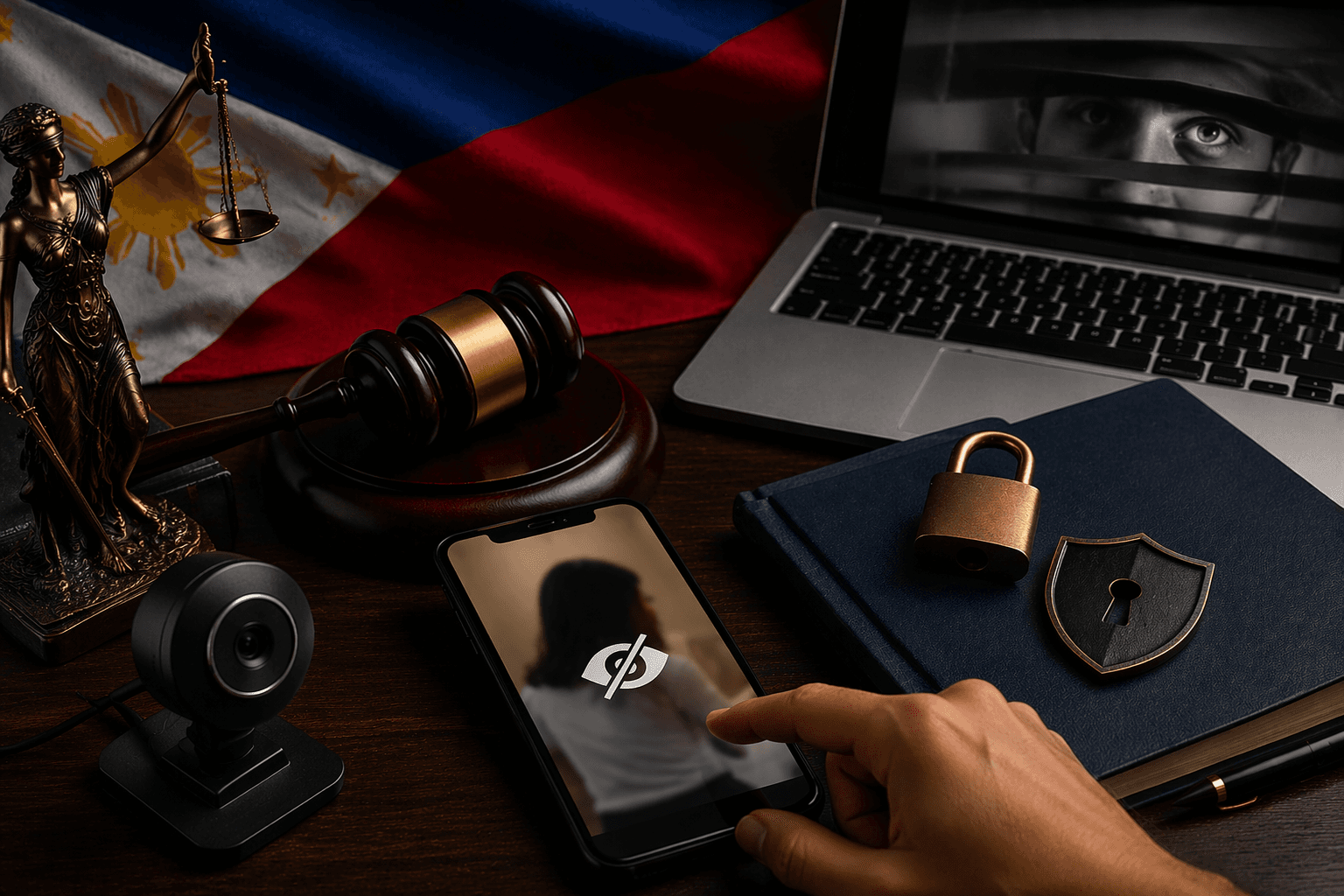
Being filmed without your knowledge by a hidden camera, a stranger's phone, or someone you trusted is one of the most violating things that can happen to a person. What makes it worse is not knowing if you have any real recourse. In the Philippines, you do. The law is on your side, and it has teeth.
This guide covers exactly which laws apply, what your rights are under Philippine law, and the concrete steps to take if you've been recorded, photographed, or filmed without your consent.
Is Secret Recording Illegal in the Philippines?
Yes and it's been illegal for longer than many people realise. The Philippines actually has one of the older anti-wiretapping statutes in Asia, and it's been reinforced in recent years by a comprehensive data privacy framework. The combination of these laws means that secretly recording someone whether in a bathroom, a bedroom, a workplace, or a public space where privacy is reasonably expected exposes the person doing it to serious criminal and civil liability.
The challenge for most victims is knowing which law covers their specific situation and which government agency to approach first. That's what this guide is here to clarify.
The Laws That Protect You
Republic Act 10173 The Data Privacy Act of 2012
The Data Privacy Act (DPA) is the cornerstone of privacy protection in the Philippines. It applies to any processing of personal information — and under the law, video footage of you, photographs of you, and audio recordings of you are all classified as personal information. If someone collected, stored, or shared that footage without your consent, they have violated the DPA.
The law is enforced by the National Privacy Commission (NPC), which has the authority to investigate complaints, issue orders, and recommend criminal prosecution.
Criminal penalties under the DPA:
- Unauthorised processing of personal information: 1 to 3 years imprisonment and fines ranging from ₱500,000 to ₱2,000,000
- Unauthorised processing of sensitive personal information: 3 to 6 years imprisonment and fines up to ₱4,000,000
- Malicious disclosure or sharing: 6 months to 5 years imprisonment
- Processing for unauthorised purposes: up to 2 years imprisonment and fines up to ₱500,000
The NPC can also order the immediate takedown of content and the deletion of all copies without requiring a court case to be concluded first.
Republic Act 4200 The Anti-Wiretapping Law
This law, passed in 1965 and still fully in force, makes it illegal to secretly record any private communication including conversations, phone calls, and any communication where the people involved have a reasonable expectation of privacy. Unlike the DPA, RA 4200 is focused specifically on audio and audio-visual recordings of private communications.
Penalties under RA 4200:
- Imprisonment of 6 years and 1 day to 12 years this is a serious criminal charge that cannot be reduced to a minor offense
- The recording itself is inadmissible as evidence in any proceeding, and the person who made it can be prosecuted regardless of what the recording supposedly contains
Republic Act 9995 The Anti-Photo and Video Voyeurism Act of 2009
This is the law most directly relevant to cases involving hidden cameras, upskirting, non-consensual intimate footage, and the sharing of such material online. It covers the taking of photos or videos of a person's private area or intimate body parts without consent, as well as the copying or broadcasting of any such content.
Penalties under RA 9995:
- 3 to 7 years imprisonment plus fines of ₱100,000 to ₱500,000
- Each act of reproduction, sharing, or broadcasting is treated as a separate offense meaning someone who shared your footage multiple times can face multiple charges
Cybercrime Prevention Act Republic Act 10175
If the recording was shared online through Facebook, Messenger, TikTok, Telegram, or any other platform the Cybercrime Prevention Act applies on top of the other laws. Section 6 of RA 10175 provides that crimes committed through information and communications technology carry penalties one degree higher than those prescribed under the underlying law.
In practical terms, this means that someone who shared non-consensual footage online can face significantly heavier penalties than someone who simply made the recording.
Your Immediate Rights Under Philippine Privacy Law
One thing victims consistently don't know is that you have rights you can act on right now without waiting for a criminal case to conclude.
Right to Access: You can demand to know what recordings of you exist, who holds them, and how they've been used.
Right to Erasure and Blocking: Under the DPA, you can demand that any recording or footage of you be permanently deleted. This right applies to individuals, companies, websites, and apps operating in the Philippines.
Right to File a Complaint with the NPC: The National Privacy Commission handles complaints directly. Filing a complaint can trigger an official investigation, result in deletion orders, and lead to criminal referrals without you needing to hire a lawyer first.
Right to Damages: Under Section 16 of the DPA, victims can pursue civil damages for privacy violations. This runs entirely separately from criminal prosecution, meaning you can seek compensation at the same time as criminal charges are being pursued.
Right to Injunctive Relief: Courts can issue temporary restraining orders (TROs) to prevent further sharing or distribution of footage while a case is ongoing. Your lawyer can apply for this immediately if the material is actively being spread.
Step-by-Step: What to Do If You Were Secretly Recorded in the Philippines
Knowing you have rights is the first step. Using them quickly and correctly is what actually makes a difference. Here is the exact sequence to follow.
Step 1: Preserve Everything Before You Do Anything Else
Screenshot every URL, post, chat message, or reference to the footage. Note the date, time, platform, and the username or account that shared it. Save these screenshots to a secure location your personal email, cloud storage, or a trusted device not connected to the person who recorded you. Do not delete anything from the platform yet, even if seeing it is distressing. Courts and investigators need evidence that the content existed and was accessible. Evidence preservation is the single biggest factor in whether a case moves forward.
If you need to share the footage with investigators, a lawyer, or a support organization without exposing your own face or the faces of bystanders, our guide to AI face anonymizer tools compares blurring versus synthetic replacement so you can choose the right method for your situation.
Step 2: Report the Content to the Platform
File a privacy or non-consensual intimate image report directly on the platform where the footage appears. Facebook, TikTok, Instagram, Telegram, and most major platforms have specific reporting categories for this. Use "Non-Consensual Intimate Image," "Privacy Violation," or the closest equivalent available. Most platforms respond to verified reports within 24 to 72 hours. If the content appears in Google Search results, submit a separate removal request through Google's dedicated privacy removal portal at myaccount.google.com/data-and-privacy.
Step 3: File a Complaint with the National Privacy Commission
Go to privacy.gov.ph and file a complaint directly with the NPC. You can do this online. In your complaint, cite the Data Privacy Act of 2012 (RA 10173) specifically, describe the nature of the recording and how you became aware of it, and attach your screenshots as evidence. The NPC can issue a cease-and-desist order, demand deletion of the footage, and refer the case for criminal prosecution all within a single proceeding.
The NPC also runs a complaints hotline at (02) 8234-2228 for situations where you're unsure how to proceed.
Step 4: File a Criminal Complaint with the PNP or NBI
You have two options for filing a criminal complaint. The Philippine National Police Women and Children Protection Center (PNP-WCPC) handles cases involving voyeurism, sexual content, and non-consensual recording particularly where the victim is a woman or minor. The National Bureau of Investigation Cybercrime Division (NBI-CCD) handles cases where the offending content was shared online.
When you file, specifically name the laws that apply to your case RA 9995, RA 4200, RA 10175, and RA 10173 as applicable. Naming the laws signals that you understand what violations occurred and ensures your report is routed to the right unit. Request an official copy of your complaint receipt before you leave.
You can also file a complaint with the NBI online through nbi.gov.ph.
Step 5: Contact the Cybercrime Investigation and Coordinating Center
The CICC operates a dedicated hotline at 1326 for cybercrime complaints, including non-consensual recording and image sharing. They coordinate between the NBI, PNP, and other agencies, and can escalate your complaint across jurisdictions useful if the person who recorded or shared footage is in a different city or province.
Step 6: Consult a Lawyer Free Options Are Available
The Public Attorney's Office (PAO) provides free legal representation to qualified complainants and can help you file criminal charges, apply for a temporary restraining order, and pursue civil damages simultaneously. PAO offices operate in every province and city in the Philippines. The Integrated Bar of the Philippines (IBP) also operates free legal aid clinics through its chapters nationwide. Either can help you send a formal demand letter requiring immediate deletion of all footage and payment of damages often the fastest way to get results without waiting for a full criminal case.
What If the Recording Happened in the Workplace?
Secret recording in a workplace by an employer, a supervisor, or a colleague is treated as a serious DPA violation when it involves personal spaces like bathrooms, changing areas, or any location where employees have a reasonable expectation of privacy. Employers who install covert surveillance in these areas face both criminal charges and substantial fines from the NPC. If this has happened to you, report simultaneously to the NPC and the Department of Labor and Employment (DOLE), and request an investigation under both the DPA and the Labor Code. Workplace surveillance disputes often overlap with broader questions about lawful monitoring versus covert recording — our guide on protecting privacy from drone and body camera surveillance covers where that line typically falls.
Protect Your Privacy Before It Happens — bgblur
The most effective protection is the kind that prevents a problem before it starts. bgblur is an AI-powered video background blur tool built for anyone who shares personal videos online creators, professionals, or everyday users who want full control over what's visible in their content.
Before you post any personal video to social media, a group chat, or any public platform, run it through bgblur. The AI automatically detects and blurs faces, backgrounds, license plates, street signs, house numbers, and any identifying detail that could reveal your location, your home, or the identities of people around you. No technical skill required. Upload, process, download. It takes minutes.
bgblur also serves a specific legal purpose for anyone already dealing with a secret recording situation. You can create a fully anonymised version of any footage with your face and identifying details blurred to share safely with investigators, lawyers, and platforms, without further exposing your identity in public records or legal proceedings. Always preserve the original unedited file as your primary evidence and use the bgblur version exclusively for sharing purposes. For a deeper look at how AI-driven anonymization compares to manual redaction, see our complete guide to AI face anonymization tools.
Key features: automatic AI face detection and blur, full background blur, bulk video processing, cloud-based with no software to install, and results in minutes. Used by journalists anonymising sources, government agencies handling sensitive footage, businesses managing customer data, and everyday people who simply want to share personal moments without giving away private details. The same voice-stripping approach used for identity protection in audio anonymization and voice distortion can also protect your identity if the recording captured your voice alongside video.
Try bgblur free at bgblur.com upload your first video and see what real privacy protection looks like before you post.
Conclusion
If you've been secretly recorded, filmed without consent, or had intimate footage shared without your permission in the Philippines, the law gives you real, actionable protection. The Data Privacy Act, the Anti-Photo and Video Voyeurism Act, the Anti-Wiretapping Law, and the Cybercrime Prevention Act all work together to give you multiple simultaneous avenues criminal prosecution, civil damages, platform takedowns, and NPC orders.
Act fast. Preserve your evidence first, report to the platform, file a complaint with the NPC, and file a criminal complaint with the PNP-WCPC or NBI Cybercrime Division naming the specific laws that apply. Contact PAO or the IBP for free legal help if you need it.
The Philippines has strong privacy laws. The agencies are accessible. The process is navigable. You don't have to face this alone, and you don't have to wait for someone to give you permission to use these rights they're yours already.
And to make sure this never happens to you again, protect every video you share with bgblur. Blur your background, hide your location, protect your identity, and take full control of your digital privacy before a problem ever starts.
Frequently Asked Questions
Is secret filming in bathrooms or changing rooms illegal in the Philippines?
Yes, absolutely. Recording someone in a bathroom, changing room, or any space where they have a clear expectation of privacy is a direct violation of RA 9995 (Anti-Photo and Video Voyeurism Act) and carries 3 to 7 years imprisonment. If the footage is shared online, RA 10175 applies on top of that, increasing the penalty by one degree.
What is the penalty for sharing someone's private video without their consent in the Philippines?
Under RA 9995, sharing or broadcasting non-consensual intimate footage carries 3 to 7 years imprisonment and fines of ₱100,000 to ₱500,000. Each act of sharing is treated as a separate offense. If shared online, penalties increase under RA 10175. Additional charges under the Data Privacy Act can also apply depending on how the footage was distributed.
Can I report a secret recording online without going to a police station?
Yes. You can file a complaint with the National Privacy Commission online at privacy.gov.ph, contact the CICC hotline at 1326, or file with the NBI online at nbi.gov.ph. If you do visit a station in person, the PNP Women and Children Protection Center is the appropriate unit for most voyeurism-related cases.
Is there free legal help available to victims of non-consensual recording in the Philippines?
Yes. The Public Attorney's Office (PAO) provides free legal representation in all provinces and cities. The Integrated Bar of the Philippines (IBP) also operates free legal aid clinics. Either can help you file criminal charges, pursue civil damages, and send formal demand letters requiring deletion of footage.
What should I do if someone shared my video on Facebook or TikTok without my consent?
Report it directly to the platform using their non-consensual image or privacy violation reporting tool. Simultaneously file a complaint with the NPC at privacy.gov.ph, submit a Google removal request if the content appears in search results, and file a criminal complaint with the NBI Cybercrime Division.
How does bgblur help protect my privacy before filming incidents happen?
bgblur uses AI to automatically detect and blur faces, backgrounds, license plates, and any identifying details in your videos before you share them online. The process requires no technical knowledge, runs entirely in the cloud, and takes minutes. Your home, location, and personal details stay private. Try it free at bgblur.com.
Does the Data Privacy Act apply if the person recording me is a private individual, not a company?
Yes. The DPA applies to any processing of personal information, and video or photos of you count as personal information regardless of who collects them. A neighbor, ex-partner, or stranger who records and shares footage of you without consent can still be reported to the NPC and prosecuted criminally — the law is not limited to corporate data handlers.
How long does an NPC complaint take to result in a takedown order?
The NPC can issue a cease-and-desist or deletion order without waiting for a full criminal case to conclude, so relief can come faster than a court verdict — though exact timing depends on case volume and how quickly you submit complete evidence. Filing promptly with screenshots, URLs, and timestamps materially speeds up the process.