Sora 2 Deepfake Backlash: A Creator Protection Guide [2026]
Sora 2's launch triggered a wave of non-consensual deepfakes serious enough that Public Citizen formally demanded OpenAI withdraw it, and SAG-AFTRA and Bryan Cranston forced emergency guardrail changes within weeks. This guide walks through what actually happened, what protections exist now, and the two-sided playbook every creator needs: verifying whether footage of you is synthetic, and reducing what future tools like Sora have to work with in the first place.
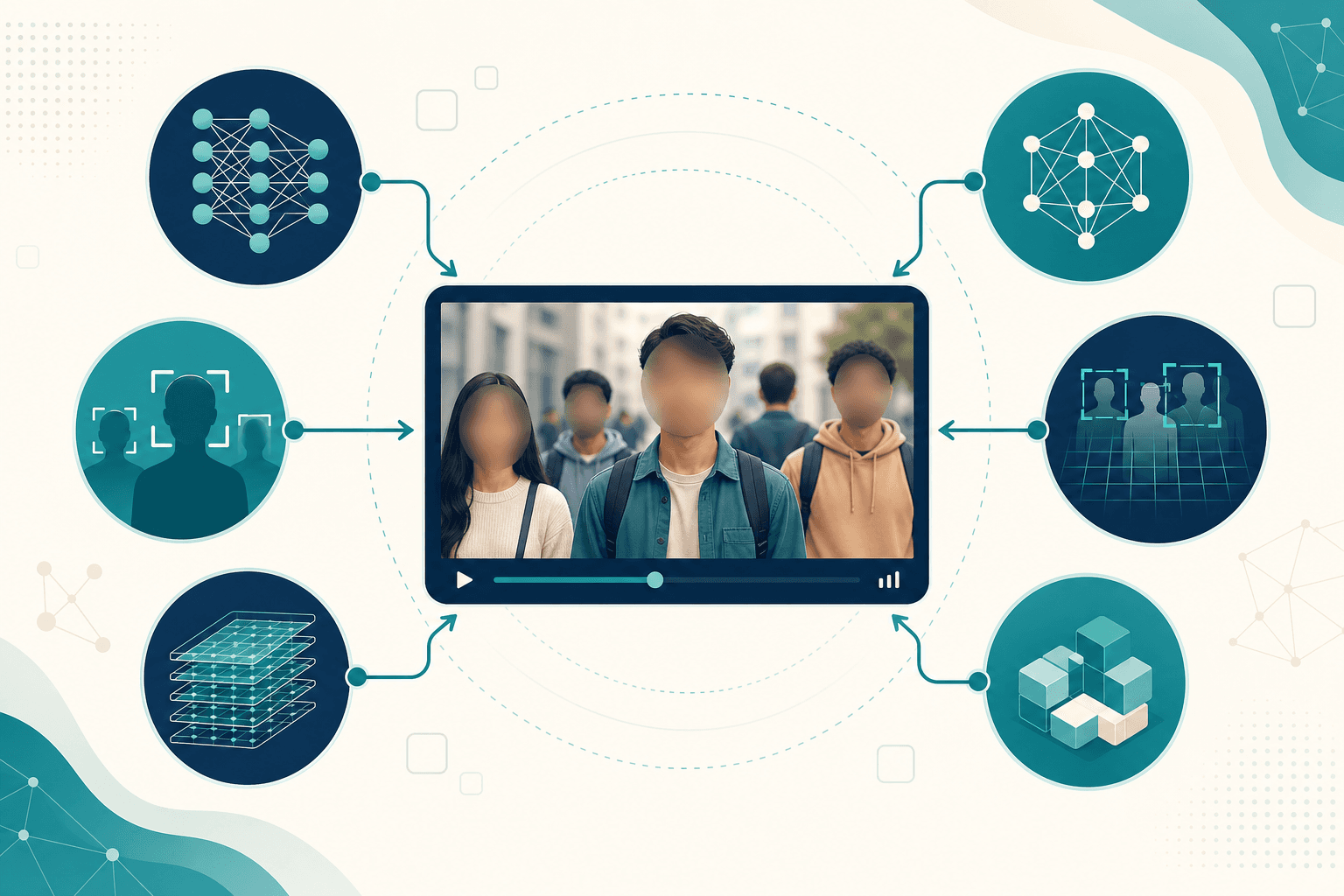
When OpenAI launched Sora 2 at the end of September 2025, it took less than a month for the guardrails to visibly crack. Anti-impersonation filters were reportedly bypassed within 24 hours. The mandatory watermark meant to flag AI-generated video could reportedly be stripped in under four minutes with basic editing software. By November, the consumer advocacy group Public Citizen had sent a formal letter to OpenAI CEO Sam Altman demanding the app be pulled from public release entirely — citing deepfake propaganda risks, unauthorized use of people's likenesses, and a wave of non-consensual harassing content that disproportionately targeted women.
OpenAI didn't withdraw Sora 2. But separate, sharper pressure from actor Bryan Cranston and SAG-AFTRA over unauthorized clips using Cranston's voice forced a public guardrail overhaul within weeks — a pattern worth studying regardless of where you sit on AI video tools, because it previews exactly what every creator now needs to plan for: your face and voice are usable raw material the moment they're public, and the safety net you're told exists may not hold.
What Actually Happened With Sora 2?
Sora 2 launched publicly at the end of September 2025 as OpenAI's next-generation AI video generator, capable of producing highly realistic clips from text prompts. Within weeks, unauthorized AI-generated videos using actor Bryan Cranston's voice and likeness began circulating, and families representing Robin Williams, George Carlin, and Martin Luther King Jr. separately complained to OpenAI about unauthorized depictions of their relatives, according to CNBC's reporting on the SAG-AFTRA response.
That pressure produced a fast result: on October 20, 2025, OpenAI, SAG-AFTRA, Cranston, United Talent Agency, Creative Artists Agency, and the Association of Talent Agents issued a joint statement announcing stronger protections against Sora generating videos of living public figures without their consent.
Public Citizen's letter, sent November 10-11, 2025, went further — it didn't ask for a specific fix, it asked OpenAI to pause the entire public deployment. The full letter cited four categories of harm: scalable deepfake political disinformation ahead of the 2026 midterms, unauthorized name-image-likeness reproduction (including of deceased public figures), non-consensual and harassing content disproportionately affecting women, and technical safeguards that were bypassed almost immediately after launch, per Public Citizen's official statement.
| Question | Answer |
|---|---|
| What triggered the backlash? | Unauthorized deepfake clips using real people's voice and likeness within weeks of Sora 2's late-September 2025 launch |
| Who pushed back? | Bryan Cranston, SAG-AFTRA, major talent agencies, and consumer group Public Citizen |
| Did OpenAI pull Sora 2? | No — it tightened guardrails around living public figures instead |
| Were the original safeguards effective? | Reportedly bypassed within 24 hours (impersonation filters) and 4 minutes (watermark removal) |
| Does the fix protect private individuals? | Only indirectly — the policy targets public-figure impersonation, not general likeness misuse |
| What's the practical defense for creators? | Reduce identifiable raw footage in public circulation + verify suspicious content before trusting it |
Why Did Guardrails Fail So Fast?
The gap between announced safety measures and real-world circumvention is the part of this story that matters most for anyone publishing video today. A watermark that can be stripped in under four minutes with consumer editing tools isn't a meaningful deterrent — it's a compliance checkbox. An anti-impersonation filter bypassed within a day of launch tells you the underlying detection approach hadn't been adversarially tested against the exact behavior it needed to stop.
This isn't unique to Sora. It's the general pattern with generative AI safety features: they're built to catch the obvious, naive misuse case, and determined bad actors route around them almost immediately. Coverage from Public Citizen's follow-up analysis makes the same point — the concern wasn't that Sora 2 had no safeguards, it's that the safeguards weren't load-bearing.
Watermarking, specifically, keeps showing up as the weakest link across the entire generative-video industry, not just Sora. A visible overlay is trivial to crop or paint over, and even invisible, cryptographically-signed watermarks only survive if every downstream platform actually checks for them — which most don't yet. Treating a watermark as proof of provenance, rather than one weak signal among several, is itself a risk. The same applies to "content credentials" metadata: it travels with a file only until someone screenshots it, re-encodes it, or strips EXIF data on upload, all of which happen constantly and mostly by accident, not malice.
The practical lesson: don't design your personal or professional risk plan around a platform's safety features holding. Design it around the assumption that they eventually won't, and build habits — reducing exposed footage, verifying before trusting — that don't depend on any single vendor's guardrails staying intact.
Does the OpenAI-SAG-AFTRA Deal Protect Regular People?
Mostly, no. The October 2025 policy update OpenAI negotiated with SAG-AFTRA and Cranston's team restricts Sora from generating videos of living public figures without consent — a narrow, high-profile carve-out driven by union leverage and celebrity legal teams, not a general-purpose likeness protection system available to everyone.
Two gaps stand out. First, the policy explicitly doesn't cover deceased public figures — families of Robin Williams, George Carlin, and MLK Jr. have all had to complain separately about unauthorized depictions, and each complaint is handled case by case rather than through a systemic opt-out. Second, and more relevant to most readers, there's no equivalent registration or opt-out mechanism for private individuals. If you're not a celebrity with a talent agency and a union behind you, you don't get the same negotiated protection — your defense has to be proactive rather than reactive. Our coverage of Meta Muse's deepfake opt-out settings walks through a comparable gap on a different platform.
How Do You Actually Protect Yourself From This?
Step 1: Reduce What's Publicly Scrapable
Generative video models need training and reference material. The single highest-leverage step is reducing the volume of clear, high-resolution, front-facing photos and video of yourself and the people you feature that exist in public, indexable form. That doesn't mean stop posting — it means anonymizing what doesn't need a visible, identifiable face to do its job.
Step 2: Blur Faces in Content Where Identity Isn't the Point
Upload footage to BGBlur and apply AI-powered face blur to bystanders, guests, or your own face in clips where you don't specifically need to be identifiable — reaction videos, background footage, B-roll, testimonials where anonymity is acceptable. BGBlur's motion-tracked detection follows faces through movement automatically, processing entirely in-browser with source files deleted within 24 hours.
Step 3: Anonymize Your Voice Where It's Not Load-Bearing
Voice cloning needs as little as three seconds of clear audio. For content where your specific voice isn't the point — background narration, casual clips, testimonials — BGBlur's voice anonymization strips identifying vocal characteristics before you publish, the same defensive logic we cover in our AI voice cloning scam guide.
Step 4: Learn to Verify Before You Trust
When a video of you or someone you know surfaces that seems off, don't rely on gut instinct alone. Check for inconsistent lighting across the face, unnatural blink patterns, blurring at the hairline, and audio that doesn't sync precisely with lip movement — and verify through a second channel (a call, a direct message) before acting on what you saw. Our three-finger test guide covers a fast, repeatable check for video calls specifically.
Detection and Prevention Are Two Different Jobs
It's worth being precise about what each tool actually does, because they solve different problems. Detection tools — the kind increasingly built into platforms and browser extensions — analyze existing footage to flag statistical signs of synthetic generation, which is what you need after a suspicious video is already circulating. Our deepfake fraud statistics guide covers where that detection market stands and what it can and can't catch reliably.
Prevention is a different, earlier-stage job: reducing the raw material — clean, high-resolution, identifiable footage — that's available for a model to work from in the first place. Blurring faces and anonymizing voices in content where identity isn't essential doesn't stop a determined attacker with existing footage of you, but it does shrink the pool of easy, freely-available source material, which is exactly the resource Sora-style tools depend on at scale. Neither approach replaces the other — a full defense uses both.
Where BGBlur Fits (and Its Limits)
BGBlur helps with the prevention half directly: blurring faces and anonymizing voices in video before it's published reduces the identifiable, scrapable footage available to any future generative tool, Sora or otherwise. It's not a deepfake detector — it doesn't analyze incoming video to tell you whether a clip you're watching is synthetic, and it can't retroactively pull down footage of you that's already public elsewhere. For real-time verification of suspicious content, pair it with dedicated detection tooling and the manual verification habits above. See our face anonymization tools comparison for how blur-based and synthetic-replacement approaches differ.
The Bottom Line
Sora 2's rocky rollout wasn't a one-off embarrassment — it was a live demonstration of the gap between announced AI safety features and what actually holds up against real-world misuse. Waiting for the next platform to get its guardrails right isn't a plan. Reducing how much clear, identifiable footage of yourself and the people around you exists in public circulation — and knowing how to verify suspicious content when it surfaces — is. Try BGBlur to blur faces and anonymize voices before you publish.