What Are Flock Cameras? Benefits, Risks & Privacy Concerns [2026]
Flock cameras are the AI-powered license plate readers now installed in thousands of U.S. towns — and also the target of a growing wave of vandalism. Here's what they actually do, who profits from them, and how the privacy backlash got here.
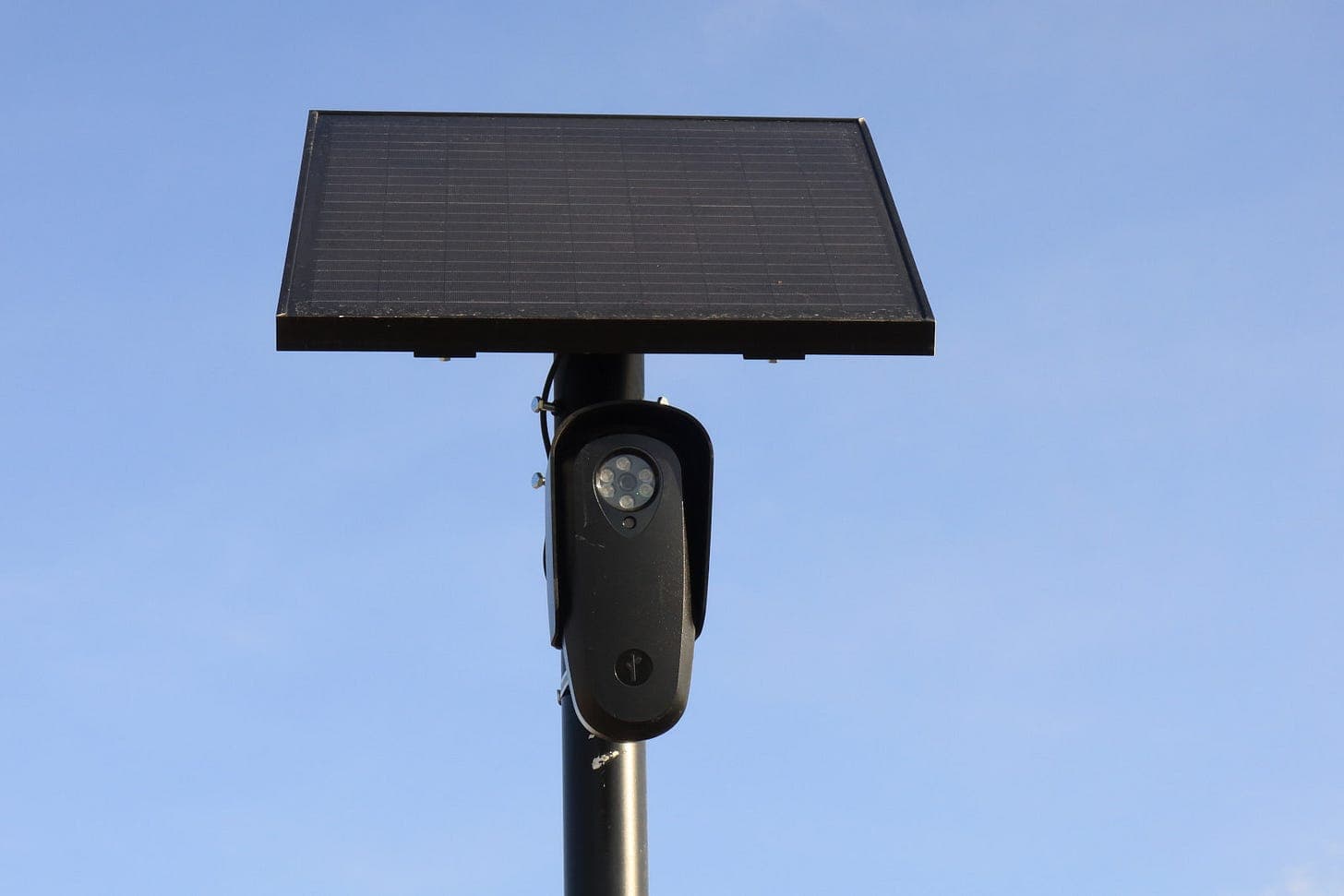
If you've driven past a tall, solar-powered camera pole in the last year — mounted at an intersection, a neighborhood entrance, or a strip mall exit — there's a good chance it was a Flock camera. Flock Safety's automated license plate readers (ALPRs) have quietly become one of the largest private surveillance networks in the country, used by more than 5,000 law enforcement agencies and thousands of homeowners' associations and businesses. Supporters credit the cameras with solving crimes in minutes instead of weeks. Critics say they've built a nationwide vehicle-tracking system with almost no oversight, and in 2026 that tension boiled over: cameras are being smashed, covered, and pulled out of the ground in cities across the country. This guide breaks down what Flock cameras actually do, who owns and profits from them, the real benefits agencies point to, and the privacy risks driving the backlash — plus practical ways to protect your own footage and images if you're a creator, journalist, or business publishing video that might capture license plates, faces, or other identifying details.
What Are Flock Cameras and How Do They Work?
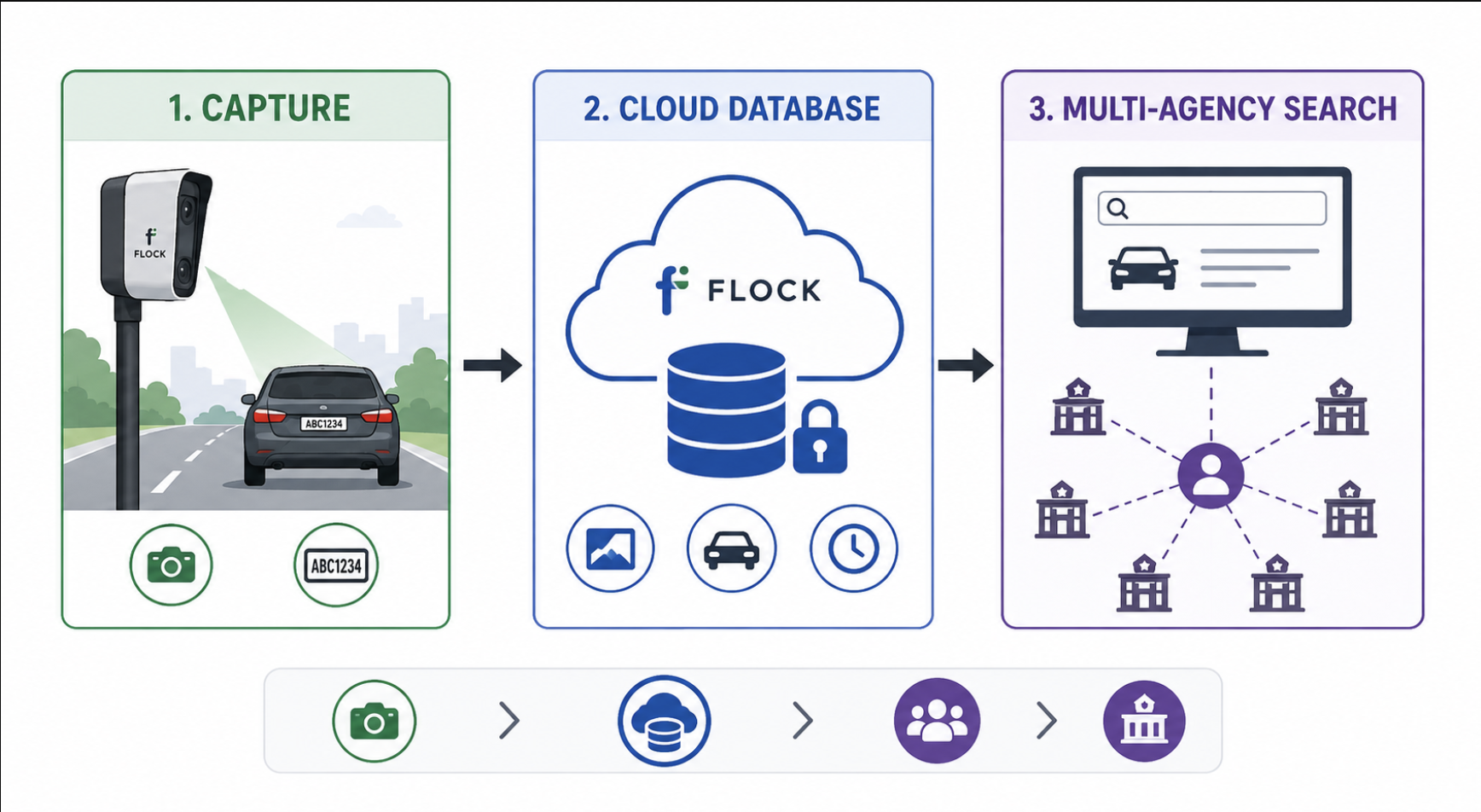
A Flock camera is a solar- or battery-powered ALPR unit that photographs every vehicle that passes it, day or night, regardless of whether that vehicle is connected to any investigation. An onboard AI model reads the plate number and logs it alongside the vehicle's make, model, color, and body type — what Flock calls its "Vehicle Fingerprint" data — plus a timestamp and GPS location. That record is uploaded to Flock's cloud network, where it can be searched by any agency with access, not just the one that installed the camera.
Vehicle Fingerprint and cross-agency search
Unlike older license plate readers that only matched plates against a "hot list" of stolen or wanted vehicles, Flock's system lets investigators search by vehicle characteristics even when no plate is visible — useful, the company says, when a suspect vehicle has covered or damaged plates. Flock's "National Lookup" feature can also extend a single search across every participating agency's camera network nationwide, not just the requesting department's own jurisdiction, which is part of what has made the system so controversial (more on that below).
Most fixed Flock cameras run about $2,500 per camera per year plus a one-time installation fee, according to public records from client police departments, with pricing that bundles installation, maintenance, cellular connectivity, and software updates into a single subscription.
Who Owns Flock Cameras — And Who Is Garrett Langley?
Flock Safety, the company behind the cameras, is privately held. It was co-founded in Atlanta in 2017 by CEO Garrett Langley alongside Matt Feury and Paige Todd, all Georgia Tech alumni, and went through the Y Combinator accelerator the same year. Langley has framed the company's mission as building the technology infrastructure to reduce crime nationally, and Flock now serves more than 6,000 communities across 49 states.
The company has raised close to $1 billion from venture investors including Andreessen Horowitz, Matrix Partners, Tiger Global, Bedrock, and Founders Fund, with its valuation climbing from $4.8 billion in 2024 to roughly $8.4 billion by April 2026. So while individual police departments and HOAs "own" the physical cameras they've purchased or leased, the underlying network, software, and data infrastructure belong to a single fast-growing private company whose investors are widely reported to be positioning it for an eventual IPO.
What Are the Real Benefits of Flock Cameras?
Law enforcement agencies that deploy Flock cameras point to several concrete advantages over older camera systems:
- Faster investigative leads. Because plate reads are searchable in real time, agencies say they can locate stolen vehicles, Amber Alert vehicles, or suspects tied to a violent crime far faster than reviewing manual footage.
- Objective evidence. Departments describe the plate data as neutral, machine-read evidence that removes some human bias from the early stages of an investigation.
- Cross-jurisdiction visibility. A vehicle involved in a crime in one city can be flagged if it later passes a camera in a neighboring county, something isolated, department-owned cameras can't do on their own.
- Deterrence. Departments that have publicized their camera networks report anecdotal drops in property crime, though independent, large-scale studies on deterrence effects remain limited.
These benefits are real reasons thousands of communities have adopted the technology — but they're also exactly what makes the network powerful enough to worry privacy advocates once it's turned toward tracking people rather than just solving individual crimes.
Why Are Some Americans Destroying Flock Cameras?
Over the past year, Flock cameras have been cut down, spray-painted, and disabled in cities from California to Minnesota to Virginia. According to NPR's reporting on the backlash, at least 100 U.S. cities have deactivated their Flock cameras or canceled their contracts outright, and the company held its 2026 annual conference amid what reporters described as intense public backlash.
Three grievances come up again and again:
- Accuracy problems. A 2024 analysis by a California police department found that Flock misread license plates in 71% of the alerts it sent to officers — a error rate that, applied at scale, means a lot of drivers get flagged incorrectly.
- Misuse by individual officers. Journalists have documented cases of police using Flock's search tools to look up plates connected to ex-partners or personal acquaintances rather than active investigations, prompting fresh scrutiny of how loosely searches are logged and reviewed.
- Scope creep beyond stolen cars. Reporting has also shown Flock's network increasingly linked to traffic-enforcement partners and speed cameras, well outside the "find the stolen vehicle" pitch the technology was originally sold on.
The backlash has produced some unusual alliances — commentary on the issue has come from voices across the political spectrum, united by discomfort with a privately built, largely unregulated vehicle-tracking network. It's worth being clear, though: destroying or disabling a Flock camera is still property destruction, and multiple people who've done it, including a West Virginia man arrested in June 2026, have faced criminal charges even as some community members publicly rallied behind them online.
Does Flock Share License Plate Data With ICE?
This is the single biggest driver of the 2026 backlash. Flock states publicly that it does not hand data directly to federal immigration authorities. But investigative reporting has found that local police departments — which do have legitimate access to Flock's cross-agency "National Lookup" search tool — have used that access to run plate searches that effectively served U.S. Immigration and Customs Enforcement's deportation efforts, circumventing state and local policies that would otherwise restrict cooperation with federal immigration enforcement.
That dynamic is why some of the highest-profile vandalism incidents have happened in cities that had already voted to keep their Flock contracts. In La Mesa, California, cameras were smashed within weeks of a city council vote to continue the program, despite a majority of meeting attendees speaking out against it. Flock has since introduced additional access guardrails in response to the criticism, but activists argue the underlying business model — a single, nationally interconnected search network — makes this kind of secondary access difficult to fully prevent.
Are Flock Cameras Legal? What Does the Fourth Amendment Say?
Legally, Flock cameras occupy a gray area that courts are still actively sorting out. The baseline rule, reaffirmed in multiple rulings, is that photographing a license plate that's in plain view from a public road generally isn't considered a Fourth Amendment "search," according to a Congressional Research Service legal brief. That's the same logic that lets red-light and speed cameras operate without a warrant.
The harder legal question is what happens once thousands of those individual reads are aggregated into a searchable, long-term database of everywhere a car has been. Civil liberties groups argue that scale changes the analysis: the Electronic Frontier Foundation has warned about "mission creep" as Flock's network expands into traffic enforcement and other uses beyond its original pitch, and EFF and the ACLU of Northern California have jointly sued over ALPR searches on both Fourth Amendment and state constitutional privacy grounds. No federal appellate court has yet ruled squarely on whether querying an ALPR database itself constitutes a search, so for now the legality of any specific deployment often comes down to state law and individual department policy rather than a single nationwide rule.
Can You Find Out Where Flock Cameras Are Near You?
Yes. DeFlock.org, an independent advocacy project, maintains a crowdsourced map of reported Flock and other ALPR camera locations across the U.S., built from user submissions. Some individual police departments also publish their own transparency portals disclosing how many cameras they operate and how often their databases are searched. Neither source is guaranteed to be complete or current, since new cameras go up constantly, but they're a reasonable starting point if you want to understand how much ALPR coverage exists in your own neighborhood before deciding how to respond to it.
How Can You Protect Your Privacy From License Plate and Video Surveillance?
Whatever side of the Flock debate you land on, the broader trend is clear: more of daily life is being captured on camera, by governments, companies, and private citizens alike. If you're a content creator, journalist, dashcam owner, or business publishing footage that might include someone else's license plate, face, or other identifying detail, that cuts both ways — the same footage that documents a Flock camera for a news story can also expose bystanders who never consented to appear in it.
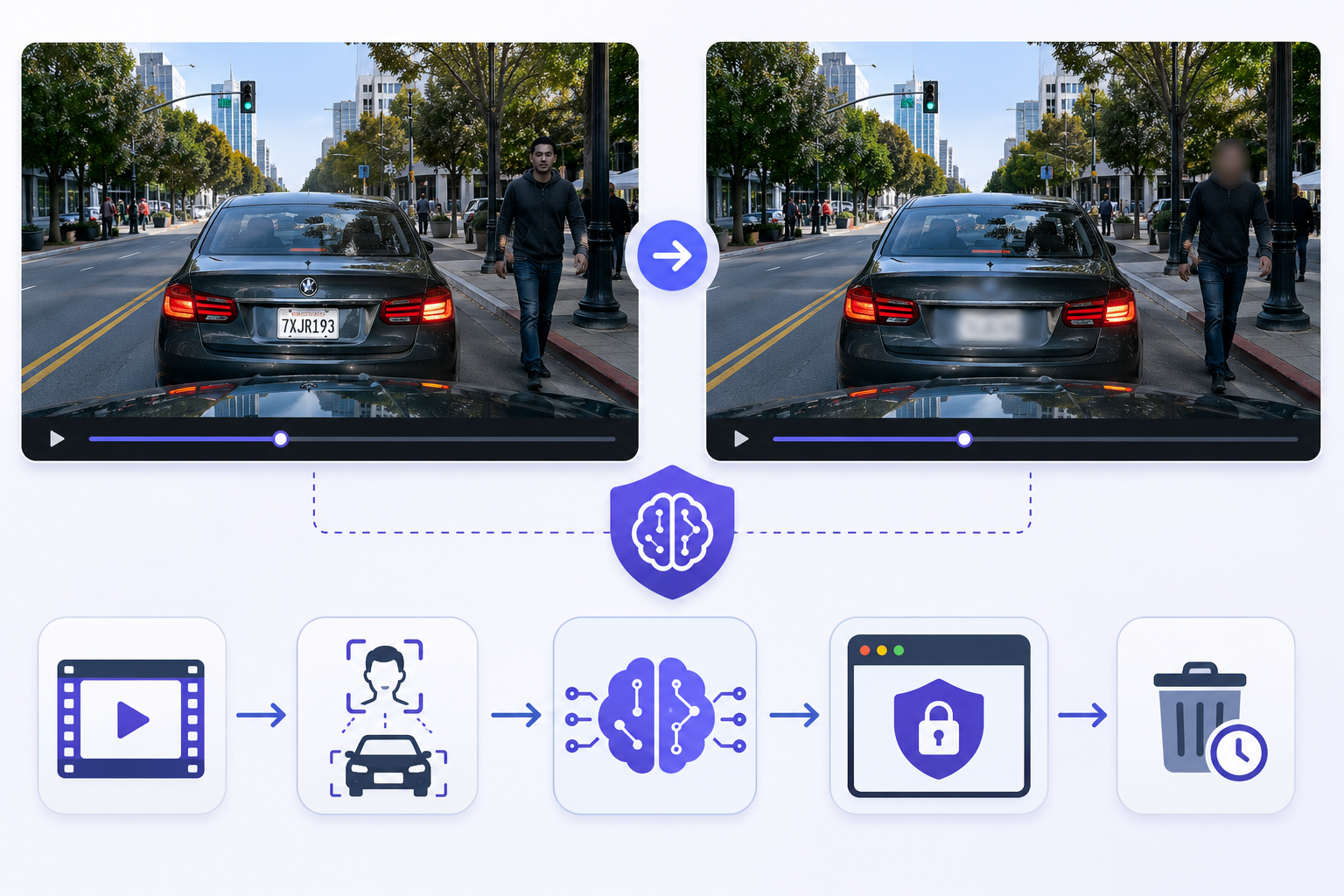
BGBlur is built for exactly that gap. It's a browser-based editor that uses motion-tracked AI to automatically blur faces in photos and video as they move through a shot, so you don't have to hand-mask every frame. It also auto-detects and blurs license plates in dashcam or security footage, which matters whether you're publishing a video about a Flock camera you spotted, sharing dashcam footage of an incident, or just don't want a car's plate readable in a video you're posting publicly. Because processing happens client-side in the browser and uploaded footage is automatically deleted within 24 hours, you're not creating a second copy of sensitive footage sitting on someone else's server indefinitely — a meaningful difference if you're documenting unauthorized filming or surveillance concerns in the first place.
For anyone covering this story specifically — bystanders filming a camera installation, activists documenting a vandalism incident, or local reporters shooting b-roll near an intersection — running the footage through an AI video blur tool before publishing is a simple way to protect the people who happen to be in frame without erasing the substance of the story.
Who Benefits and Who's Concerned
Law enforcement agencies get a searchable, cross-jurisdiction investigative tool that can surface leads on stolen vehicles or wanted suspects far faster than manually reviewing footage.
HOAs and businesses use smaller Flock deployments for perimeter monitoring and to deter break-ins or theft in parking areas.
Privacy-conscious drivers, immigrants, and activists are the groups most concerned about the network's scale, arguing that a car's travel history can reveal medical visits, religious attendance, protest participation, or immigration status by inference, even without directly identifying a face.
Journalists and content creators covering this story sit in the middle: they need to document the cameras and the backlash against them, while avoiding creating new privacy problems for bystanders in their own footage.
Pro Tips If You're Documenting Flock Cameras or Similar Surveillance
- Blur before you publish, not after. If a video shows other people's plates or faces incidentally, process it before it goes live rather than relying on a platform to take it down later.
- Check your local transparency portal first. Many departments post camera counts and search-audit summaries publicly, which is often faster and more reliable than trying to verify claims secondhand.
- Separate the policy debate from the property-crime question. Whatever you think of the surveillance concerns, damaging a camera is still a chargeable offense in nearly every jurisdiction — document and advocate, don't vandalize.
Conclusion
Flock cameras sit at the center of one of 2026's most visible privacy fights precisely because the underlying trade-off is real: the same nationwide network that helps a department recover a stolen car in minutes is also a searchable record of where millions of vehicles go every day, owned and operated by a single private company now valued in the billions. Whether that trade-off is worth it is still being argued out in city council meetings, courtrooms, and — increasingly — on the street, where cameras themselves have become the flashpoint. Understanding how the system actually works, who profits from it, and where the legal lines currently sit is a better foundation for that debate than headlines alone. And if your own work means publishing footage that could capture someone else's plate or face along the way, tools like BGBlur make it straightforward to protect the people around you without sitting on the sidelines of the story.
Update — August 25, 2026: For more on how AI video tools intersect with surveillance and consent concerns more broadly, see our guide on AI face anonymization: blur vs. synthetic replacement.
Further reading: WAPT's explainer on what Flock cameras are and The Hindu's report on why some Americans are destroying them both cover the same story from different angles and are worth a read for additional context.
Update — August 29, 2026: The cancellation wave kept accelerating — four separate city councils voted on their Flock contracts in the last week of August alone. See our full roundup of why Flock cameras are getting ripped out nationwide.