Ring Familiar Faces Lawsuit: Doorbell Face Scans [2026]
Ring's Familiar Faces feature identifies visitors by faceprint, and a June 2026 class action says it collects biometric data from people who never agreed. This guide explains how the feature works, which states block it, what EFF and the lawsuit argue, and how to blur neighbors and visitors before you share doorbell footage.
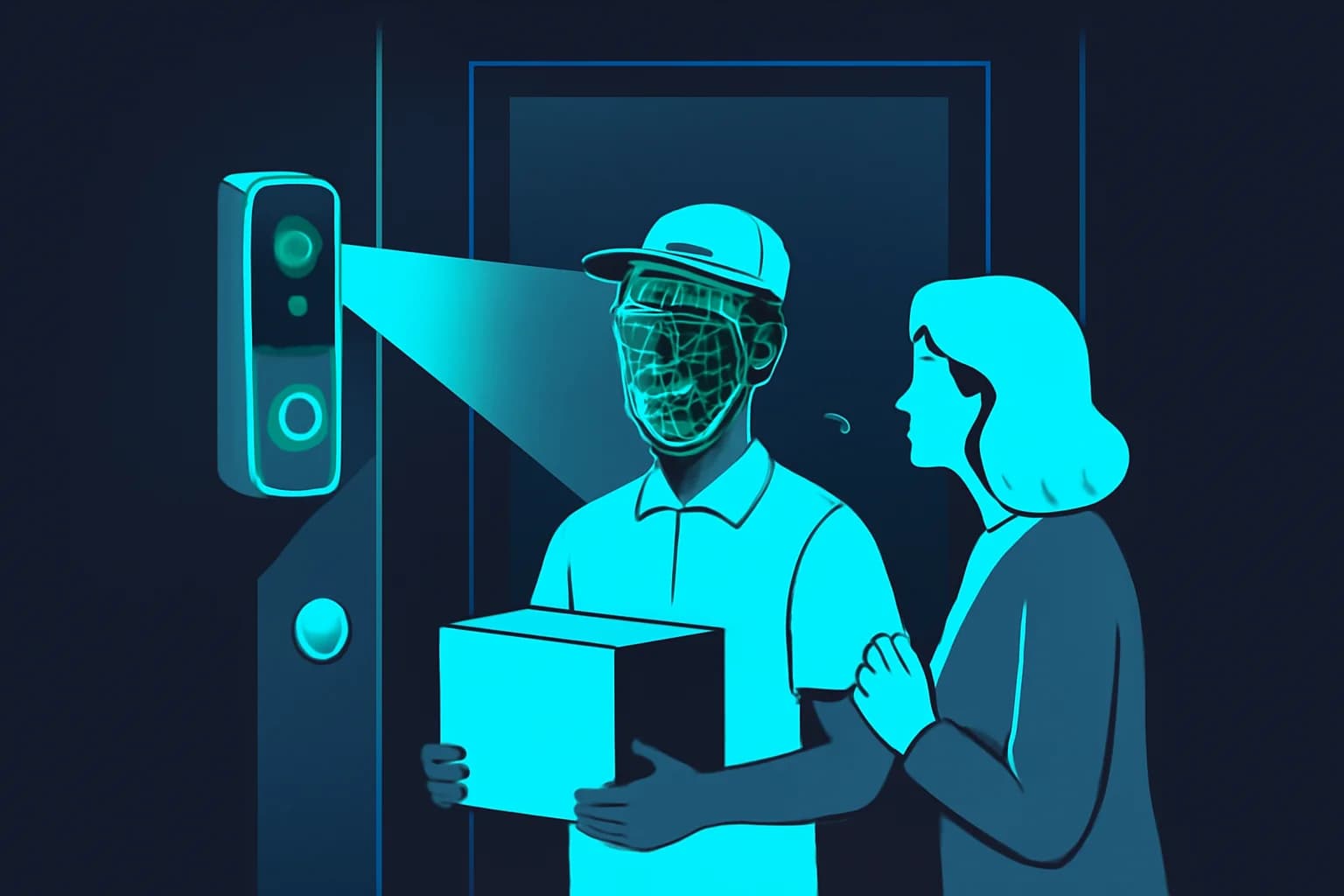
Your doorbell used to tell you "Person detected." Now it can tell you who. Ring's Familiar Faces feature turns every visitor's face into a mathematical template and matches it against the people you have saved, and a proposed class action filed in June 2026 argues that this scans people who never agreed to it. If you own a Ring camera, visit someone who does, or deliver packages for a living, this affects you.
This guide explains how the Ring Familiar Faces feature works, what the lawsuit and the Electronic Frontier Foundation argue, which places have blocked it, and what you can do as a camera owner, a visitor or a creator who shares doorbell clips. If you post any of that footage, BGBlur's face blur covers the faces you don't have permission to show.
TL;DR: Ring Familiar Faces and the Lawsuit
| Question | Answer |
|---|---|
| What is Familiar Faces? | Opt-in Ring feature that recognizes visitors by facial features and names them in alerts |
| Is it on by default? | No. Ring says it is disabled by default and set per device |
| How many faces can I save? | Up to 50 profiles |
| Where is face data stored? | Encrypted, in the cloud, not on the doorbell |
| Where is it unavailable? | Illinois, Texas, Portland (Oregon) and Quebec |
| What does the lawsuit claim? | Collection of biometric data from non-consenting people (allegations, unproven) |
| Who filed it? | Charles Sigwalt, a Virginia resident, in the Western District of Washington |
| What should I do if I share doorbell clips? | Blur faces and plates before posting |
How Does Ring Familiar Faces Work?
Familiar Faces lets a Ring owner label the people who regularly appear at their door. According to Ring's support page, "your camera learns to recognize friends, family, and frequent visitors over time," and alerts then name the person instead of saying "Person." The feature is disabled by default, can be turned on or off per device, and caps out at 50 profiles.
The facial images are converted into mathematical templates, often called faceprints. Ring says profiles and facial recognition information are encrypted and stored in the cloud, not on your Ring devices. Unnamed profiles are removed after 30 days without recognition, and after a subscription is cancelled, all profiles and facial recognition information are deleted after 180 days of no recognition.
The catch is how matching works. To decide whether the person at your door is someone you saved, the system has to look at everyone who steps in front of the lens.
What Does the Ring Familiar Faces Lawsuit Say?
The complaint was reported by The Register on June 3, 2026. A Virginia resident, Charles Sigwalt, sued Amazon and Ring in the U.S. District Court for the Western District of Washington on behalf of a proposed class.
The claims, as reported:
- Violations of Virginia consumer protection law
- Violations of Virginia computer crimes statutes
- Violations of Virginia privacy law
- Conflict with FTC standards on the "surreptitious and unexpected collection or use of biometric information"
Sigwalt asks the court to stop the use of facial recognition, award damages, and order Amazon and Ring to hand over profits from the practice. Amazon had not responded at the time of reporting. Earlier, in October 2025, a Ring spokesperson said the company "does not use the data collected for the feature to train any AI models or algorithms." These are allegations. No court has found that Ring violated any law.
Why Do Privacy Groups Say Bystanders Never Consented?
The Electronic Frontier Foundation laid out the objection in its legal analysis of Ring's face recognition feature. The system, EFF says, necessarily scans the faces of all people approaching the camera, including non-users like friends, postal workers, delivery drivers and passers-by. In EFF's words, "It is impossible for Amazon to obtain consent from everyone—especially people who do not own Ring cameras."
EFF also points to a patchwork of state biometric laws that could apply:
- Illinois and Texas require affirmative consent before face recognition
- Washington passed a biometric privacy law in 2017 and strengthened it in 2023
- Colorado requires opt-in consent for biometric data collection
- Maryland prohibits companies from collecting biometrics from bystanders
- At least 16 states have comprehensive privacy laws covering sensitive biometric data
EFF adds that earlier facial-scanning cases were expensive for the companies involved, citing a $1.375 billion Google settlement with Texas, a $650 million Facebook settlement, and a $1.4 billion Meta payment to Texas. Those cases involved different products and facts, so treat them as context for the risk, not predictions for Ring.
Where Is Ring Familiar Faces Blocked?
Ring's support page says Familiar Faces is not available to U.S. customers in Illinois, Texas and Portland, Oregon, or to Canadian customers in Quebec. The page lists availability in the United States and Canada. Illinois and Texas both require consent before collecting biometric identifiers, and Portland restricts facial recognition in places of public accommodation, which is a plausible reason for the carve-outs. EFF reads the exclusions as a sign that Amazon sees legal vulnerability in those places.
If you live in the rest of the U.S., the absence of a ban does not mean the practice is settled. The same EFF analysis notes several states with consent or opt-in rules, and lawsuits like the Virginia case test theories that don't depend on a dedicated biometric statute.
Should I Turn Familiar Faces On?
That is your call, but weigh who bears the risk. You get convenience; your visitors get scanned. Consider:
- Who comes to your door? Kids, tenants, delivery drivers, canvassers and neighbors all pass the camera.
- Do you operate a business or rental? Employees and customers raise consent obligations that a private home doesn't.
- What does your local law say? Ring's own page tells owners to notify people they save and notes that some laws require explicit consent from visitors.
- Do you need it? A standard motion alert covers most security needs without creating a faceprint library.
If you already turned it on, Ring says you can disable it per device at any time. Delete saved profiles too if you want the library gone.
How Do I Protect Visitors When I Share Doorbell Footage?
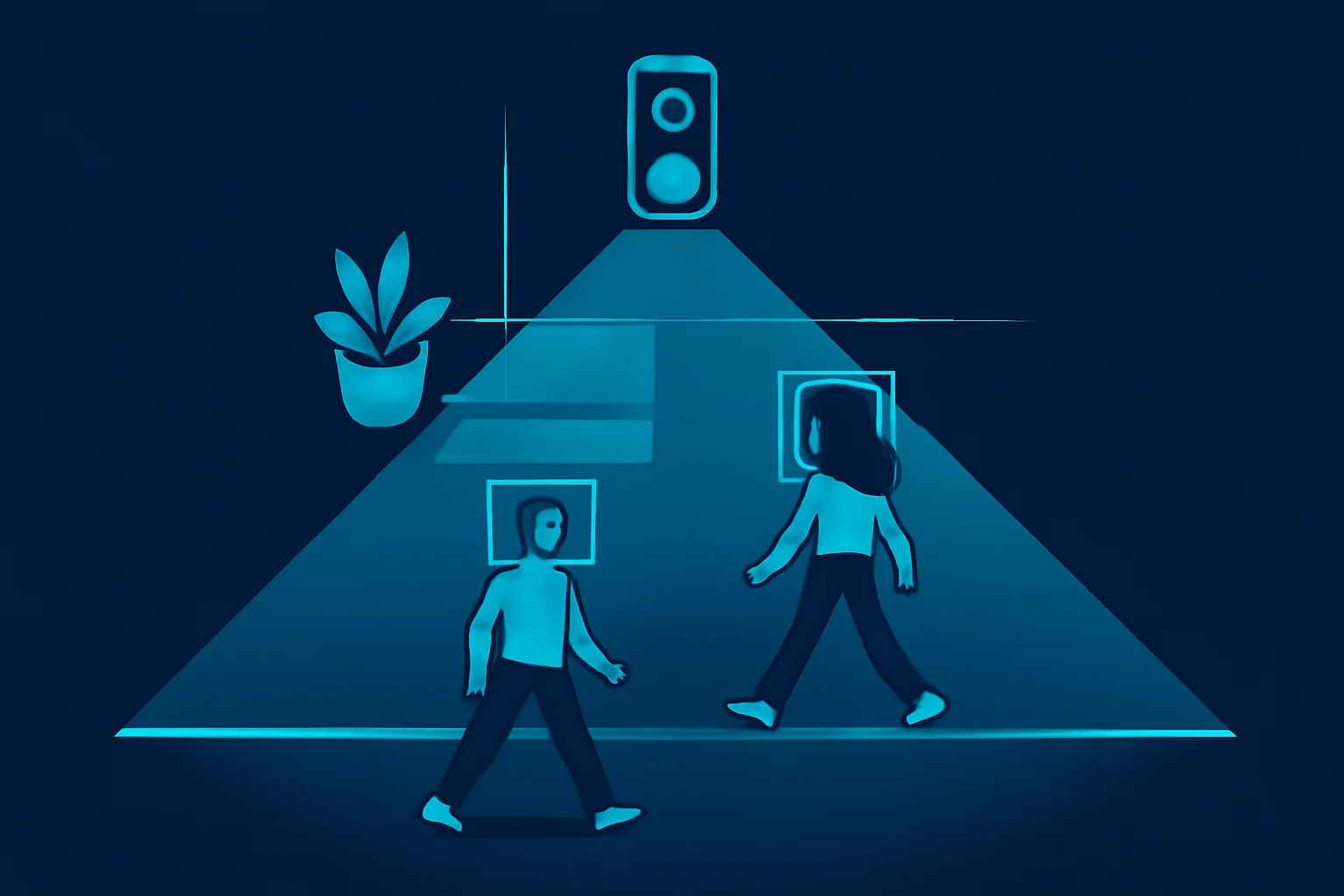
The face-scanning debate is about what a company does with footage. There is a second privacy risk that is entirely in your hands: what you do when you post a clip. Doorbell videos that go viral, get sent to a neighborhood group, or are shared with police often show neighbors' faces, children, and license plates. Once online, faces can be pulled into face-search tools and scraped. See our guides on doorbell camera GDPR and bystander footage and whether someone can record and post your face.
Step 1: Download your clip
Save the video from the Ring app to your phone or computer.
Step 2: Upload it to BGBlur
Open bgblur.com and drop in the file (MP4, MOV or M4V, up to 4K). Processing runs in your browser.
Step 3: Let the AI detect faces
BGBlur finds every face automatically and its motion tracking keeps moving people covered through the whole clip.
Step 4: Preview and export
Check the result and export. Processed files are deleted within 24 hours. For sensitive footage you would rather not upload at all, the BGBlur desktop app blurs faces on your own computer.
For a full walkthrough, see how to blur faces in video with AI.
How Did Familiar Faces Get Here?
The feature moved quickly from announcement to litigation. Based on the sources cited above:
- October 2025: A Ring spokesperson says the company doesn't use data from the feature to train AI models.
- November 2025: EFF publishes its legal analysis of the feature and the state laws it may implicate.
- December 2025: Familiar Faces launches in the United States, per The Register.
- June 2026: Charles Sigwalt files the proposed class action in the Western District of Washington.
Ring's own support page lists availability in the United States and Canada, excluding Illinois, Texas, Portland and Quebec. Feature availability can change, so check the current page rather than relying on any article, including this one.
What If I'm a Visitor, Neighbor or Delivery Worker?
You can't opt out of a stranger's doorbell, which is the crux of the criticism. There are still practical things to know.
- Ask. Ring's own page tells owners to notify people they save as Familiar Faces, so a host who uses the feature should be able to tell you.
- Know your state. In Illinois, Texas, Portland and Quebec the feature isn't offered by Ring; elsewhere, state biometric or privacy laws may give you rights, and EFF lists several.
- Don't assume an alert means a match. A named alert means the system thinks it recognized you; recognition systems can be wrong.
- Be careful what you post from someone else's camera. If a host shares a clip of you, you can ask them to blur your face or take it down.
For camera owners, a simpler alternative is to keep standard motion alerts on and leave face recognition off. You still get a notification when someone approaches, without building a library of faceprints of the people who visit you.
What About Other Cameras That Identify People?
Ring is one node in a growing web. Smart glasses can film strangers, as covered in Meta smart glasses facial recognition and the ACLU backlash, and license plate networks track vehicles, as in our Flock Safety guide. The pattern is the same: the person operating the camera opts in, and everyone else is scanned by default.
Honest Limitations
Blurring your published footage does not stop a neighbor's Ring from scanning your face when you walk past it, and it can't undo a faceprint that already exists in someone's cloud account. It only controls what you publish. The lawsuit is at an early stage and its claims are unproven, and Ring's feature details can change, so check Ring's support page for current terms. This article is general information, not legal advice.
The Bottom Line
Ring's Familiar Faces is optional for owners but not for the people walking up to their door, and that consent gap is what EFF and the Virginia class action target. Ring has already blocked it in Illinois, Texas, Portland and Quebec. Whatever you decide about the feature, the one privacy step you fully control is your own footage: blur faces and plates before you post. Try BGBlur's face blur on your next doorbell clip.