Posting My Face on Social Media Without Consent 2026
If someone recorded and posted your face without permission, your options depend on jurisdiction, context, and use. This guide breaks down US, UK, and EU law on unauthorized filming and explains how to request removal or protect your own content.
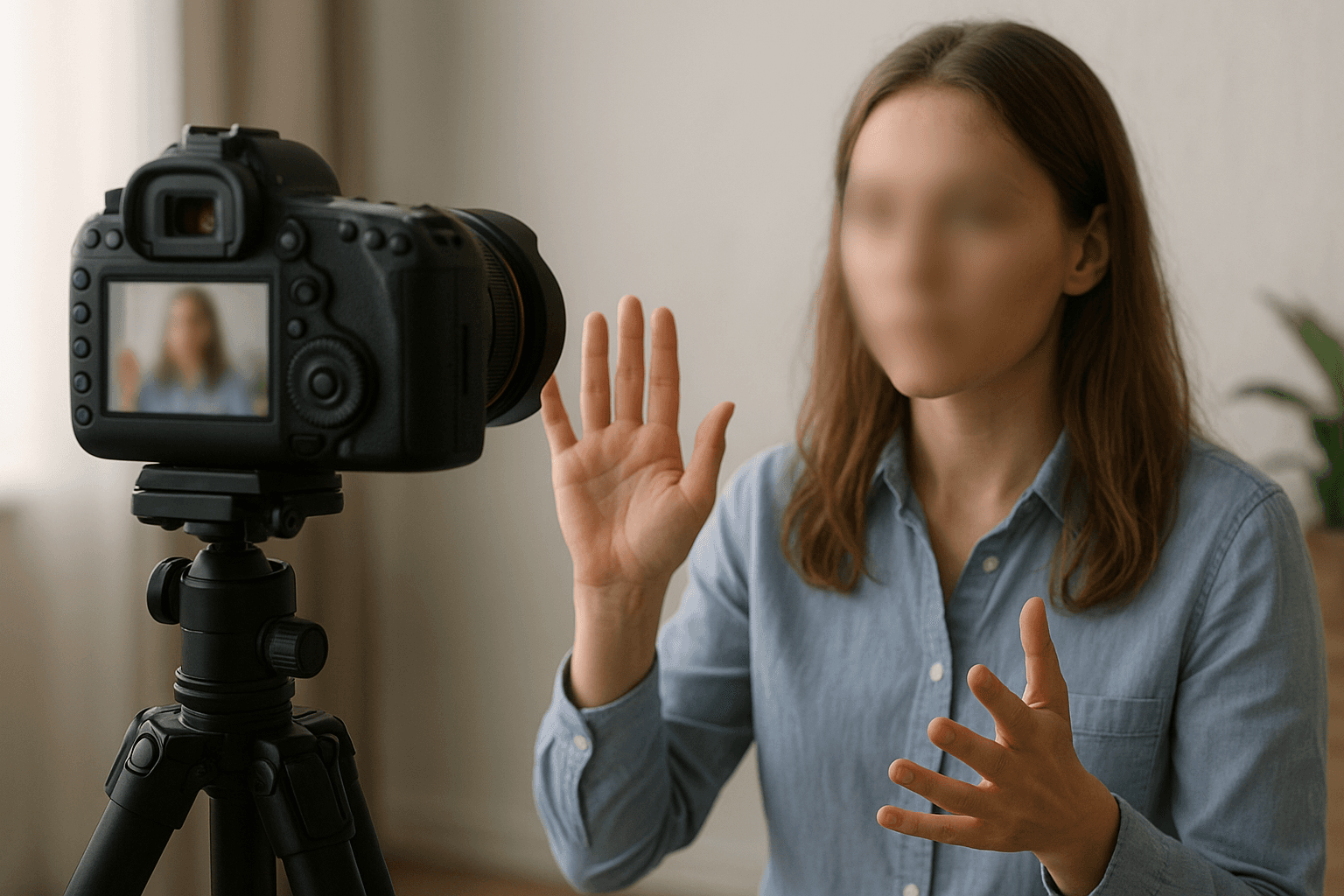
Someone filmed you at a protest, a party, a store, or just walking down the street. Now that video is on TikTok with 200,000 views. Or a creator used your likeness in content without asking. Or a news clip from your workplace went viral and your employer saw it.
Is any of this legal? What rights do you actually have? Can you force them to take it down?
The honest answer: it depends — on where you live, where the filming happened, and how the content is being used. But "it depends" doesn't mean you're powerless. This guide gives you a clear picture of your rights, what the law says across major jurisdictions, and exactly what you can do about it.
Your Face Is Personal Data — Here's Why That Matters
In privacy law, a face is not just an image. It is biometric data — information that can uniquely identify you as an individual. Courts and regulators around the world increasingly treat facial images and videos the same way they treat fingerprints: as sensitive personal information that carries strong legal protections.
The implications are significant. If your face appears in content that a third party posts, processes, or distributes without your consent, many jurisdictions now consider that a data protection violation — not just a social norm violation.
This is why the question "can someone post my face online without my consent" doesn't have a simple answer. The legal landscape is multi-layered and evolving fast.
The Core Legal Concepts You Need to Know
Before diving into country-specific rules, three foundational concepts govern this entire area of law:
1. Right of Publicity
The right of publicity (sometimes called personality rights) gives you control over the commercial use of your name, image, likeness, and voice. It's strongest in the US, where many states have codified it into law, but variations exist across jurisdictions.
The key word is commercial. If someone uses your face to sell a product, promote a service, or generate revenue without your permission, you have a much stronger legal claim than if they simply documented a public event.
2. Expectation of Privacy
This concept determines whether you had a reasonable expectation that you wouldn't be recorded in a given situation. Courts apply it differently by location:
- Private spaces (your home, a private party, a medical facility): strong expectation of privacy, filming without consent is almost always illegal
- Semi-public spaces (restaurants, bars, workplaces): context-dependent — filming that reveals you in an embarrassing or harmful way may still violate privacy rights
- Public spaces (streets, parks, public events): lower expectation of privacy for incidental capture, but commercial use still requires careful legal analysis
3. Consent — And What It Actually Covers
Consent in video and photography law is not just a yes/no question. It covers:
- What was consented to (a specific photo vs. all future commercial use)
- Where it can be used (a private message vs. public posting with millions of views)
- When (consent given once doesn't apply forever — you can withdraw it)
- Who gave it (you personally, not someone else on your behalf)
Being in a public space does not mean you've consented to your face being used in commercial content, broadcast journalism, or viral social media posts.
What the Law Says: Country by Country
United States — State Laws Create a Patchwork
The US has no single federal privacy law covering the right to control your image on social media. This creates a complex state-by-state landscape:
California has the strongest protections. The California Celebrities Rights Act and related personality rights law give individuals (not just celebrities) control over the commercial use of their likeness. The CCPA adds a layer for personal data, including facial images used commercially. California also has a robust anti-paparazzi law that extends to intrusive filming of private individuals.
Illinois — home of the Biometric Information Privacy Act (BIPA) — is the strictest state in the country for facial recognition and biometric data. BIPA requires affirmative written consent before any company or individual collects, stores, or uses biometric identifiers, including a scan of your face geometry. Violations carry statutory damages of $1,000–$5,000 per incident. Illinois courts have issued some of the largest biometric privacy settlements in US history (Google and Facebook both paid hundreds of millions in Illinois BIPA cases).
New York — Civil Rights Law Sections 50 and 51 prohibit using someone's name, portrait, picture, or voice for advertising or trade purposes without consent. The law applies to any commercial use, and violators face injunctions and damages.
Texas — The Capture or Use of Biometric Identifier Act (CUBI) requires informed consent before capturing biometric identifiers from an individual's face, with civil remedies available.
Most other states — Generally allow filming in public spaces without consent, but laws against harassment, intentional infliction of emotional distress, and defamation can all apply when filming is used to harm someone.
The federal angle: While there's no federal image-privacy law, federal laws like the Computer Fraud and Abuse Act and Section 230 intersect with social media cases. The FTC has also taken action against companies that misuse facial images in advertising without consent.
United Kingdom — Strong Data Protection Rights
The UK's data protection framework — built on the UK GDPR and Data Protection Act 2018 — is explicit: a photographic or video image of an identified or identifiable individual is personal data.
This means:
- Posting your face online without a valid lawful basis (consent, legitimate interest, legal obligation, etc.) is a data protection violation
- You have the right to request removal (right to erasure / "right to be forgotten")
- The Information Commissioner's Office (ICO) can investigate complaints and order compliance
- Courts have awarded damages for privacy violations involving unauthorized posting of someone's image
The UK also recognizes the tort of misuse of private information, developed through case law. Even in cases where an image was taken in a public place, UK courts have found liability where posting the image caused significant harm and the subject had a reasonable expectation that it would remain private.
Key UK cases to know: The UK Supreme Court and Court of Appeal have repeatedly upheld image privacy rights, including for individuals who appeared briefly in public-facing video content.
European Union — GDPR Is Comprehensive
The EU's GDPR is the strictest and most comprehensive regime for protecting your face online. Key protections:
Facial images as personal data: GDPR explicitly classifies images of identified or identifiable individuals as personal data. Processing them (which includes posting online) requires a lawful basis.
Biometric data special protection: When facial images are processed specifically to uniquely identify a person — which social media platforms often do automatically through facial recognition features — they qualify as special category biometric data, which receives the highest level of protection and requires explicit consent or another narrow lawful basis.
Right to erasure: You can demand that content containing your face be removed. The controller (the person who posted it, or the platform) must comply unless they can demonstrate a legitimate overriding interest.
Cross-border application: GDPR applies to any content accessible to EU residents, regardless of where the poster is located. A US-based content creator with EU viewers can face GDPR complaints from those viewers.
Data Protection Authorities (DPAs) across EU member states actively investigate complaints about unauthorized image use. France's CNIL, Germany's BfDI, and Ireland's DPC have all handled cases involving unauthorized social media posting of individuals' faces.
India — Emerging Privacy Framework
India's Digital Personal Data Protection (DPDP) Act 2023 is bringing formal data protection rights to over 1.4 billion people. Under the DPDP Act:
- Personal data, including images that identify individuals, requires consent for processing
- Individuals have rights to correction and erasure
- Data fiduciaries (including social media platforms) must implement privacy by design
Read more about your recording rights in India in our dedicated guide on recorded without consent in India — rights, laws, and what to do.
Other Notable Jurisdictions
Canada (PIPEDA): Requires consent for collection and use of personal information, including images, for commercial purposes. Provincial laws in Quebec, Alberta, and BC add additional layers.
Australia: The Privacy Act 1988 covers images that can identify individuals. The Australian Privacy Principles require consent for collection and use in most commercial contexts.
Germany: Has some of the world's strongest personality rights (Persönlichkeitsrecht), built through decades of case law. Publishing someone's image without consent can result in injunctions and significant damages even outside GDPR.
Public Spaces vs. Private Spaces: The Key Distinction
This is the question most people ask first: "They filmed me in public — can they really do that?"
The short answer: filming in public is generally legal, but using that footage commercially or harmfully often is not.
Here's the breakdown:
| Situation | Filming Legal? | Posting Legal? | Commercial Use Legal? |
|---|---|---|---|
| Street in a public city | Usually yes | Often yes with limits | Requires consent in most jurisdictions |
| Public protest or event | Usually yes | Usually yes (newsworthy) | Requires consent for commercial use |
| Restaurant / bar | Usually yes | Context-dependent | Consent required |
| Your home or private property | No — trespass + privacy | No | No |
| Doctor's office / hospital | No | No | No |
| Changing room / bathroom | Criminal offense | Criminal offense | Criminal offense |
| Workplace (by coworker) | Depends on employer policy | Often no | No |
Being in public does not give someone the right to build a commercial audience, generate revenue, or harass you using footage of your face. The moment filming crosses into commercial use, the law in most developed countries requires explicit consent.
What Social Media Platforms Will (and Won't) Do
Platforms have their own policies that sit on top of the law — and they're worth understanding separately.
Facebook and Instagram (Meta): Their Terms of Service technically require users to have rights to content they post. Instagram's community guidelines specifically address posting people's private information without consent. You can report content for privacy violations. Meta's oversight board has upheld privacy-based removals in several high-profile cases.
TikTok: Has explicit rules against posting content that "depicts, promotes, normalizes, or glorifies non-consensual sexual acts or non-consensual recording." You can report videos that show your face without consent, particularly in private or embarrassing contexts. TikTok has also started prompting creators to blur identifiable individuals in sensitive content.
YouTube: Has a Privacy Complaint process specifically for videos showing your face without consent. A successful complaint results in the video being taken down or the private information being obscured. Repeated privacy violations can result in channel strikes.
Twitter/X: Has a policy against sharing private information without consent. Their enforcement is inconsistent, but escalated complaints can result in content removal.
The hard truth: Platforms are reactive, not proactive. They act on reports, not prevention. For rapid removal, you'll usually need to escalate through official channels — and sometimes beyond the platform to legal action.
How to Get Your Face Removed: Step-by-Step
If your face has been posted without your consent, here's what to do:
Step 1: Document Before Reporting
Take screenshots with timestamps and URL before you do anything else. If the content gets removed (good!) you may still need evidence of what happened for legal purposes.
Step 2: Use the Platform's Privacy Reporting Tool
Every major platform has a privacy violation reporting mechanism:
- Instagram: Three-dot menu → Report → It's a privacy violation
- TikTok: Long press on video → Report → Privacy violation
- YouTube: Three-dot menu → Report → Privacy → I appear in this video and want it removed
- Facebook: Three-dot menu → Find Support or Report → Privacy concern
Be specific: state that the video contains your face (identifiable personal data) without your consent, and that you demand its removal.
Step 3: Contact the Person Directly
Simultaneously, send the poster a direct message. Keep it factual and non-aggressive: explain that you did not consent to the recording or posting, that it constitutes a privacy violation in your jurisdiction, and that you are requesting removal within 48 hours. Many people remove content once they understand the implications.
Step 4: Escalate to Authorities
If the platform fails to act within a reasonable timeframe (usually 72 hours for clear violations):
- EU residents: File a complaint with your national Data Protection Authority (DPA). It's free, and DPAs have real enforcement power.
- UK residents: File a complaint with the Information Commissioner's Office (ICO) at ico.org.uk.
- US residents: Depending on the content and your state, you may have claims through state consumer protection authorities, or in severe cases (stalking, harassment, revenge porn), through law enforcement.
Step 5: Legal Action
If all else fails, consult a lawyer specializing in privacy or defamation law. Potential claims include:
- Invasion of privacy (public disclosure of private facts)
- Misuse of private information (UK)
- Right of publicity violation (US commercial use)
- GDPR erasure claim (EU/UK, can be pursued in court if DPA process is slow)
- Defamation (if the video made false statements about you)
- Harassment or stalking (if the posting was part of a pattern of targeting)
Protect Yourself Before It Happens: AI Face Blur
The most powerful protection is proactive. If you're a content creator, journalist, event organizer, or anyone who films other people — blurring faces before posting protects both you and your subjects.
BGBlur's AI face blur tool automatically detects and blurs faces in photos and videos in seconds. You don't need to install anything — it works in your browser on any device.
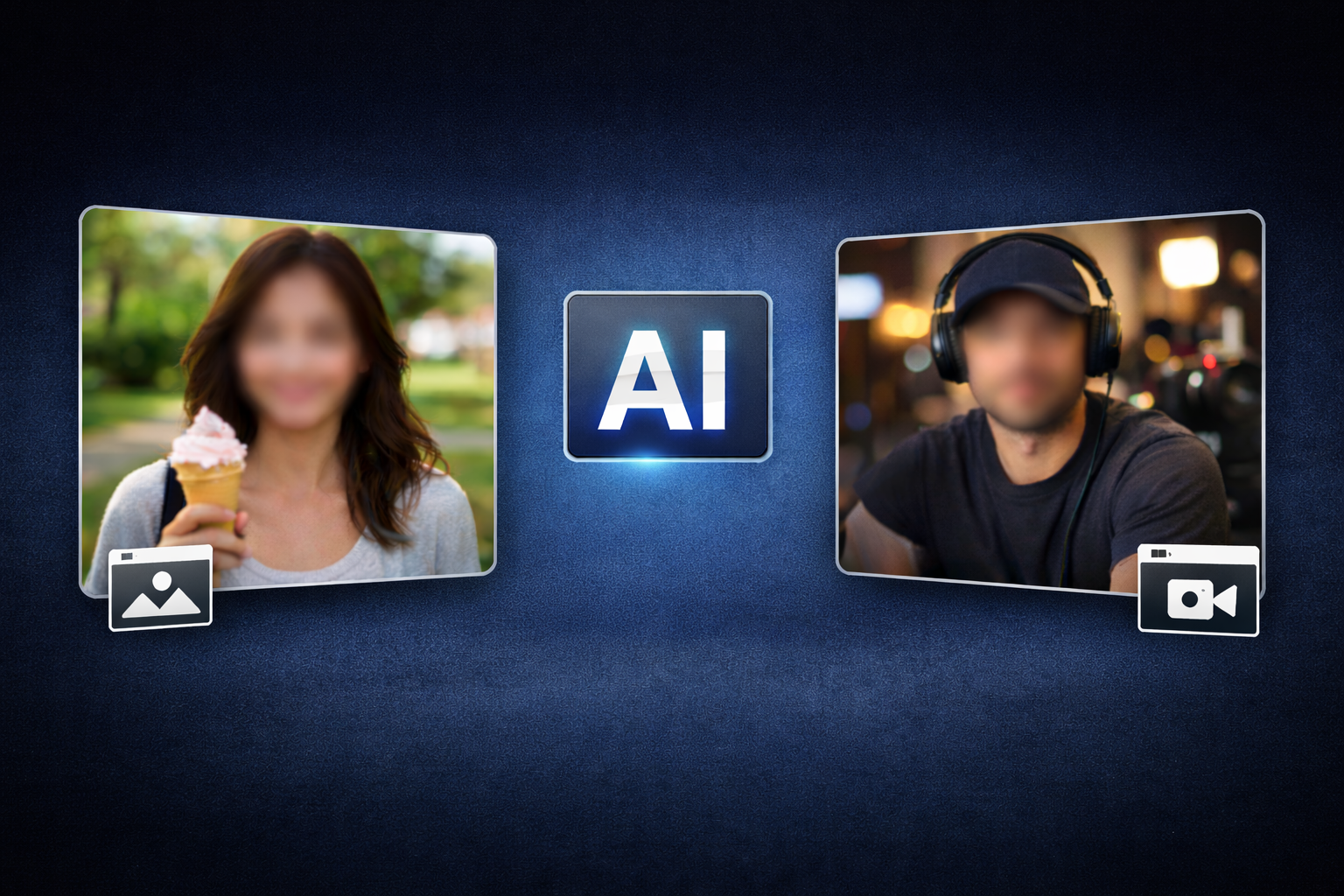
Why creators use BGBlur:
✅ 98%+ AI Face Detection Accuracy
BGBlur's AI identifies faces regardless of angle, lighting, or partial obstruction — including profiles, crowd shots, and motion-blurred footage where manual blurring would miss faces entirely.
✅ Motion-Tracking for Video
For video content, BGBlur tracks faces across frames so the blur follows the person as they move. You don't have to manually keyframe each face through every second of footage.
✅ Multiple Blur Styles
Choose between Gaussian blur (smooth, professional) or pixelation (clearly censored aesthetic). Both options satisfy legal privacy requirements.
✅ No App Required — Works Everywhere
Upload from iPhone, Android, or desktop. No software to install, no account required for basic use. Processing happens on secure servers and files are deleted after download.
✅ GDPR and CCPA Compliant
BGBlur's privacy-first infrastructure means your processing activity itself complies with data protection requirements — end-to-end encryption, no data retention after processing.
See our complete guide on how to blur faces in video — the AI complete guide for the full workflow.
For mobile users, our guide on blurring faces on mobile devices covers iPhone and Android step-by-step.
Special Cases: When the Rules Change
Journalism and News Content
Journalists and news organizations have broader rights to film and publish in the public interest — but these rights are not unlimited. Newsworthy events can justify some publication without explicit consent, but commercial misuse, defamatory framing, or unnecessarily invasive coverage still creates liability.
If a journalist has posted your face in a way you believe goes beyond public interest coverage, you can still contact the publication's editorial team and request a review. Many responsible news organizations will blur faces in historical online archives upon request.
School and Sports Events
Parents filming their own children at school events often inadvertently capture other children's faces. Most schools require some form of filming consent from parents, and posting footage of identifiable minors without parental consent carries heightened legal risk in virtually every jurisdiction.
See our dedicated guide on how to blur other kids' faces in school and sports videos for practical steps.
Protests and Public Demonstrations
Courts have generally protected filming at public protests as a matter of free expression. However, commercial use of protest footage that identifies specific individuals — especially in ways that could endanger them — is increasingly being challenged.
In authoritarian contexts, even non-commercial posting of identifiable protesters can have devastating consequences. Our guide on protecting privacy at protests covers both the legal and practical dimensions.
Recorded Voice, Not Just Face
The same unauthorized-recording questions apply to audio, not only video. If someone recorded your voice — a phone call, a street interview, a bystander clip — and wants to publish it, see our guide on whether you can publish someone's recorded voice without consent, which covers one-party vs. two-party consent recording laws and GDPR's treatment of voice as personal data.
Conclusion: You Have More Rights Than You Think — And They're Growing
The legal framework protecting your face and likeness online is stronger than most people realize, and it's getting stronger every year. The EU has already established that your face is personal data with full protection rights. The UK agrees. US states are catching up, with Illinois, California, and New York leading the way. Platforms are tightening their enforcement. AI-powered content moderation is getting better at identifying unauthorized face use.
If your face has been posted without your consent, you have tools: platform reporting, data protection complaints, legal action. Use them.
If you're creating content that features other people's faces, the simplest, fastest, most legally sound approach is to blur them before posting. BGBlur makes this a 60-second task with 98%+ accuracy, motion tracking, and full compliance built in.
Privacy isn't just a legal obligation — it's the foundation of trust. Content that respects its subjects builds better, more durable audiences than content that exploits them. Blur first. Earn trust. Post confidently.