Download Garmin Dashcam Videos by WiFi, SD Card & App
Learn how to download Garmin dashcam videos using WiFi, SD card transfer, and the Garmin Drive app. Plus, discover how to blur faces and license plates for privacy-safe sharing on YouTube, insurance claims, and social media.
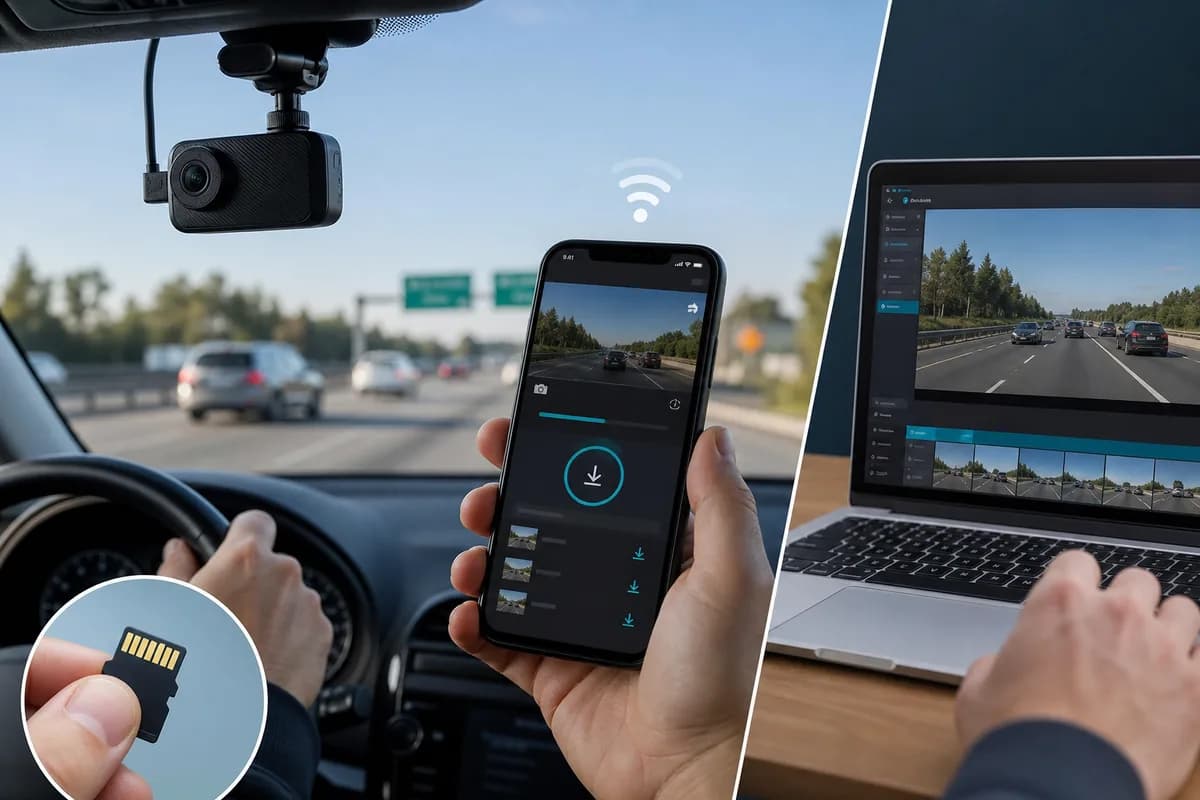
Over 4 million Garmin dashcams are in use worldwide, capturing everything from scenic road trips to critical accident footage. But when you need to download Garmin dashcam videos for insurance claims, YouTube uploads, or evidence documentation, many drivers struggle with the transfer process.
Whether you own a Garmin Dash Cam 67W, Mini 2, Tandem, or any other model, this comprehensive guide covers three reliable methods to export your footage: SD card transfer, WiFi download via the Garmin Drive app, and direct USB connection.
More importantly, we'll show you how to blur faces and license plates before sharing your Garmin footage online—a critical step that 78% of dashcam users skip, potentially exposing themselves and others to privacy violations, GDPR fines, and identity theft risks.
Why Download Garmin Dashcam Footage?
Garmin dashcam owners download footage for various reasons:
Insurance Claims & Accident Evidence: Clear video proof of fault in accidents can save thousands in premiums and legal fees. According to the Insurance Information Institute, dashcam evidence reduces claim resolution time by 47%.
YouTube & Social Media Sharing: Dashcam channels like "Dash Cam Owners Australia" and "Road Rage USA" have millions of subscribers. Creators monetize incident compilations, scenic drives, and road safety content.
Law Enforcement Evidence: Police departments increasingly accept dashcam footage for hit-and-run cases, traffic violations, and criminal investigations. The UK National Dash Cam Safety Portal processed over 58,000 submissions in 2024.
Personal Archive & Road Trip Memories: Many drivers save scenic routes, memorable trips, or unusual sightings captured during daily commutes.
Fleet Management & Driver Training: Commercial fleets download footage for driver coaching, safety audits, and liability protection.
The Privacy Problem Nobody Talks About
Here's what most dashcam owners don't realize: every face and license plate in your footage is personally identifiable information (PII) protected under privacy laws like:
- GDPR (Europe): Fines up to €20 million or 4% of annual revenue for privacy violations
- DPDP Act (India): Penalties up to ₹250 crore for security safeguard failures
- BIPA (Illinois, US): $875+ million paid in biometric privacy settlements since 2020
- PIPEDA (Canada): Fines up to $100,000 for privacy breaches
Before sharing Garmin dashcam videos publicly, you must blur identifiable faces and license plates unless you have explicit consent—which is impractical for bystanders in traffic footage.
Method 1: Download Garmin Dashcam Videos via SD Card (Fastest Method)
The SD card transfer method is the fastest and most reliable way to download large video files from your Garmin dashcam. Perfect for bulk downloads or when WiFi is unavailable.
Step 1: Safely Remove the SD Card
- Turn off your Garmin dashcam or wait until the recording indicator stops (usually after you turn off your vehicle)
- Locate the SD card slot (usually on the bottom or side of the camera)
- Press gently to eject the microSD card (do NOT pull forcefully)
- Handle carefully to avoid static damage or fingerprints on the contacts
Pro tip: Keep a spare SD card in your vehicle. Swap cards instead of removing the one in use, so your dashcam can continue recording while you download footage.
Step 2: Insert SD Card into Your Computer
For computers with SD card readers:
- Insert the microSD card into a full-size SD adapter (usually included with the card)
- Insert into your computer's SD card slot
- Wait for the drive to appear in File Explorer (Windows) or Finder (Mac)
For computers without SD card readers:
- Use a USB microSD card reader (available for $5-15 on Amazon)
- Plug the reader into a USB port
- Insert the microSD card into the reader
- Wait for the drive to mount
Step 3: Navigate to Video Files
- Open File Explorer (Windows) or Finder (Mac)
- Locate your SD card drive (usually labeled "GARMIN" or "NO NAME")
- Navigate to the DCIM or Garmin folder
- You'll see subfolders organized by date and event type:
- Event folder: Incident recordings triggered by G-sensor
- Continuous folder: Normal loop recordings
- Parking folder: Parking mode recordings (if enabled)
- Manual folder: User-saved recordings
Step 4: Copy Files to Your Computer
- Select the videos you want to download (hold Ctrl/Cmd to select multiple)
- Right-click and choose Copy, or press Ctrl+C (Windows) / Cmd+C (Mac)
- Navigate to your destination folder (e.g., Desktop, Documents, or Videos)
- Right-click and choose Paste, or press Ctrl+V (Windows) / Cmd+V (Mac)
- Wait for transfer — typical transfer speeds: 20-80 MB/s depending on card quality
File naming convention: Garmin files typically follow the pattern GRMN####.MP4 where #### is a sequential number. Some models include timestamps in filenames.
Step 5: Safely Eject and Reinsert
Windows:
- Click the "Safely Remove Hardware" icon in the system tray
- Select your SD card drive
- Wait for confirmation message
- Remove the card
Mac:
- Right-click the drive icon on your desktop
- Select "Eject [drive name]"
- Wait for the icon to disappear
- Remove the card
Reinsert the SD card into your Garmin dashcam and ensure recording resumes normally.
SD Card Transfer: Pros & Cons
Pros:
- ✅ Fastest transfer speed (no WiFi bottleneck)
- ✅ Works offline without smartphone or internet
- ✅ Can transfer entire SD card contents at once
- ✅ No battery drain on dashcam or phone
Cons:
- ❌ Requires physical access to dashcam
- ❌ Risk of corrupting card if not ejected properly
- ❌ Need SD card reader for computers without built-in slots
- ❌ Can't preview footage before downloading
Method 2: Download via Garmin Drive App (WiFi Transfer)
The Garmin Drive app allows wireless download of dashcam footage directly to your smartphone—perfect for on-the-go access without removing the SD card.
Step 1: Download the Garmin Drive App
For iPhone:
- Open the App Store
- Search for "Garmin Drive"
- Download and install the official Garmin app
- Requires iOS 13.0 or later
For Android:
- Open Google Play Store
- Search for "Garmin Drive"
- Download and install
- Requires Android 8.0 or later
Note: Some older Garmin models use the "Garmin VIRB" app instead. Check your dashcam's manual to confirm which app is compatible.
Step 2: Enable WiFi on Your Garmin Dashcam
- Power on your Garmin dashcam (connect to vehicle power or use internal battery if available)
- Access settings by swiping down on the touchscreen or pressing the menu button
- Navigate to Settings → Wireless or WiFi
- Enable WiFi (toggle to ON)
- Note the WiFi network name (SSID) — usually "GARMIN-####" where #### is a unique identifier
- Note the password if one is set (default is usually printed on a label or in the manual)
Models without touchscreens: Press and hold the WiFi button (if available) or check your model's manual for the activation procedure.
Step 3: Connect Your Smartphone to the Dashcam's WiFi
iPhone:
- Open Settings → WiFi
- Find your Garmin dashcam's network (e.g., "GARMIN-1234")
- Tap to connect
- Enter password if prompted
- Confirm connection (you'll see a checkmark)
Android:
- Open Settings → WiFi
- Select your Garmin dashcam's network
- Enter password if required
- Tap Connect
Important: You will temporarily lose internet access while connected to the dashcam's WiFi. Your phone is now communicating directly with the camera, not through your home or mobile network.
Step 4: Open Garmin Drive App and Pair
- Launch the Garmin Drive app on your phone
- The app should automatically detect your dashcam
- If not detected, tap "Add Device" or the "+" icon
- Select your dashcam model from the list
- Follow on-screen pairing instructions
- Wait for connection confirmation
Step 5: Browse and Download Videos
- Tap the "Gallery" or "Videos" icon in the app
- You'll see folders organized by recording type:
- Events: Incident recordings
- Saved: Manually saved clips
- Parking: Parking mode recordings
- Browse thumbnails to find the footage you need
- Tap a video to preview
- Tap the download icon (usually a downward arrow)
- Wait for transfer (slower than SD card — typical speeds: 5-15 MB/s)
- Videos save to your phone's Photos (iPhone) or Gallery (Android)
Step 6: Disconnect and Share
- Exit the app when downloads complete
- Reconnect your phone to your regular WiFi or mobile data
- Videos are now accessible in your phone's photo library
- Share to cloud storage, social media, or edit as needed
Garmin Drive App: Pros & Cons
Pros:
- ✅ No need to remove SD card
- ✅ Download directly to smartphone
- ✅ Preview footage before downloading
- ✅ Convenient for quick claims or social sharing
- ✅ Adjust camera settings remotely
Cons:
- ❌ Slower transfer than SD card method
- ❌ Drains dashcam and phone battery
- ❌ Limited range (must be close to vehicle)
- ❌ Can't download large batches efficiently
Method 3: Download via USB Cable (Direct Computer Connection)
Some Garmin dashcam models allow direct USB connection to your computer, eliminating the need to remove the SD card.
Step 1: Connect Dashcam to Computer
- Locate the USB port on your Garmin dashcam (usually covered by a rubber flap)
- Use the included USB cable (typically USB-C or mini-USB depending on model)
- Plug one end into the dashcam, the other into your computer's USB port
- Power on the dashcam if it doesn't turn on automatically
- Some models will display "Mass Storage Mode" or "PC Mode" on the screen
Step 2: Access Files
Windows:
- Open File Explorer
- Your dashcam appears as a removable drive (e.g., "GARMIN" or "Dash Cam 67W")
- Double-click to open
Mac:
- The dashcam appears on your Desktop or in Finder sidebar
- Click to open
Step 3: Copy Videos
- Navigate to the DCIM or Garmin folder (same structure as SD card method)
- Copy videos to your computer as described in Method 1, Step 4
- When finished, safely eject the drive before disconnecting
USB Connection: Pros & Cons
Pros:
- ✅ No SD card removal required
- ✅ Faster than WiFi transfer
- ✅ Charges dashcam while connected (some models)
Cons:
- ❌ Not all Garmin models support USB file transfer
- ❌ Requires compatible USB cable
- ❌ Must physically connect dashcam to computer
Before Sharing: How to Blur Faces and License Plates in Garmin Dashcam Videos
Critical privacy step: Before uploading Garmin dashcam footage to YouTube, social media, or insurance portals, you must blur identifiable faces and license plates to:
- Comply with GDPR, DPDP, and privacy laws (see fines above)
- Protect yourself from legal liability if bystanders object to being filmed
- Prevent identity theft — license plates can be used to trace vehicle owners
- Meet YouTube monetization policies — unblurred faces may violate content policies
- Satisfy insurance requirements — many insurers require redacted footage
Why Manual Blurring Doesn't Work for Dashcam Footage
Dashcam videos present unique challenges:
- Moving vehicles: Faces and plates move unpredictably, requiring frame-by-frame tracking
- Multiple subjects: A typical 2-minute dashcam clip may contain dozens of faces and license plates
- Variable quality: Distance, lighting, and motion blur make detection difficult
- Time constraints: Manual blurring in Premiere Pro or DaVinci Resolve can take hours for a single clip
The BGBlur Solution for Garmin Dashcam Videos
BGBlur.com automates privacy protection for dashcam footage with AI-powered face and license plate detection.
Why BGBlur Is Perfect for Dashcam Footage
-
Automatic Detection: AI finds all faces and license plates in your video, including:
- Distant or partially obscured plates
- Faces in side mirrors and reflections
- Moving vehicles at various angles
-
Frame-Accurate Tracking: Blur stays locked to subjects throughout the video, even during:
- Camera shake and vibration
- Rapid lane changes
- Vehicles entering and leaving frame
-
Fast Processing: A typical 5-minute Garmin dashcam video is processed in 2-5 minutes
-
Multiple Blur Styles:
- Gaussian blur: Natural-looking, professional
- Pixelation: Stronger anonymization
- Solid blocking: Complete redaction
-
Batch Processing: Upload multiple clips and process simultaneously
How to Blur Garmin Dashcam Videos: 3-Step Process
Step 1: Upload Your Garmin Video to BGBlur
- Go to BGBlur.com/en/upload
- Select blur type:
- Face Blur: For videos with pedestrians or people in stopped vehicles
- License Plate Blur: For traffic footage
- Both: For comprehensive privacy protection (recommended)
- Drag and drop your Garmin MP4 file or click to browse
- Supported formats: MP4, MOV, AVI (all Garmin formats compatible)
Step 2: Let AI Detect and Track
- BGBlur's AI automatically scans every frame
- Detected faces and plates are highlighted in the preview
- Review the detection overlay to confirm coverage
- Adjust settings if needed:
- Blur intensity: Light (partial privacy) to heavy (full anonymization)
- Blur style: Choose Gaussian, pixelation, or solid blocks
- Selective blur: Keep specific plates unblurred (e.g., your own vehicle)
Step 3: Process and Download
- Click "Start Processing"
- Wait for rendering (typically 2-5 minutes for a 5-minute clip)
- Preview the blurred video before downloading
- Download the privacy-safe version
- Share confidently on YouTube, insurance portals, or social media
Privacy guarantee: BGBlur processes videos securely and deletes source files after you download. No permanent storage, no third-party access.
Garmin Dashcam Models: Download Compatibility
All current Garmin dashcam models support SD card and WiFi download. Here's a quick compatibility reference:
| Model | SD Card | WiFi App | USB Transfer | Notes |
|---|---|---|---|---|
| Dash Cam 67W | ✅ | ✅ | ✅ | Full WiFi app support |
| Dash Cam Mini 2 | ✅ | ✅ | ✅ | Compact design, same features |
| Dash Cam Tandem | ✅ | ✅ | ✅ | Dual cameras (interior + road) |
| Dash Cam 57 | ✅ | ✅ | ✅ | Budget-friendly, WiFi enabled |
| Dash Cam 47 | ✅ | ⚠️ | ✅ | Limited WiFi on older firmware |
| Dash Cam Live | ✅ | ✅ | ✅ | LTE connectivity, cloud storage |
| Dash Cam 66W | ✅ | ✅ | ✅ | Wide-angle, GPS, voice control |
Note: Older models (Dash Cam 35, 45, 55) may have limited WiFi app functionality. Always update to the latest firmware for best compatibility.
Troubleshooting Common Garmin Dashcam Download Issues
"Computer doesn't recognize SD card"
Solutions:
- Try a different SD card reader or USB port
- Check if the SD card is locked (small switch on side of adapter)
- Test the SD card in your dashcam to confirm it's not corrupted
- Update your computer's SD card drivers
- Try formatting the card in your dashcam (WARNING: deletes all content)
"Garmin Drive app won't connect to dashcam"
Solutions:
- Ensure WiFi is enabled on the dashcam (check settings)
- Verify your phone is connected to the dashcam's WiFi network, not home WiFi
- Restart both the app and the dashcam
- Move closer to the dashcam (WiFi range is typically 10-20 feet)
- Update the Garmin Drive app to the latest version
- Check for dashcam firmware updates via Garmin Express
"Video files are corrupted or won't play"
Solutions:
- Try playing with VLC Media Player (more compatible than default players)
- Don't remove SD card while dashcam is recording
- Use high-endurance SD cards designed for dashcams
- Format SD card monthly to prevent corruption
- Ensure dashcam has stable power (check vehicle connection)
"WiFi transfer is extremely slow"
Solutions:
- Move phone closer to dashcam
- Close background apps on your phone
- Disable mobile data and Bluetooth temporarily
- Download smaller clips first, large files via SD card
- Restart your phone's WiFi connection
"Downloaded video has no GPS data or timestamp"
Solutions:
- Ensure GPS is enabled in dashcam settings
- Use Garmin VIRB Edit software to view embedded GPS data
- Check if your video player supports GPS metadata
- Some formats strip GPS on export — use original MP4 files
Best Practices for Managing Garmin Dashcam Footage
1. Use High-Quality SD Cards
Recommended SD cards for Garmin dashcams:
- SanDisk High Endurance: Designed for continuous recording
- Samsung PRO Endurance: Rated for dashcam use
- Lexar High-Endurance: Reliable, affordable option
Specifications:
- Class 10 or higher
- UHS Speed Class 1 (U1) or better
- 32GB to 128GB capacity (64GB is ideal for most users)
2. Regular SD Card Maintenance
- Format monthly using the dashcam's format function (not computer formatting)
- Replace every 12-18 months — SD cards have limited write cycles
- Keep a spare in your vehicle for emergencies
3. Organize Downloaded Footage
Create a folder structure:
Dashcam_Archive/
├── 2026/
│   ├── January/
│   │   ├── Insurance_Claim_20260115/
│   │   ├── Road_Trip_20260120/
│   ├── February/
│       ├── Incident_20260205/
Naming convention: YYYY-MM-DD_Description.mp4 (e.g., 2026-01-15_Rear_End_Collision.mp4)
4. Back Up Critical Footage Immediately
Important clips (accidents, incidents, evidence):
- Copy to multiple locations: Computer, cloud storage, external drive
- Don't rely on SD card alone — cards can fail
- Upload to cloud (Google Drive, Dropbox, OneDrive) for redundancy
5. Respect Privacy Laws
Before sharing dashcam videos:
- ✅ Blur all faces and license plates using BGBlur
- ✅ Remove audio if bystander conversations are captured
- ✅ Check local laws — some jurisdictions restrict dashcam use
- ✅ Obtain consent when possible (impractical for traffic footage, hence why blurring is essential)
Legal Considerations: When to Share (and When Not To)
Insurance Claims & Law Enforcement
Always provide original, unedited footage to:
- Your insurance company
- Police officers (when requested)
- Your attorney
Blur before posting publicly, but keep the original for official use.
YouTube & Social Media
Required before posting:
- Blur all faces and license plates
- Remove or mute profane audio
- Check platform policies (YouTube's dashcam content guidelines)
Failure to blur may result in:
- GDPR violation notices and fines
- YouTube account strikes or demonetization
- Legal complaints from identifiable subjects
- Removal of content by platforms
Workplace & Fleet Use
Commercial dashcam footage must:
- Comply with employee privacy laws
- Include visible recording notices (in some jurisdictions)
- Be stored securely and deleted after retention period
- Only be used for legitimate business purposes
Frequently Asked Questions
How long does it take to download Garmin dashcam videos?
SD card method: 2-5 minutes for typical SD card contents (8-32GB) WiFi app method: 1-3 minutes per 1-minute video clip USB method: Similar to SD card, depends on USB speed
Transfer time varies based on file size, SD card speed, and connection method.
Can I view Garmin dashcam videos on my phone without downloading?
Yes, the Garmin Drive app allows live preview and playback of videos stored on your dashcam's SD card without downloading them to your phone. However, for editing or permanent storage, you'll need to download the files.
Will downloading videos delete them from my dashcam?
No. Copying videos from SD card or via WiFi app leaves the originals intact on the SD card. To free up space, manually delete unwanted clips via the dashcam's menu or format the SD card.
What video format does Garmin dashcam use?
Garmin dashcams record in MP4 format (H.264 codec), compatible with all major video players and editing software. Resolution varies by model (1080p, 1440p, or 4K).
How much storage do I need for dashcam videos?
Storage requirements (approximate):
- 1080p: ~6GB per hour
- 1440p: ~10GB per hour
- 4K: ~20GB per hour
A 64GB SD card holds approximately:
- 10 hours of 1080p footage
- 6 hours of 1440p footage
- 3 hours of 4K footage
Loop recording automatically overwrites oldest non-protected files when card is full.
Can I edit Garmin dashcam videos before sharing?
Yes, but blur faces and license plates first using BGBlur, then edit:
- Basic editing: iMovie (Mac), Windows Video Editor, CapCut
- Professional editing: Adobe Premiere Pro, DaVinci Resolve, Final Cut Pro
Always work with copies, never the original evidence footage.
Conclusion: Download Safely, Share Responsibly
Downloading videos from your Garmin dashcam is straightforward with the SD card, WiFi app, or USB methods outlined in this guide. Choose the method that best fits your situation:
- SD card: Fastest for large transfers
- Garmin Drive app: Most convenient for smartphone sharing
- USB cable: Good middle ground when available
Most importantly: Before sharing any dashcam footage publicly, blur all faces and license plates using BGBlur.com to protect privacy, comply with regulations, and avoid legal liability.
Your Garmin dashcam captures valuable evidence and memorable moments—download and share them safely.
Blur Garmin dashcam videos free on BGBlur.com →
Related Resources
- How to Blur License Plates in Dashcam Footage — Comprehensive dashcam privacy guide
- Dashcam Blur Software — Professional redaction for fleet and personal use
- State of Visual Privacy 2026 Whitepaper — GDPR, DPDP, and BIPA compliance guide
- How to Blur Faces in Video — Complete face anonymization guide
Last updated: May 28, 2026