Smart Glasses Should Blur Faces by Default [2026]
On August 31, 2026, Australia's eSafety Commissioner called for smart glasses to automatically blur the faces of anyone filmed without consent, after cheap $89 models sold at Kmart triggered a national privacy probe. This guide breaks down the recommendation, the Greens' proposed 12-month import ban, the OAIC's Kmart facial recognition ruling, and how creators and organizations can blur bystanders in wearable-camera footage today.
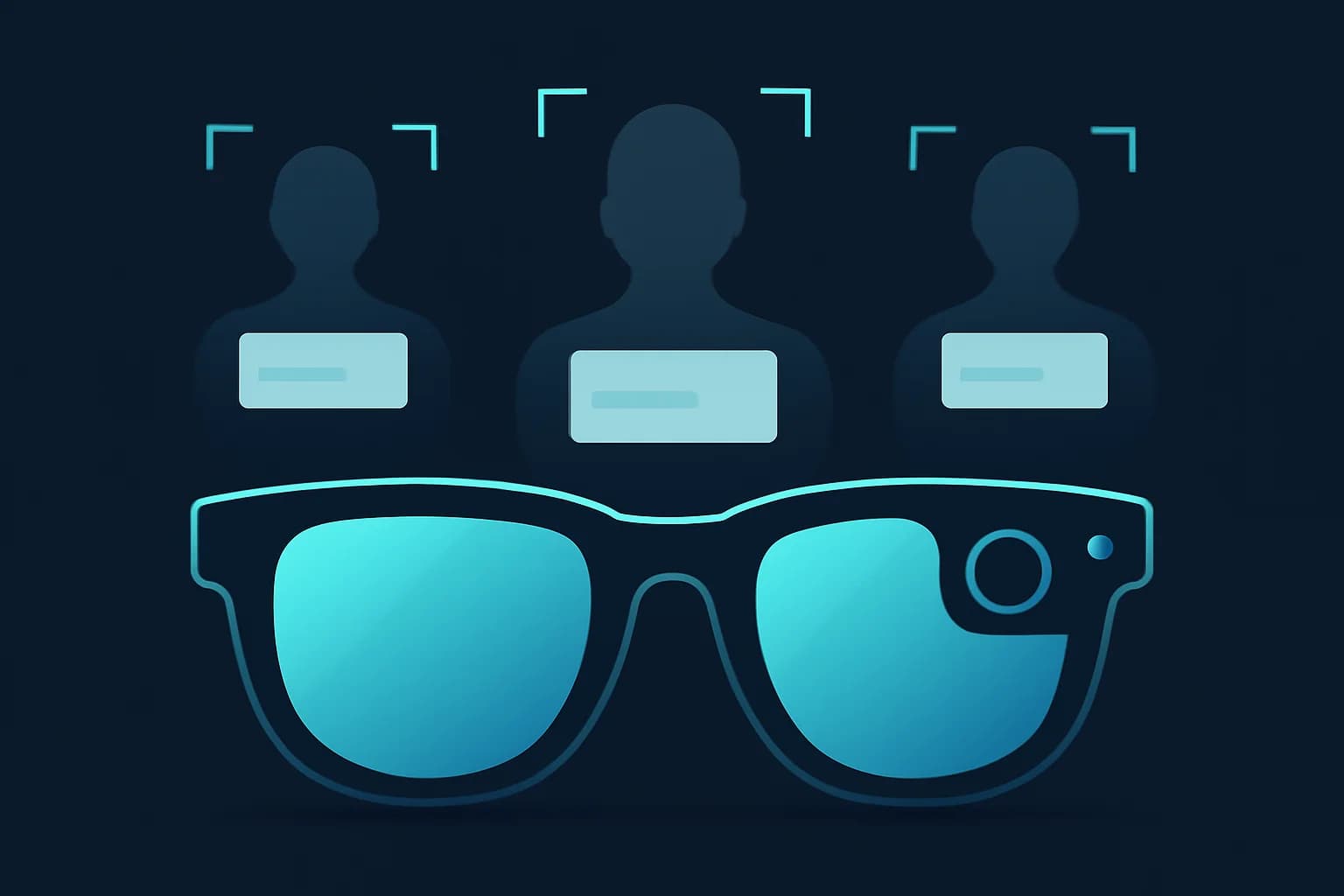
On August 31, 2026, Australia's eSafety Commissioner, Julie Inman Grant, said the faces of people filmed by smart glasses should be blurred by default whenever those people have not given consent. The recommendation landed after cheap camera glasses, including an 89 US dollar model sold at Kmart, sold out nationally and pushed privacy concerns into federal politics. Attorney-General Michelle Rowland has asked the privacy commission to investigate whether extra rules are needed, and the Greens want a 12-month ban on smart glasses imports.
If you record or publish video, this matters even though the recommendation targets manufacturers. Regulators are signalling that the burden of protecting bystanders is shifting toward the people and companies that capture and post footage. This guide explains exactly what was recommended, how it connects to the Office of the Australian Information Commissioner's ruling against Kmart's in-store facial recognition, what is and is not already illegal, and how to blur bystanders in wearable-camera footage today using BGBlur's AI face blur.
What the eSafety Commissioner actually recommended
The eSafety Commissioner's guidance is directed at companies that make and sell smart glasses, and it sets out four safeguards.
| Question | Answer |
|---|---|
| Who issued it? | eSafety Commissioner Julie Inman Grant, August 31, 2026 |
| Is it law? | No — it is industry guidance and a set of recommendations |
| Core ask | Blur faces of non-consenting bystanders by default |
| Other asks | Clearer recording indicators, delayed livestreaming, recording disabled when glasses are not worn |
| What triggered it | Cheap camera glasses (an ~$89 Kmart model) selling out nationally |
| Political response | AG Michelle Rowland asked the privacy commission to investigate; Greens want a 12-month import ban |
| What already applies | Privacy Act 1988, state surveillance-device laws, the June 2025 statutory privacy tort |
Blur bystanders by default
The central recommendation is that companies should "automatically blur the faces of people who have not provided informed consent." The reasoning is preventive: if a stranger's face never leaves the device in identifiable form, footage cannot later be used to harass, dox, or humiliate them. This is the same design pattern Google adopted for Street View, where faces and licence plates are redacted automatically before imagery is published.
Clearer recording indicators
Meta's Ray-Ban glasses use a small LED that lights when recording, but regulators and privacy advocates have repeatedly said it is too subtle to give bystanders meaningful notice. The Commissioner wants a more visible, harder-to-miss signal, and Meta has already been forced to disable the camera on tampered units after a firmware update.
Delayed livestreaming and wear detection
The guidance also asks that livestreaming run on a short delay, so a stream showing abuse or a private moment can be cut before it spreads, and that recording be disabled when the glasses are sitting on a table or in a bag rather than on someone's face. Both measures narrow the window for accidental or covert capture.
Why cheap Kmart glasses set this off
Meta has sold wearable cameras for years, but at a price point that kept them relatively niche. Kmart's roughly 89 US dollar smart glasses changed the maths. A low-cost, mass-retail recording device that sells out means far more cameras in shopping centres, classrooms, gyms, and streets, worn by people who may not have read a single line about recording etiquette or state surveillance law.
The retail connection also carries baggage. In 2025 the OAIC found Kmart Australia had breached the Privacy Act through in-store facial recognition, and that determination is still shaping how regulators talk about consent and proportionality. A company already on record for a facial-recognition breach now distributing face-mounted cameras is exactly the kind of story that moves a privacy probe from "maybe later" to "this month." For the broader retail-surveillance context, see our guide to doorbell and security camera bystander footage under privacy law.
How this connects to the OAIC's Kmart facial recognition ruling
On August 26, 2025, Australian Privacy Commissioner Carly Kind determined that Kmart Australia breached the Privacy Act 1988 by using facial recognition technology to capture and analyse the faces of people entering 28 stores between June 2020 and July 2022. Kmart argued it was preventing refund fraud and relying on the Act's unlawful-activity exemption. The Commissioner rejected that, finding the collection "indiscriminate," of "limited utility," and "disproportionate to the risk." Kmart was ordered to stop, to publish an apology and a detailed statement in stores and online for at least 30 days, and to destroy the remaining facial data after a 12-month compliance hold.
Two ideas from that ruling now drive the smart glasses debate:
- Proportionality. Collecting biometric data from everyone to catch a few is disproportionate. An always-on wearable camera that captures every passing face has the same problem at street scale.
- Informed consent has a high bar. A sign at a store entrance was not enough for Kmart. A barely visible LED on someone's glasses is a weaker signal still.
The eSafety Commissioner's default-blur recommendation is essentially the design answer to both: if faces are blurred unless someone opts in, there is no disproportionate biometric collection and no reliance on notice that bystanders never really see. For a full breakdown of obligations when footage contains identifiable people, see our Australian Privacy Act video compliance guide.
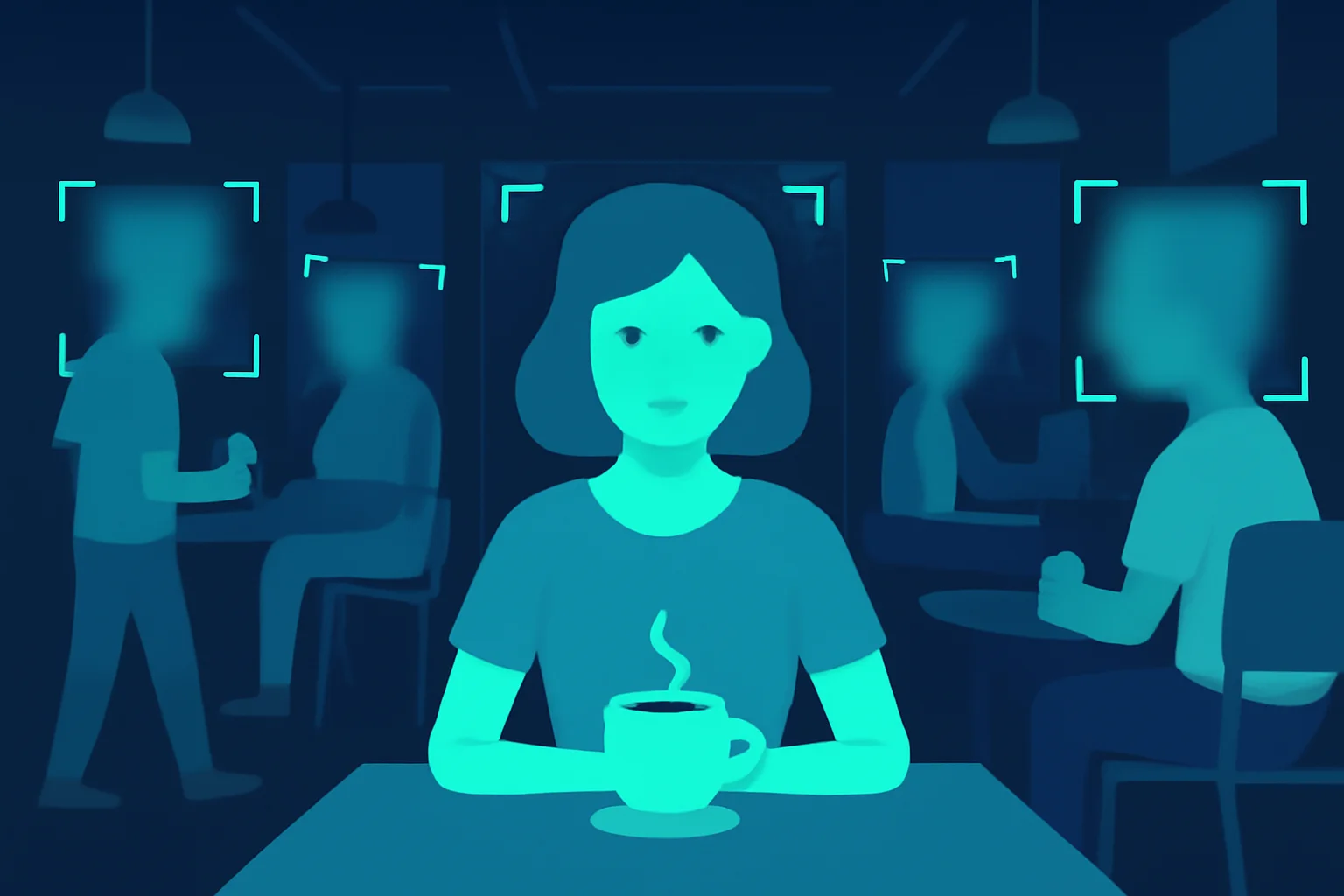
Is filming strangers with smart glasses already illegal in Australia?
Short answer: sometimes, and it depends far more on what you do with the footage than on the glasses themselves.
Recording in public
Australian courts recognize a reduced expectation of privacy in public spaces, so simply capturing a street scene is usually not unlawful. There is no general right in Australia not to be photographed in public.
Surveillance-device and listening-device laws
Every state and territory has its own surveillance-device or listening-device statute. Recording a private conversation, or using a device to record private activity, can be an offence in states such as Victoria, Western Australia, and the ACT even when it happens in a semi-public setting. Smart glasses that also capture audio raise this risk because they record conversations the wearer is not part of.
Publishing, monetizing, and harassing
This is where most legal exposure sits. Posting identifiable footage of someone, running ads against it, using it to intimidate, or demanding payment to take it down can trigger the Privacy Act (for organizations), consumer protection law, anti-harassment and stalking provisions, and the statutory tort for serious invasions of privacy that commenced in June 2025. Our guide on whether someone can record and post your face on social media covers the takedown and complaint routes in detail.
The real-time identification risk
The Commissioner and academics have flagged a further danger: glasses paired with a companion app and a face-search database could identify strangers in real time, surfacing names, social accounts, workplaces, and home addresses. That is not hypothetical hardware; it is a software integration away, which is why regulators want blur applied at the source before any database lookup is possible.
How to blur faces in smart glasses footage with BGBlur
If you film with smart glasses, or you manage footage other people captured, you do not need to wait for a default-blur mandate. Here is the workflow.
Step 1: Export the clip from your glasses app
Transfer the recording from the Meta AI app, the Kmart companion app, or your camera roll to a file. BGBlur accepts MP4, MOV, and M4V at up to 4K.
Step 2: Upload to BGBlur
Go to bgblur.com and drag the file in. Processing runs client-side in the browser, and uploads are deleted within 24 hours, so raw footage of bystanders is not stored.
Step 3: Let the AI detect and track every face
BGBlur's face detection finds every face in the frame and motion-tracks each one as people and the camera move, which matters for walk-and-talk smart-glasses footage where nothing holds still. A short clip processes in seconds.
Step 4: Choose who stays sharp
If you have a consenting subject on camera, for example an interviewee or a colleague who signed a release, keep them visible and blur only the bystanders around them. If nobody consented, blur everyone.
Step 5: Export and publish
Export a new MP4, MOV, or WebM. The anonymized file is what you post; the original stays off the internet. For a walkthrough with screenshots, see how to blur a face in photo and video with AI in 3 seconds.
Batch it for volume
Retail security teams, event crews, and training departments dealing with many clips can use batch processing on the Business plan to blur a folder of footage at once rather than one file at a time.
Who needs to act on this now
Content creators and vloggers: If your smart-glasses footage shows crowds, you are the publisher and the legal exposure is yours. Blur non-consenting faces before upload, the same way you would for dashcam footage.
Retailers and venues: A staff member wearing camera glasses on the shop floor creates the same proportionality problem the OAIC flagged for Kmart. Set a recording policy and anonymize any footage you retain.
Journalists and researchers: Wearable cameras are useful for discreet field recording, but publishing identifiable bystanders who are not part of the story is both an ethics and a privacy-law issue. Blur everyone who is not a subject.
Employers: If staff use smart glasses for hands-free work such as warehouse picking or field service, you are collecting the faces of customers and members of the public. Default blur on retained footage is the defensible position.
Honest limitations
BGBlur is built for footage you control after capture. It cannot stop someone filming you in the first place, and it does not intercept a live stream. If your concern is being recorded, that is a device-design and legislative problem, which is what the eSafety Commissioner's recommendations and the Greens' proposal are trying to address. For very large archives, tens of thousands of hours of retail or body-worn footage, a dedicated enterprise evidence-management platform may be more cost-effective than a per-clip workflow, though it will cost far more upfront. For the protest and rights angle, see our guide to smart glasses misuse, bans, and how to push back.
Frequently asked questions
Will smart glasses actually get default face blur? It is likely over time but not certain, and not soon. The eSafety Commissioner's guidance is a recommendation, not a rule, and the companies affected, chiefly Meta, would need to build it into firmware. Meta already applies some automatic face blurring to footage it collects for AI annotation, so the capability exists. Regulatory pressure in Australia, the EU, and elsewhere makes an opt-in-to-be-visible model more plausible than it was a year ago, but until it ships, the responsibility for blurring bystanders sits with whoever publishes the video.
Does this affect Meta Ray-Ban glasses specifically? Yes. Meta is the dominant smart-glasses maker and the reference point for most of the criticism, including a separate German data-protection challenge and a US civil-liberties backlash. The eSafety guidance does not name a single company, but Meta's Ray-Ban and Ray-Ban Display lines are the products regulators have in mind, alongside the cheaper Kmart-style entrants.
I was filmed by someone wearing smart glasses. What can I do? If footage of you is posted, screenshot it before it can be edited, then report it to the hosting platform. If it was monetized or used to demand payment for removal, that may breach consumer-protection and harassment laws on top of privacy law. In Australia you can complain to the eSafety Commissioner about image-based abuse and to the OAIC if an organization was involved. Our guide on recording and posting faces on social media walks through the steps.
Is blurring faces enough to comply with the Privacy Act? Blurring identifiable faces is the single most effective step, because the Privacy Act regulates personal and biometric information, and a properly anonymized face is neither. You still need to think about other identifiers such as name badges, licence plates, tattoos, and voices. BGBlur also offers licence plate blur and voice anonymization for footage where those appear.
How fast is the blur? For a typical short smart-glasses clip, detection and tracking complete in seconds. Longer footage scales roughly with length. There is no queue for standard clips on paid plans.
Does BGBlur keep my footage? No. Processing happens in your browser, and uploads are deleted within 24 hours. There is no permanent storage of your videos.
Conclusion
Australia's eSafety Commissioner has put a clear idea on the table: smart glasses should blur the faces of people who never agreed to be filmed, and the burden of that protection should not fall on bystanders who cannot even tell they are being recorded. Backed by the OAIC's Kmart facial-recognition ruling and a live political debate over import bans, the direction of travel is toward opt-in visibility rather than opt-out. You do not have to wait for the hardware to catch up. Export your clip, run it through BGBlur's AI face blur, keep the people who consented sharp, blur everyone else, and publish the version that respects the crowd you filmed.