Body Cam FOIA Redaction Comparison for Enterprises 2026
US FOIA requests for body cam footage have tripled since 2020, creating redaction backlogs that cost agencies millions. This guide compares AI-powered redaction tools — from BGBlur's $29/month Business tier to $50K+ enterprise contracts — and breaks down FOIA exemptions, CJIS requirements, and batch processing workflows for law enforcement and public records officers.

The public records officer at a mid-size police department in the American Midwest described the situation plainly: "We have a backlog of over 1,400 FOIA requests for body cam footage. At our current pace, we'll never catch up." That agency is not unusual. Across the United States, law enforcement agencies are drowning in an avalanche of body cam footage disclosure requests — and the redaction step is where everything grinds to a halt.
This guide breaks down the FOIA legal framework for body cam footage, quantifies the redaction backlog problem with current statistics, and compares the leading redaction tools — from BGBlur's $29/month Business tier to enterprise contracts that cost $50,000 or more per year.
The Body Cam FOIA Backlog: By the Numbers
The widespread adoption of body-worn cameras was meant to increase transparency and public trust. In many respects, it has. But it also created an enormous secondary obligation: processing and releasing footage in response to public records requests.
Key statistics for 2026:
- FOIA requests for body cam footage have tripled in the US since 2020, according to data compiled from state-level public records offices.
- The average time to manually redact one hour of body cam footage is 8 to 12 hours — requiring a trained reviewer to scrub through the video frame by frame, identify all exempt content, and apply redactions without creating errors that could expose agencies to litigation.
- A single officer generating 4 hours of footage per shift creates a potential obligation of 32–48 hours of manual redaction work per day of patrol — before any FOIA request is even filed.
- AI-assisted redaction reduces processing time to under 60 minutes per hour of footage, representing a 90%+ reduction in labor cost.
- Agencies report average backlogs of 6–18 months for FOIA responses involving video footage, creating legal exposure under state sunshine laws that mandate response timelines.
For UK police forces, the situation mirrors the US. The Metropolitan Police and regional constabularies face parallel obligations under the Freedom of Information Act 2000, with the Information Commissioner's Office (ICO) receiving a growing number of complaints about delayed disclosure of body-worn video footage.
FOIA Legal Framework: What Must Be Redacted?
Before choosing a redaction tool, it is important to understand what the law actually requires agencies to redact — and why.
Federal FOIA Exemptions
The federal Freedom of Information Act, 5 U.S.C. § 552, provides two exemptions most relevant to body cam footage:
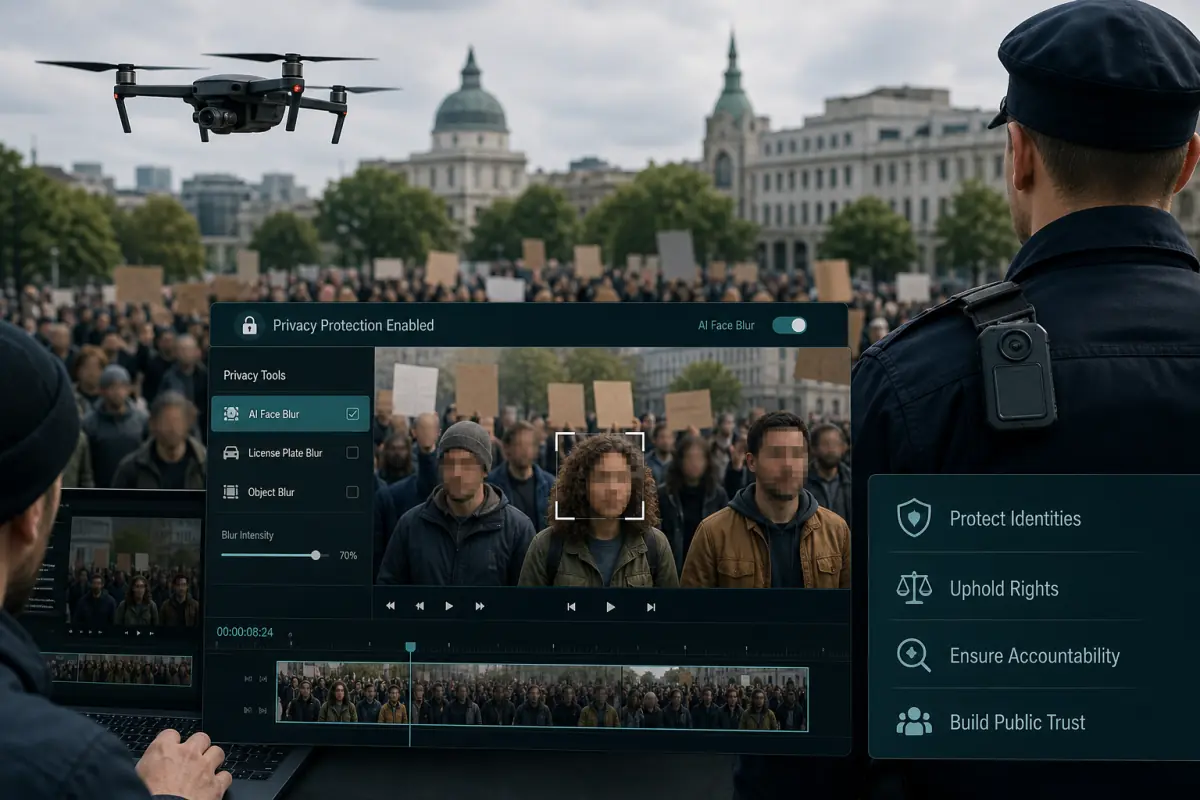
Exemption b(6) protects "personnel and medical files and similar files the disclosure of which would constitute a clearly unwarranted invasion of personal privacy." In practice, this means faces of private citizens who are not subjects of the law enforcement action, bystanders, witnesses who did not consent to filming, and medical personnel responding to scenes must generally be redacted before release.
Exemption b(7)(C) protects "records or information compiled for law enforcement purposes" that "could reasonably be expected to constitute an unwarranted invasion of personal privacy." This exemption covers law enforcement-specific content: the faces and names of informants, undercover officers, minors, and victims of certain crimes.
Most state public records laws (California Public Records Act, Texas Government Code Chapter 552, New York FOIL, etc.) contain analogous exemptions. Some states, like California, have additional specific statutory provisions protecting the faces of officers or civilians in specified circumstances.
What Must Be Redacted in Practice
Based on FOIA guidance and case law, agencies typically must redact:
- Faces of bystanders and uninvolved third parties
- Faces of minors in all circumstances
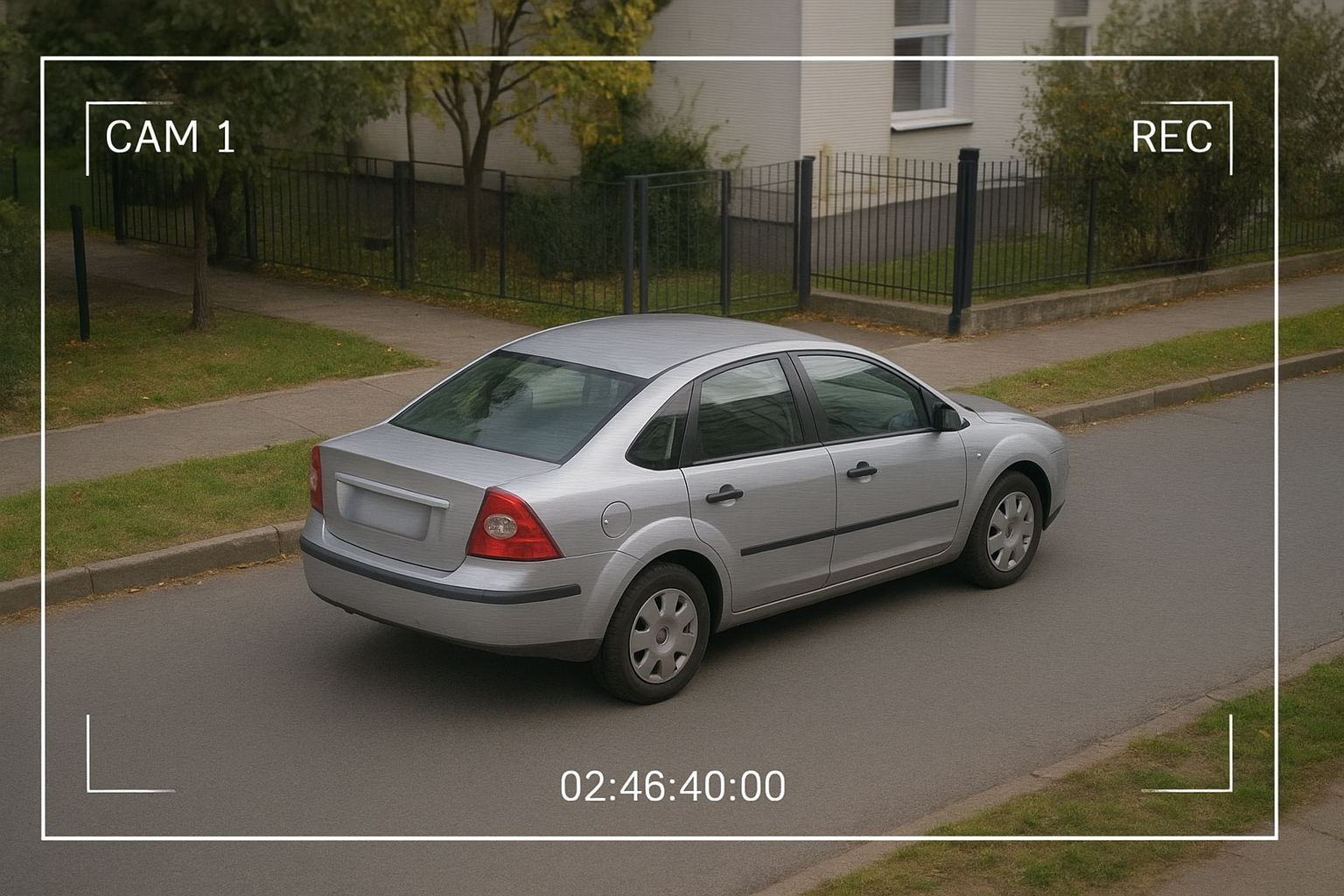
- License plates of non-subject vehicles
- Faces of confidential informants and undercover personnel
- Medical information visible on scene (patient records, medication bottles)
- Home addresses visible on documents or screens
- Victims of certain crimes (domestic violence, sexual assault) unless consent is obtained
- Audio identifying exempt individuals (names, identifying statements)
The GDPR video content face and license plate blurring compliance guide covers parallel obligations in European jurisdictions, which are relevant for UK police forces operating under the Data Protection Act 2018.
CJIS Compliance: What It Means for Redaction Software
The Criminal Justice Information Services (CJIS) Security Policy, maintained by the FBI, establishes security requirements for any system that accesses, transmits, or stores Criminal Justice Information (CJI). For body cam redaction software, CJIS compliance matters because footage may contain CJI — arrest data, criminal history references, warrant information visible on screens.
CJIS requirements relevant to redaction tools include:
- Data encryption in transit and at rest (AES-256 minimum)
- Multi-factor authentication for all users
- Audit logging of all data access and processing
- Data residency requirements (US-based storage for federal agencies)
- Background screening for personnel with CJI access
- Incident response and breach notification protocols
Not all redaction software is CJIS-certified. Agencies must evaluate whether the footage they process contains CJI before choosing a tool.
Feature Comparison: BGBlur Business vs Enterprise Redaction Platforms
| Feature | BGBlur Business | Axon Redaction | VIDIZMO | Veritone Redact | CaseGuard |
|---|---|---|---|---|---|
| Price | $29/month | Camera-bundled or $15K+/yr | $25K–$80K/yr | Custom (est. $30K+/yr) | $2K–$10K/yr |
| CJIS Certified | No | Yes | Yes (FedRAMP) | Yes | Partial |
| Face Blur (AI) | Yes | Yes | Yes | Yes | Yes |
| License Plate Blur | Yes | Yes | Yes | Yes | Yes |
| Audio Redaction | Yes (voice anonymization) | Yes | Yes | Yes | Yes |
| Batch Processing | Yes (API) | Yes | Yes | Yes | Yes |
| 4K Support | Yes | Yes | Yes | Yes | Limited |
| File Formats | MP4, MOV, M4V | Proprietary + MP4 | MP4, AVI, MOV | MP4, AVI | MP4, AVI, MOV |
| Cloud-Based | Yes (files deleted in 24hr) | Hybrid | Yes/On-prem | Cloud | Cloud/On-prem |
| API Access | Yes | Yes | Yes | Yes | Limited |
| Axon Camera Integration | No | Native | No | No | No |
| Setup Time | Minutes | Weeks–months | Weeks | Weeks | Days |
| Contract Required | No | Yes | Yes | Yes | Yes |
Platform Profiles
Axon Redaction is the dominant choice for agencies already using Axon body cameras (roughly 47% of US law enforcement agencies). Its tight integration with Axon Evidence means footage flows directly from cameras to redaction to release without manual file transfers. CJIS-certified, and deeply embedded in agency workflows. The limitation: it only works well for Axon camera users, and contract costs are opaque and high.
VIDIZMO is a DOD-approved, FedRAMP-authorized video intelligence platform used heavily by federal agencies and large municipal departments. It offers the strongest compliance credentials and extensive audit logging, but implementation typically takes months and requires dedicated IT resources.
Veritone Redact uses Veritone's aiWARE AI platform for automated face, license plate, and audio redaction. Strong enterprise features, good API, and solid accuracy. Pricing is custom and typically accessible only to agencies with meaningful video volume and budget.
CaseGuard is positioned as a mid-market option, offering legal case management integration alongside redaction. More accessible pricing than Veritone or VIDIZMO, with solid accuracy for standard body cam footage.
BGBlur Business occupies a different niche: maximum accessibility at minimum cost. At $29/month with API access, batch processing, 4K support, and a browser-based interface requiring zero installation, it is the only option in this comparison with no contract, no procurement process, and no IT department required.
Cost Comparison: The Real Numbers
For a mid-size police department processing 200 hours of body cam footage per month:
Manual redaction cost:
- 200 hours of footage × 10 hours average manual redaction = 2,000 staff hours/month
- At $35/hour for a records technician: $70,000/month in labor
- Annual cost: $840,000
BGBlur Business:
- Subscription: $29/month
- AI processing reduces labor to review and quality-check output: 200 hours × 30 minutes = 100 staff hours/month
- At $35/hour: $3,500/month in labor
- Total monthly cost: $3,529
- Annual cost: $42,348 — a 95% reduction from manual processing
Enterprise contract (e.g., VIDIZMO or Veritone):
- Licensing: $50,000–$80,000/year
- IT implementation and maintenance: $15,000–$30,000/year
- Remaining staff review time (AI still requires human QC): 100 hours/month = $42,000/year
- Total annual cost: $107,000–$152,000
The math is stark. For agencies not subject to mandatory CJIS certification of their redaction tools, BGBlur delivers near-enterprise AI accuracy at a fraction of the cost.
Step-by-Step: Batch Redaction Workflow with BGBlur Business
Here is a practical workflow for a public records officer processing a batch of body cam footage requests using BGBlur:
Step 1: Export footage from camera system Export responsive footage in MP4 or MOV format from your camera management system (Axon Evidence, Motorola VideoManager, etc.). BGBlur accepts files up to 4K resolution.
Step 2: Upload via API or browser For single files, upload directly at bgblur.com. For batches, use the Business tier API to programmatically submit files. The API accepts standard multipart/form-data requests and returns job IDs for tracking.
Step 3: Configure redaction settings Select redaction types: face blur, license plate blur, voice anonymization, or all three. BGBlur's AI automatically detects faces and license plates throughout the video. For footage where specific individuals (undercover officers, informants) must be redacted but others do not, use the manual region selection tool to designate additional redaction zones.
Step 4: Review AI output BGBlur processes the video and returns a redacted version. Always conduct human review to verify accuracy — AI systems can miss partially obscured faces or non-standard license plate formats. Flag clips for manual correction as needed.
Step 5: Export and disclose Download the redacted video (in the same format as the upload). BGBlur automatically deletes source files within 24 hours, supporting data minimization obligations. Release the redacted footage in response to the FOIA request, retaining the original (unredacted) copy in your case management system per retention schedule requirements.
For agencies processing high volumes, the API workflow can be scripted to automatically submit overnight processing batches, returning redacted files by the next business day.
When BGBlur Is the Right Fit vs When to Use Enterprise Solutions
Choose BGBlur Business when:
- Your agency does not require CJIS-certified redaction software (footage lacks CJI, or footage is reviewed and exported before entering the redaction pipeline)
- Budget constraints make $25K–$80K/year enterprise contracts infeasible
- You use a non-Axon camera system and don't need proprietary camera integration
- You need to start processing backlogs immediately without a multi-month procurement and implementation process
- Your FOIA volume is manageable (under 500 hours/month) and doesn't justify dedicated infrastructure
Choose enterprise solutions when:
- Mandatory CJIS certification of all systems touching footage is required by department policy or state law
- You use Axon cameras and the native Axon Redaction integration provides significant workflow value
- You need on-premises deployment with no cloud processing
- Your agency has dedicated IT staff and a procurement process that requires vetted vendor contracts
- Volume exceeds 1,000+ hours/month and you need fully automated pipelines with no manual upload steps
The best video redaction software business comparison for 2026 provides additional detail on enterprise tool evaluation criteria.
UK Police Forces: Parallel Obligations
UK police forces face analogous obligations under the Freedom of Information Act 2000 and the Data Protection Act 2018. The ICO has published specific guidance on body-worn video, making clear that:
- Footage of members of the public must generally be redacted before release under FOIA
- The DPA 2018's "law enforcement processing" provisions (Part 3) govern how footage is handled internally
- Requests under FOIA must be responded to within 20 working days
- Exemptions under section 40 (personal data) and section 31 (law enforcement) of FOIA apply similarly to the US b(6)/b(7) exemptions
UK forces not using Axon's native tools can use BGBlur to process footage exported from their camera systems. The protecting privacy at protests and demonstrations guide covers additional UK-specific considerations around footage from public order events.
Additionally, for agencies dealing with global privacy compliance across jurisdictions, the GDPR video content compliance guide and the India DPDP global privacy laws video redaction guide provide jurisdiction-specific frameworks.
Audio Redaction: The Overlooked FOIA Obligation
Most agencies focus their redaction efforts on visual content — faces and license plates — but audio presents equal or greater privacy risk in body cam footage. Officers may refer to individuals by name, repeat personal information (addresses, dates of birth) from ID checks, or capture sensitive witness statements.
FOIA exemptions b(6) and b(7)(C) apply to audio content as well as visual content. Voice anonymization through BGBlur's audio redaction feature can:
- Distort or modulate voices of exempt individuals while preserving intelligibility of non-exempt audio
- Remove specific audio segments where names or identifying information is spoken
- Process audio in the same pipeline as visual redaction, eliminating the need for separate audio editing software
For agencies that also need voice anonymization for whistleblowers, informants, or victim interviews beyond body cam footage, the audio anonymization voice distortion privacy protection guide covers broader use cases.
Getting Started: Clearing the Backlog
For agencies with existing backlogs, the fastest path to compliance is:
- Prioritize FOIA requests by legal deadline — statutory response deadlines (often 10–20 business days at state level) take priority
- Set up a BGBlur Business account and test the API with a batch of 5–10 clips
- Establish a human QC workflow where a reviewer checks AI output for missed redactions before release
- Work backward through the backlog by date, oldest requests first
The combination of AI speed (under 60 minutes per hour of footage) and a $29/month tool cost means most agencies can address their backlogs without additional budget authorizations or procurement cycles.
For related coverage of how body cam footage intersects with broader privacy and surveillance law, see how to blur body cam video footage and top 10 tools for body cam and law enforcement video.
Update — August 5, 2026: Enterprise redaction needs aren't limited to body cam footage — corporate meeting recordings face a similar risk profile now that deepfake impersonation is showing up on business video calls. See what Microsoft's new Teams deepfake Report button covers, and where recorded meetings still need redaction and verification.
Update — August 12, 2026: Choosing a tool is now a legal exposure question, not just a procurement one — agencies are being fined and losing FOIA suits over redaction backlogs, and "we lack the means to blur faces" has stopped working as a defense. See the 2026 body camera redaction rulings and what they mean for release workflows.