New York AI Disclosure Law 2026: BGBlur Solution for Ads
Navigate New York's synthetic performer disclosure law (S.8420-A) with BGBlur's privacy-first solution. Use real human models with automated face blurring to avoid AI disclosure requirements, maintain authenticity, and achieve GDPR, BIPA, and CCPA compliance for Meta, Google, and TikTok advertising campaigns.
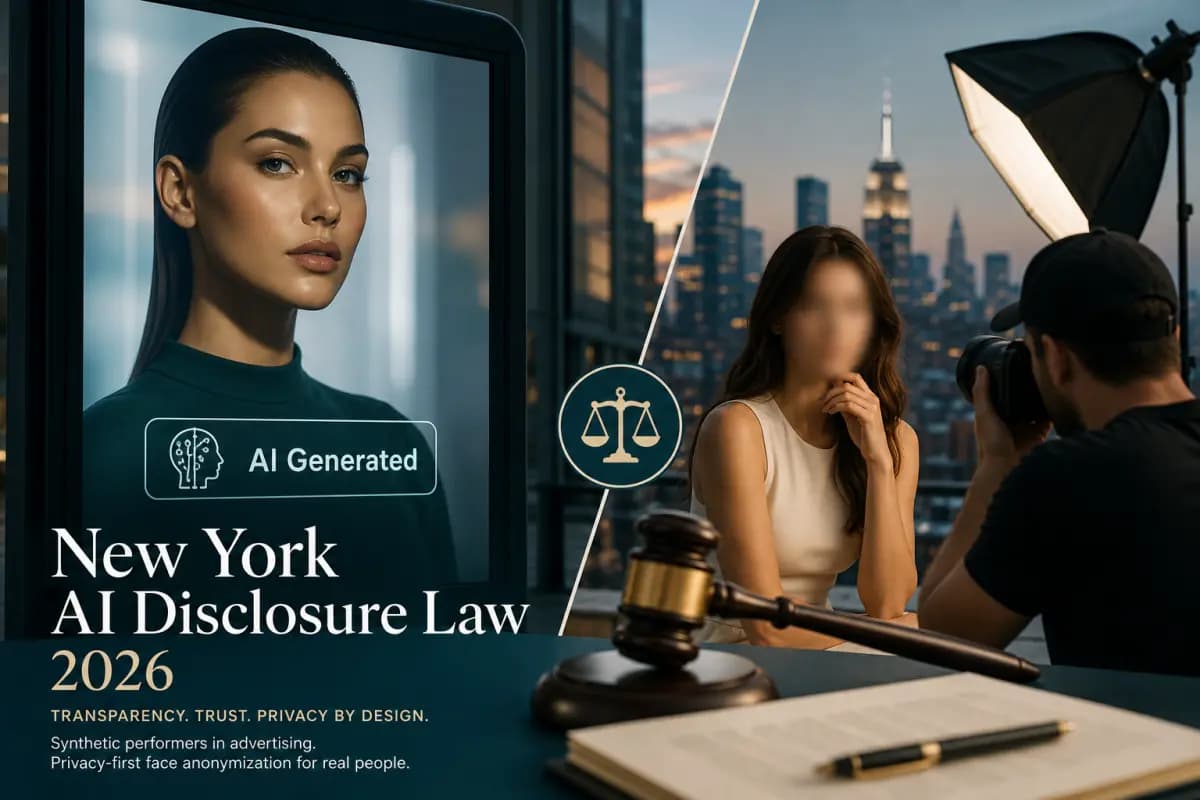
Introduction
On December 11, 2025, New York Governor Kathy Hochul signed groundbreaking legislation (S.8420-A) requiring advertisers to disclose AI-generated "synthetic performers" in commercial advertisements starting June 9, 2026. With penalties reaching $5,000 per violation and New York's aggressive enforcement history, advertisers face a critical strategic decision: embrace AI with mandatory disclosure or pivot to privacy-protected real human content.
BGBlur.com offers a third path – use real human models with automated face anonymization to eliminate AI disclosure requirements entirely while maintaining full GDPR, CCPA, and BIPA privacy compliance. This comprehensive guide explores New York's synthetic performer law and reveals how bgblur.com enables advertisers to create compliant, privacy-first content without the conversion-killing "AI-generated" disclaimers.
This article references and builds upon the comprehensive analysis available at explainx.ai's detailed breakdown of New York's AI Video Disclosure Law.
Understanding New York's Synthetic Performer Disclosure Law
What is S.8420-A?
Full Legal Framework:
- Bill Number: S.8420-A / A.8887-B
- Effective Date: June 9, 2026
- Scope: All commercial advertising featuring AI-generated human performers
- Enforcement: New York Attorney General with civil penalties
- First Violation: $1,000 per advertisement
- Subsequent Violations: $5,000 per advertisement
Who Must Comply?
The law targets anyone creating advertisements for commercial purposes:
✅ Required to Comply:
- Brands and advertisers running paid campaigns
- Marketing agencies producing commercial content
- E-commerce sellers using product photography
- Direct-to-consumer brands on Meta, Google, TikTok
- Political campaigns with paid advertising
- Influencers creating sponsored content
❌ Not Liable:
- Media platforms (Meta, Google, TikTok) publishing third-party ads
- Newspapers and traditional media outlets
- Streaming services hosting advertiser content
What Qualifies as a "Synthetic Performer"?
According to the law, synthetic performers are:
"Digital assets created, reproduced, or modified by computer using generative AI or software algorithms that give the impression of a human performer when not recognizable as any identifiable natural performer."
Examples Requiring Disclosure:
- AI-generated faces from Midjourney or Stable Diffusion in product ads
- Synthetic voiceovers created with ElevenLabs or Descript
- Virtual influencers like Lil Miquela promoting products
- Composite images blending multiple faces into non-identifiable persons
- Deepfake performances demonstrating products
Examples That Don't Require Disclosure:
- Real human models photographed for advertisements
- Identifiable celebrities (covered by separate digital replica laws)
- Cartoon or animated characters not meant to appear human
- Product-only imagery without human performers
- Background scenery or wide shots where humans are incidental
The Strategic Problem: AI Disclosure Impact on Conversions
Early Data on Disclosure Effects
Research from Northwestern University (2025) and the Marketing AI Institute (2026) reveals contradictory consumer responses to AI disclosure:
Positive Impacts (Fashion & Product Showcase):
- 73% of consumers appreciate transparency about AI use
- Trust increases when brands proactively explain AI workflows
- "AI-native" campaigns position brands as innovative
Negative Impacts (Testimonials & Endorsements):
- 41% of consumers trust ads less when synthetic performers are disclosed
- Testimonial credibility drops significantly with "AI-generated" labels
- Conversion rates decrease for relationship-driven products
The Disclosure Dilemma
For most advertisers, especially in e-commerce and DTC segments, the calculus is clear:
Option 1: Use AI-Generated Models + Disclosure
- Lower production costs (no photoshoots)
- Faster iteration and A/B testing
- BUT: Mandatory "AI-generated" disclosure may reduce trust and conversions
- AND: Compliance overhead for multi-state regulations
Option 2: Return to Traditional Human Models
- Higher production costs (photographers, models, studios)
- Slower content creation cycles
- BUT: No disclosure requirements
- AND: New privacy risks under GDPR, CCPA, and BIPA
Option 3: BGBlur's Privacy-First Approach
- Use real human models with automated face anonymization
- No AI disclosure requirements (not synthetic performers)
- Full privacy compliance (GDPR, CCPA, BIPA)
- Cost-efficient automated workflow
- Maintain authentic human presence without identity risks
How BGBlur Solves the Synthetic Performer Problem
The BGBlur Advantage
BGBlur.com enables advertisers to create commercial content featuring real human models while protecting individual privacy through automated AI-powered face detection and blurring – eliminating both synthetic performer disclosure requirements and privacy compliance risks.
Why BGBlur Content Doesn't Require Disclosure
Critical Legal Distinction:
New York's law requires disclosure for "synthetic performers" – digital assets created by AI that give the impression of human performance when not recognizable as any identifiable person.
BGBlur content uses real human performers who are:
- Actually photographed or filmed (not AI-generated)
- Privacy-protected through face anonymization
- Not "synthetic" under legal definitions
Result: No S.8420-A disclosure requirement because the performers are real humans, not AI-generated synthetic performers.
Privacy Compliance Without Consent Overhead
Traditional advertising with identifiable human models creates privacy risks:
GDPR Requirements (Europe):
- Explicit consent for using identifiable faces
- Biometric data processing restrictions
- Data subject access and erasure rights
- Potential €20M fines for violations
BIPA Requirements (Illinois):
- Written consent for biometric data collection
- Strict retention and destruction policies
- Private right of action with $1,000-$5,000 per violation
CCPA/CPRA Requirements (California):
- Consumer disclosure for personal information collection
- Opt-out rights for biometric data sales
- Enhanced penalties for violations
BGBlur Solution:
- Automated face anonymization eliminates identifiable biometric data
- No consent requirements for anonymized subjects
- Full regulatory compliance across all jurisdictions
- Zero privacy enforcement risk
BGBlur Technical Workflow for Advertisers
Step 1: Content Creation with Real Models
Produce advertising content using standard methods:
- Photoshoots with human models
- Video production with actors
- User-generated content from customers
- Event footage and B-roll with people
Step 2: Upload to BGBlur.com
Navigate to bgblur.com and upload your media:
- Supports all formats: MP4, MOV, AVI, JPEG, PNG
- Batch processing for multiple files
- Secure encrypted upload
- Fast processing infrastructure
Step 3: Automated AI Face Detection
BGBlur's advanced AI system:
- Scans every frame to detect all faces
- Works across angles, lighting, and motion
- Identifies faces regardless of obstruction
- Tracks faces through video sequences
Step 4: Privacy-Compliant Face Blurring
Customize anonymization to match your brand:
- Blur intensity: Subtle to complete obscuration
- Blur style: Gaussian blur, pixelation, or custom effects
- Selective blurring: Protect specific faces while maintaining others
- Edge detection: Natural-looking privacy protection
Step 5: Download & Deploy
- Receive processed content maintaining original quality
- Use across Meta, Google, TikTok, display networks, CTV
- No AI disclosure required (real humans, not synthetic)
- Full privacy compliance (no identifiable faces)
Integration Options
Web Interface:
- Simple drag-and-drop upload
- Real-time preview and customization
- Immediate download of processed files
API Integration:
- Seamless workflow automation
- Batch processing for high-volume operations
- Custom integration with DAM systems
Batch Processing:
- Upload entire content libraries
- Automated processing queues
- Scheduled anonymization workflows
Real-World Use Cases: BGBlur for Advertisers
E-Commerce Fashion Brands
Traditional Challenge:
- AI-generated models require disclosure
- Real model contracts + consent management overhead
- Privacy risks from identifiable imagery
BGBlur Solution:
- Conduct photoshoots with diverse models
- Process all imagery through BGBlur
- Deploy anonymized product photos across platforms
- Result: Authentic human presence, no disclosure, no privacy risk
Fitness & Wellness Brands
Traditional Challenge:
- Gym backgrounds reveal member identities
- AI-generated workout demonstrations lack authenticity
- Consent requirements for all visible individuals
BGBlur Solution:
- Film workout content in real gym environments
- Automatically blur background member faces
- Maintain focus subject visibility (optional)
- Result: Authentic gym atmosphere without privacy violations
Food & Restaurant Advertising
Traditional Challenge:
- Dining footage captures other patrons
- AI-generated food presentation lacks realism
- Privacy concerns in public spaces
BGBlur Solution:
- Capture real dining experiences and food preparation
- Blur incidental faces in backgrounds
- Maintain food and ambiance focus
- Result: Authentic dining atmosphere with privacy protection
Corporate & B2B Marketing
Traditional Challenge:
- Employee faces in testimonials and case studies
- Workplace footage reveals confidential information
- International privacy compliance complexity
BGBlur Solution:
- Film genuine workplace and employee content
- Anonymize faces while preserving professional context
- Blur screens and sensitive background information
- Result: Authentic corporate content with comprehensive privacy
Event Marketing & Conference Content
Traditional Challenge:
- Attendee privacy concerns at conferences and events
- AI-generated crowds lack authenticity
- Consent impossible for large gatherings
BGBlur Solution:
- Capture real event energy and participation
- Automatically blur all attendee faces
- Maintain event branding and atmosphere
- Result: Dynamic event footage without privacy violations
Compliance Comparison: AI Disclosure vs. BGBlur Approach
Option 1: AI-Generated Content with Disclosure
Requirements:
- ✅ Add "AI-generated performer" disclosure to every ad
- ✅ Update all creative templates
- ✅ Train media buyers on compliance
- ✅ Document AI usage for enforcement
- ✅ Monitor multi-state regulatory changes
Risks:
- ❌ Conversion rate impact from disclosure
- ❌ Consumer trust concerns
- ❌ Competitive disadvantage vs. real humans
- ❌ Patchwork compliance as more states regulate
Costs:
- Compliance overhead
- Potential conversion rate decrease
- Legal review and documentation
- Multi-state regulatory monitoring
Option 2: Real Models Without Privacy Protection
Requirements:
- ✅ Negotiate model contracts and releases
- ✅ Obtain consent for each jurisdiction
- ✅ Manage data subject rights (access, erasure)
- ✅ Maintain consent records
- ✅ Handle consent withdrawal requests
Risks:
- ❌ GDPR violations (€20M fines)
- ❌ BIPA lawsuits ($1,000-$5,000 per violation)
- ❌ CCPA enforcement and penalties
- ❌ Reputational damage from privacy violations
Costs:
- Model fees and contract negotiations
- Legal compliance infrastructure
- Consent management systems
- Privacy violation exposure
Option 3: BGBlur Privacy-First Approach
Requirements:
- ✅ Upload content to bgblur.com
- ✅ Apply automated face anonymization
- ✅ Download and deploy
Benefits:
- ✅ No AI disclosure (real humans)
- ✅ No privacy violations (anonymized)
- ✅ No consent overhead (no identifiable data)
- ✅ Multi-jurisdiction compliance (GDPR, BIPA, CCPA)
- ✅ Authentic human presence (not synthetic)
- ✅ Cost-efficient workflow (automated processing)
Costs:
- BGBlur subscription/processing fees
- Standard content production
- No compliance overhead
- No legal risk
Future-Proofing Your Advertising Strategy
Multi-State Regulatory Landscape
New York's law is just the beginning. As of June 2026:
States Advancing Similar Legislation:
- California AB-2655: $10,000 first violation penalties
- Illinois HB-3950: BIPA-style private right of action
- Texas SB-1084: Political advertising focus
- Florida HB-919: Broad news/satire exemptions
BGBlur Advantage:
- Single solution complies with all current and proposed state laws
- No need for geo-targeted disclosure variations
- Future-proof against regulatory expansion
Federal Regulation Timeline
Current Federal Landscape:
- FTC reviewing deceptive AI practices
- FCC proposing AI robocall disclosure rules
- Congress debating comprehensive AI frameworks
Prediction: Federal advertising disclosure law unlikely before 2028, but state patchwork creates compliance complexity.
BGBlur Strategy:
- Eliminates disclosure requirements regardless of future regulations
- Privacy-first approach aligns with all regulatory directions
- Scalable across any jurisdiction
Consumer Trust Trends
Research Insights:
- 73% appreciate AI transparency
- 41% trust AI-generated content less
- "Real human model" becoming premium signal (like "organic" for food)
BGBlur Positioning:
- Maintain authentic human presence
- Demonstrate privacy responsibility
- Differentiate from AI-generated competitors
- Build long-term consumer trust
Advanced BGBlur Features for Advertisers
Selective Face Blurring
Consent-Based Workflows:
- Blur non-consenting individuals
- Maintain visibility for consenting performers
- Role-based protection (employees vs. customers)
- Age-based protection (automatic minor detection)
Use Case: Corporate video featuring CEO testimonial with employee background:
- Keep CEO face visible (consent obtained)
- Automatically blur all employee faces
- Maintain professional office atmosphere
- Result: Compelling leadership content with privacy protection
Dynamic Blur Intensity
Context-Aware Processing:
- Stronger blur for close-ups
- Subtler effects for wide shots
- Motion-responsive blur for dynamic scenes
- Consistent protection across all frames
License Plate & Object Anonymization
Beyond Face Blurring:
- Automatic license plate detection and blurring
- Logo redaction for copyright protection
- Screen and document blurring for confidentiality
- Custom object detection and anonymization
Use Case: Automotive advertising with street scenes:
- Blur all non-featured vehicle license plates
- Anonymize pedestrian faces
- Maintain featured vehicle visibility
- Result: Legal compliance with authentic urban atmosphere
Background Blur for Focus
Visual Enhancement + Privacy:
- Blur backgrounds while maintaining subject focus
- Professional bokeh effects
- Privacy protection for incidental captures
- Enhanced visual hierarchy
Use Case: Product demonstration videos:
- Blur messy workshop backgrounds
- Maintain product and demonstrator focus
- Professional presentation quality
- Result: Clean, focused content without re-shooting
Cost-Benefit Analysis: BGBlur vs. Alternatives
Traditional Model Photography
Average Costs:
- Model fees: $500-$5,000 per day
- Photographer: $1,000-$10,000 per shoot
- Studio rental: $500-$2,000 per day
- Legal contracts and releases: $500-$2,000
- Total per shoot: $2,500-$19,000
BGBlur Enhancement:
- Add anonymization: $29-$299/month (unlimited processing)
- Eliminate consent management overhead
- Reduce legal review costs
- Net benefit: Privacy compliance + cost reduction
AI-Generated Content
Costs:
- AI tool subscriptions: $10-$100/month
- Compliance overhead: $1,000-$5,000/year
- Legal review and documentation: $2,000-$10,000
- Potential conversion rate impact: 5-15% decrease
BGBlur Alternative:
- Maintain authentic human presence
- No disclosure requirements
- No conversion rate penalty
- Similar or lower total cost
BGBlur Pricing Model
Flexible Options:
- Pay-Per-Video: Process individual files as needed
- Monthly Subscription: Unlimited processing for high-volume advertisers
- Enterprise API: Custom pricing for workflow integration
- ROI: Compliance + privacy + efficiency = positive return
Implementation Checklist for Advertisers
Immediate Actions (Before June 9, 2026)
1. Audit Current Content:
- ✅ Inventory all active advertising campaigns
- ✅ Identify AI-generated synthetic performers
- ✅ Flag content requiring disclosure or replacement
- ✅ Prioritize high-spend campaigns for review
2. Evaluate Privacy Risks:
- ✅ Review real human model consent documentation
- ✅ Assess GDPR, BIPA, CCPA compliance
- ✅ Identify content with identifiable faces lacking consent
- ✅ Calculate potential privacy violation exposure
3. Test BGBlur Workflow:
- ✅ Sign up at bgblur.com
- ✅ Upload sample advertising content
- ✅ Review anonymization quality
- ✅ Validate output across target platforms
4. Update Content Creation Workflow:
- ✅ Integrate BGBlur into production pipeline
- ✅ Train creative teams on privacy-first approach
- ✅ Establish automated batch processing
- ✅ Document compliance procedures
Strategic Decisions
1. Content Strategy:
- Embrace privacy-first authentic human content?
- Invest in BGBlur automation vs. manual compliance?
- Differentiate from AI-generated competitors?
2. Platform Deployment:
- Prioritize Meta, Google, TikTok for BGBlur content?
- A/B test privacy-protected vs. disclosed AI content?
- Monitor conversion rates and engagement metrics?
3. Brand Positioning:
- Communicate privacy commitment to consumers?
- Use "Real Human Models - Privacy Protected" messaging?
- Differentiate in privacy-conscious market segments?
Conclusion: The Privacy-First Future of Advertising
New York's synthetic performer disclosure law marks a turning point in advertising regulation – but it's not just about AI disclosure. The law reflects broader consumer expectations for transparency, privacy, and authenticity in commercial content.
BGBlur.com enables advertisers to embrace this future by offering:
✅ Authentic Human Presence – Real models, not synthetic performers ✅ No Disclosure Requirements – Skip AI compliance entirely ✅ Full Privacy Compliance – GDPR, BIPA, CCPA protection ✅ Cost-Efficient Workflow – Automated processing at scale ✅ Future-Proof Strategy – Ready for multi-state regulations ✅ Consumer Trust – Privacy-first brand positioning
The era of undisclosed AI-generated advertising is ending. The question isn't whether to comply, but how to do so while preserving authenticity, trust, and competitive advantage.
BGBlur's answer is clear: Use real humans with automated privacy protection. Skip the disclosure requirements. Build consumer trust. Win in the privacy-first future.
Get Started with BGBlur Today
Ready to future-proof your advertising strategy?
- Visit bgblur.com to start your free trial
- Upload your first advertising content
- Experience automated face detection and anonymization
- Deploy privacy-compliant content across all platforms
For enterprise solutions and API integration:
- Contact the BGBlur team for custom pricing
- Integrate privacy protection into your DAM workflow
- Scale compliance across your entire content library
Additional Resources:
- Complete Guide to Face Blurring in Videos
- GDPR Video Compliance Requirements
- License Plate Anonymization Best Practices
- ExplainX AI Disclosure Law Deep Dive
Update — August 5, 2026: Synthetic voices carry the same disclosure and abuse risks as synthetic faces. See our guide on AI voice cloning scam protection, covering the reported 1,210% surge in AI voice scams and the FTC complaint against voice-cloning platform Speechify.
The privacy-first future of advertising starts now. Choose real humans. Choose privacy protection. Choose BGBlur.