Why You Should Avoid Showing License Plates Online [2026]
License plates look like harmless background detail, but they link directly to your name, address, and vehicle history through registration databases and data brokers. This guide covers the real risks — cloning, insurance fraud, doxxing — and how to blur plates automatically before you post.
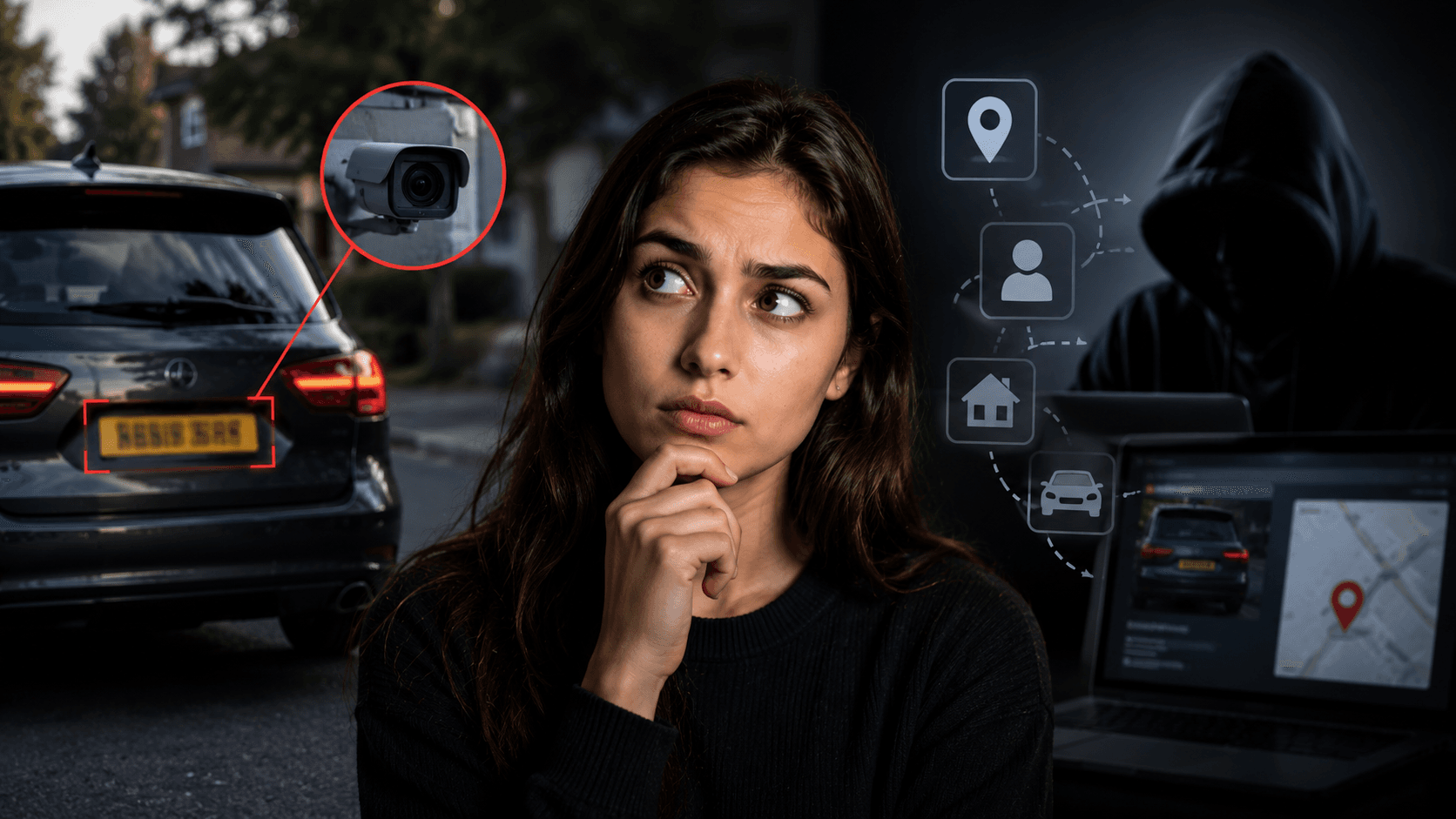
Posting photos or videos that clearly show license plates may seem harmless, but license numbers can be used to obtain personal details, facilitate harassment, or enable plate cloning. In an era where a single image can be reverse-searched, geotagged, and cross-referenced within seconds, even an innocent car selfie or road trip reel can expose far more than you intend. What looks like a random string of letters and numbers on your bumper is, in the wrong hands, a direct link to your identity, home address, and daily routine.
License plates are publicly visible on the road but that does not mean they should be permanently indexed on the internet. The leap from a physical sighting to a searchable, shareable digital record is a critical distinction that most people overlook. For a deeper look at whether specific platforms permit this, see is it illegal to show number plates on social media.
| Question | Answer |
|---|---|
| Is showing a plate online illegal? | Not always automatically, but it's increasingly treated as personal data under GDPR |
| Biggest risk? | License plate cloning and identity-linked profiling by data brokers |
| Can I remove a post later? | Copies may already be cached or screenshotted — deletion doesn't undo exposure |
| How do I fix it before posting? | Automated AI blur tools detect and blur plates in seconds |
| Does BGBlur handle dashcam footage? | Yes — motion-tracked blur across changing angles and lighting |
What Is a License Plate and Why Does It Matter Online?
A vehicle registration plate (commonly called a license plate or number plate) is a government-issued identifier tied to a specific vehicle in official databases. In many countries, this registration record links directly to the registered owner's name, address, and vehicle history.
While accessing these databases typically requires law enforcement credentials or a paid service, the digital age has introduced several workarounds from open vehicle history APIs to dark-web data dumps that make license plate lookups far more accessible than they were a decade ago. This is why your plate number, once posted online, carries real-world risk.
Key Risks
Identity Theft and Exposure of Personal Information
A license plate number can serve as a starting point for a chain of data lookups. In many jurisdictions, vehicle registration information is semi-public or accessible through third-party lookup tools. Bad actors can use your plate to find your registered name, approximate home address, and vehicle make or model. Combined with other publicly available information social media profiles, location check-ins, and tagged photos this creates a detailed personal profile that can be exploited for identity theft, phishing, or targeted scams.
Insurance fraud is another growing concern. Scammers who know your plate number and vehicle details can file fraudulent insurance claims, stage accidents, or impersonate you in vehicle-related disputes.
License Plate Cloning Leading to Fines or Legal Troubles
License plate cloning where criminals duplicate your plate onto another vehicle is a well-documented crime that disproportionately affects people whose plate numbers are easily discoverable online. Cloned plates are commonly used to evade toll charges, traffic cameras, speed fines, and even to commit more serious offences.
The consequences fall on the legitimate plate owner. Victims of cloning have reported receiving fines, penalty notices, and even police inquiries for offences committed by a vehicle they have never seen. Resolving these disputes is time-consuming, stressful, and sometimes costly. The risk is amplified when your plate is paired with images of your actual vehicle making the clone far more convincing.
Long-Term Digital Permanence Once Online, It's Hard to Fully Remove
One of the most underestimated risks of sharing license plates online is the permanence of digital content. Once an image is posted, it can be screenshot, cached by search engines, archived by third-party tools, or re-shared across platforms before you have a chance to delete it. Even after the original post is removed, copies may persist for years in places you cannot reach.
This permanence is especially relevant for content posted on social media platforms, video-sharing sites, and community forums. A dashcam clip shared in a driving group, a photo posted to celebrate a new car, or a holiday snap with a vehicle in the background all of these can circulate indefinitely. The longer a plate is exposed online, the higher the probability that it will be indexed, scraped, or misused.
Who Is Most at Risk?
While anyone who posts vehicle images online carries some level of exposure, certain groups face elevated risk:
- Frequent travellers and vloggers who share dashcam footage, road trip videos, or travel content
- Car enthusiasts who post images of their vehicles at meets, on forums, or on social platforms
- Delivery drivers and rideshare operators whose vehicles appear in customer-shared photos
- Parents who post family holiday photos with vehicles in the frame
- Activists, journalists, and public figures for whom location tracking and targeted harassment are genuine threats
Even seemingly innocuous contexts selling a car online, sharing a parking victory, or posting a "just arrived" photo can expose your plate to an unknown and uncontrollable audience.
The Broader Privacy Picture
License plate visibility is part of a wider conversation about digital privacy hygiene. Just as you would redact your home address before posting a letter online, or blur your face in certain contexts, treating your license plate as sensitive information is a natural extension of responsible online behaviour.
Data brokers companies that aggregate personal information from public and semi-public sources are known to include vehicle registration data in their profiles. A plate number seen in a social media post can, over time, contribute to a profile that is sold to marketers, insurers, employers, or anyone willing to pay.
Regulators in several regions are beginning to take note. Privacy frameworks such as the GDPR in Europe and various state-level laws in the US increasingly recognise vehicle identifiers as personal data, meaning their careless publication may carry legal implications in certain contexts. Our full GDPR video content compliance guide covers how this applies to video specifically, including dashcam and bodycam footage.
How to Protect Yourself: Blurring a Plate Step by Step
Use automated detection tools to blur plates in videos and images before sharing. Services that detect license plates and apply consistent, high-quality blur reduce both risk and editing effort.
Step 1: Upload Your Photo or Video
Go to bgblur.com and drag-drop your file. BGBlur accepts photos and video up to 4K, including MP4, MOV, and M4V dashcam exports.
Step 2: Select License Plate Blur
Choose plate detection from the blur options. The AI scans every frame and locks onto plate regions even as the vehicle moves or the angle changes.
Step 3: Preview and Export
Review the preview to confirm the plate is fully obscured, then export as MP4, MOV, or WebM. Processed files are deleted within 24 hours, so nothing lingers on a server after you download it.
Modern AI-powered redaction tools can process footage in bulk, handle multiple angles and lighting conditions, and apply blur automatically without requiring frame-by-frame manual editing. This makes privacy protection practical even for high-volume creators or businesses that regularly publish video content. For dashcam owners specifically, see our guide on blurring faces and license plates in dashcam videos.
When sharing images of vehicles whether on social media, marketplaces, forums, or review platforms treating plate redaction as a default habit rather than an afterthought is the most effective long-term approach. If you're unsure whether a specific post crosses a line, our breakdown of whether someone can post your license plate on social media walks through the consent and platform-policy angle in more detail.
Frequently Asked Questions
Is it illegal to show license plates online? Not automatically, but regulators increasingly treat vehicle registration numbers as personal data under frameworks like GDPR. Careless publication that enables harassment or stalking can carry legal consequences even where posting itself isn't banned outright.
Can someone find my address from my license plate? Not directly from the plate alone — official databases require law enforcement or permissible-use access. But combined with social media posts, check-ins, and tagged photos, a plate number helps build a profile that narrows down your location and routine.
What is license plate cloning? Criminals duplicate your plate number onto another vehicle to evade tolls, cameras, and fines under your identity. A clear photo of your plate online, especially with your car's make and color visible, makes a convincing clone easier to produce.
Does blurring my plate ruin the photo or video? No. AI blur tools detect the plate region and apply a precise, motion-tracked blur that leaves the rest of the frame untouched, in seconds rather than a manual frame-by-frame edit.
How do I blur a license plate for free? BGBlur's free tier supports uploads up to 200MB and 10 minutes with automatic plate detection and a 720p export, no cost. Longer or bulk dashcam footage needs the Pro plan.
Does deleting a post remove my plate from the internet? Not reliably — screenshots, search engine caches, and third-party archives can preserve a copy before you delete the original. Blurring before posting is more effective than trying to scrub it afterward.
Who is most at risk from posting plates online? Frequent travellers and vloggers sharing dashcam footage, car enthusiasts, delivery and rideshare drivers, and activists or journalists facing targeted harassment all carry elevated exposure compared to occasional posters.
Conclusion
Avoiding the display of license plates online is a simple and effective step toward protecting your privacy and security. In a landscape where personal data is increasingly valuable and digital permanence is near-absolute, the small effort of blurring a plate before posting can prevent identity theft, plate cloning, location tracking, and a range of downstream harms. It is one of the easiest privacy habits to adopt and one of the most consistently overlooked. Start with BGBlur's automated license plate blur to build the habit into every upload.