Meta VR Glasses vs Ray-Ban Meta: Connect 2026 [2026]
At Connect 2026 Meta unveiled Meta VR Glasses, a 100-gram tethered headset shipping Spring 2027, alongside Ray-Ban Meta Gen 3 and a camera-free audio model. This comparison covers specs, price, cameras and the privacy trade-offs, and shows how to blur bystanders before you share any footage.
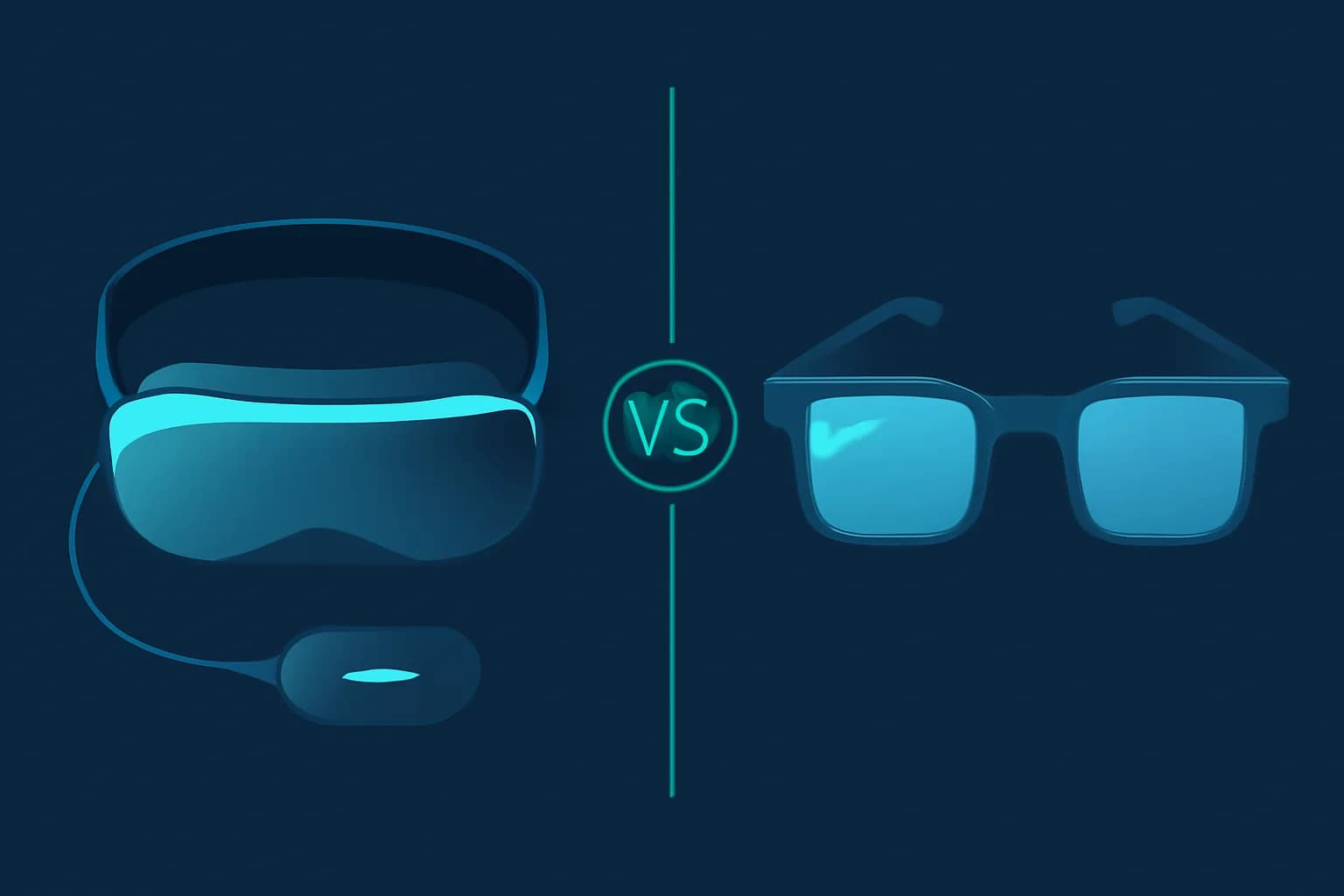
Meta Connect 2026 (September 23) put two very different face-worn products in the spotlight: Meta VR Glasses, a $1,300 ultra-thin headset that ships in Spring 2027, and the Ray-Ban Meta smart glasses line, now on Gen 3 from $449 with a camera-free Audio model alongside it. They look like cousins, but they do opposite jobs. One shows you a virtual world; the other films the real one, including the people in it.
This comparison covers what each product actually is, how the specs stack up against each other and against Quest 3, and where the privacy line falls between them. If you make videos with any of these devices, the last section shows how to blur bystanders and strangers before you publish, using BGBlur's face blur.
TL;DR: Meta VR Glasses vs Ray-Ban Meta
| Question | Answer |
|---|---|
| What is Meta VR Glasses? | A ~100 g tethered VR headset with micro-OLED displays and a separate compute puck |
| Price and release? | $1,300 (128GB), Spring 2027 |
| What are Ray-Ban Meta Gen 3? | Camera smart glasses with Meta AI, from $449, up to 9 hours of battery |
| Is there a camera-free version? | Yes, Ray-Ban Meta Audio from $349, shipping October 13 |
| Which one films bystanders? | Ray-Ban Meta. VR Glasses' cameras track you and pass through your room |
| Did Meta add bystander protections? | Forrester found no new features designed to protect the public |
| How do I protect bystanders in my clips? | Blur faces before posting with BGBlur |
What Did Meta Announce for VR at Connect 2026?
Meta announced Meta VR Glasses, previously codenamed Project Phoenix, at $1,300 for the 128GB model, shipping Spring 2027, according to UploadVR's launch report. UploadVR notes it is Meta's first non-LCD headset since the original Oculus Quest, and it deliberately trades field of view for weight and image quality.
The headline specs from UploadVR and Road to VR:
- Weight: around 100 grams on the head, magnesium alloy, fanless and passively cooled
- Displays: dual micro-OLED, 2412×2288 per eye, up to 120Hz, HDR with Dolby Vision, IMAX Enhanced certified
- Field of view: 70° horizontal × 66° vertical, about 87° diagonal, with an open-periphery design so you can see the real world at the sides
- Compute: no onboard computing; a puck (around 300 g, 12GB RAM, Snapdragon Reality Elite) connects by a thin fiber optic cable, with a microSD slot for storage expansion
- Tracking: four eye-tracking cameras, face tracking, hand tracking, and 26 PPD color passthrough
- Input: gaze and hand gestures by default; Touch Plus controllers sold separately
- Software: the same operating system as Quest 3 and the same content library
Meta says the puck lasts 3+ hours of mixed use and includes a 45W USB-C charger. Road to VR also lists 75+ games and apps optimized for hand gestures at launch, plus streaming from Disney+, Peacock, HBO, YouTube and Prime Video.
What Did Meta Announce for Smart Glasses?
Meta launched three glasses-adjacent products beside the headset, according to Engadget's live coverage and its Gen 3 hands-on:
- Ray-Ban Meta Gen 3, from $449, in Aviator and Zena frame styles. Battery life tops out at 9 hours, there is a sixth microphone for noise reduction, a programmable action button, adjustable temple tips, and Dolby Atmos and spatial sound capture.
- Ray-Ban Meta Audio, Meta's first camera-free glasses, from $349, shipping October 13.
- Muse Charm, a pendant-style device carrying Meta's new Muse AI agent, planned for the holidays.
Meta also said Muse AI will work with retailers including Walmart and Instacart, and introduced a virtual environment to isolate Muse interactions from the rest of Meta. One thing I could not verify from the coverage available today: Gen 3's camera resolution and its recording indicator design. Meta hasn't detailed those in the sources I checked, so treat any claim about them as unconfirmed.
Meta VR Glasses vs Ray-Ban Meta vs Quest 3: Side-by-Side
| Feature | Meta VR Glasses | Ray-Ban Meta Gen 3 | Quest 3 |
|---|---|---|---|
| Category | Tethered VR headset | Camera + AI smart glasses | Standalone mixed-reality headset |
| Price | $1,300 (128GB) | From $449 | $600 (512GB) |
| Release | Spring 2027 | Announced Sept 2026 (date unconfirmed) | Available now |
| Weight | ~100 g (plus ~300 g puck) | Standard glasses weight | Heavier, full headset |
| Display | Micro-OLED 2412×2288 per eye | None (audio and AI) | LCD 2064×2208 per eye |
| Field of view | 70° × 66° | Not applicable | ~110° × 96° |
| Eye and face tracking | Yes | No | No |
| Controllers | Sold separately | Not applicable | Included |
| Outward-facing recording | Passthrough + tracking cameras | Yes, camera captures what you see | Passthrough cameras |
| Battery | 3+ hours (puck) | Up to 9 hours | Built into headset |
The practical takeaway: Meta VR Glasses versus Ray-Ban Meta is not really a shopping decision. Nobody chooses between a headset and glasses that record photos on a walk. The real comparison for most buyers is Meta VR Glasses versus Quest 3, and Ray-Ban Meta against its own camera-free sibling.
Are Ray-Ban Meta Glasses "Spy Glasses"?
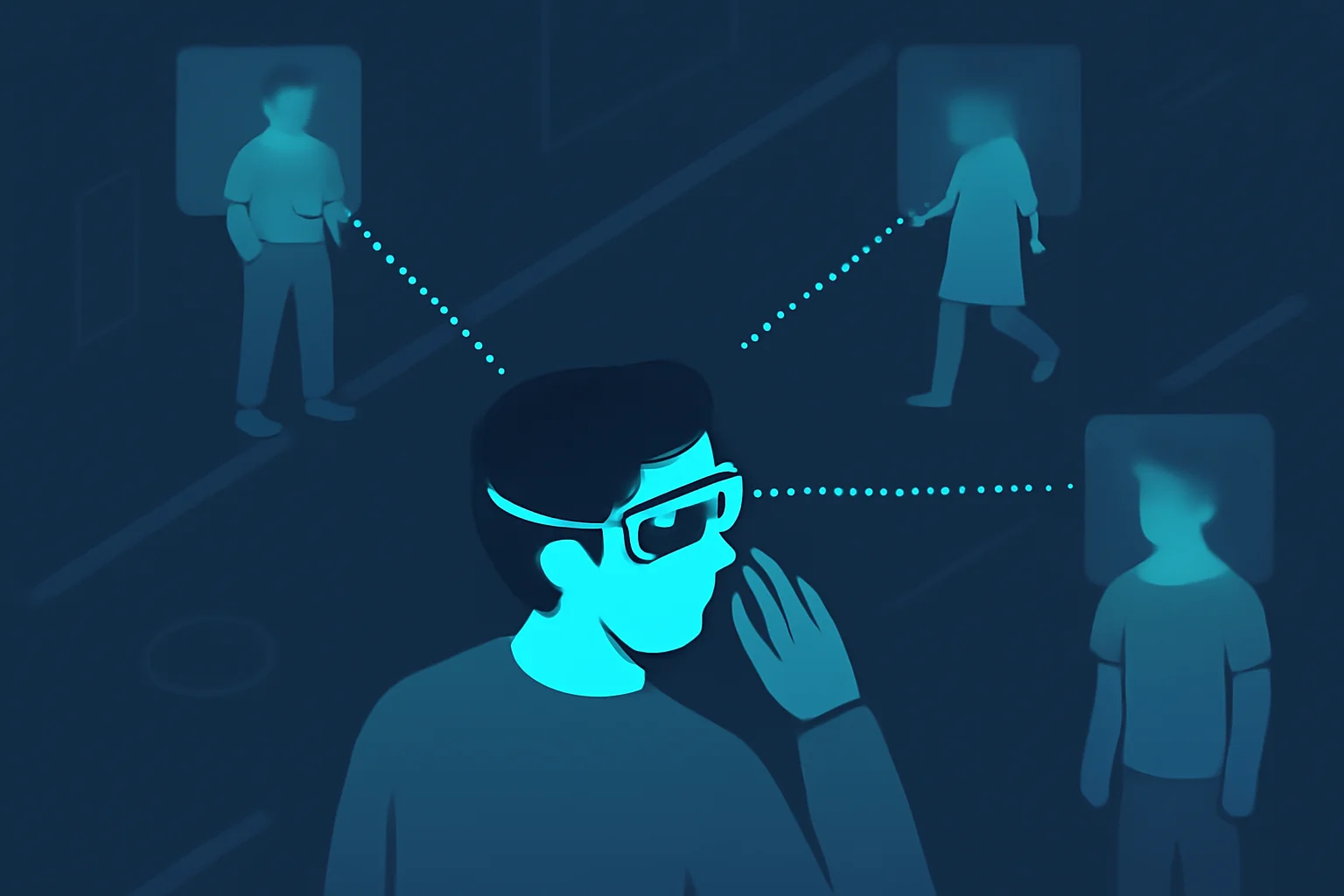
Not by design, but the concern is legitimate and well documented. Ray-Ban Meta glasses look like ordinary eyewear while carrying a camera and microphones, which is exactly what makes bystanders uneasy. Forrester's Connect 2026 analysis says viral videos showed users tampering with the filming indicator light and that the first wave of user content included public harassment and nonconsensual filming. Its verdict on Meta's response: the company seems to be "noting no new features designed to protect the public."
The legal picture varies by place. Recording in public spaces is generally allowed in the US, but audio recording, private venues, gyms, changing rooms and workplaces bring different rules. Australia's eSafety regulator has taken a harder line, covered in our post on eSafety and smart glasses face blur defaults. For a broader look at how venues are reacting, see smart glasses misuse, bans and how to protest, and for the covert-filming angle specifically, smart glasses covert filming and privacy protection.
Do Meta VR Glasses Have the Same Privacy Problem?
Mostly no, but they introduce a different one. A headset worn indoors is not aimed at strangers, and the 100-gram open-periphery design is meant for a desk or couch. The cameras that do exist are passthrough cameras (so you can see your room), hand-tracking cameras, and four cameras aimed at your own eyes.
That last group is the new sensitivity. Eye tracking on these headsets serves UI selection and biometric unlock, and Road to VR lists iris detection among the sensors. Eye and face data is biometric data, which is regulated more strictly than ordinary telemetry under laws like the GDPR. Meta's Muse claims about a "Confidential VM" are about the AI agent, not headset sensor data, so read Meta's data policy for the headset when it publishes ahead of the Spring 2027 launch.
If you record passthrough footage of your living room and post it, family members and visitors appear in it just as they would in a phone clip. The blur step is the same. For the broader picture across brands, read our guide to smart glasses content creation privacy across Apple, Meta and Google.
Which Should You Buy?
Buy Meta VR Glasses if you want a light, high-resolution headset for movies, productivity and social presence, you can wait until Spring 2027, and you accept a narrower field of view (70° × 66° versus Quest 3's roughly 110° × 96°) and a $1,300 price. Eye and face tracking is the real differentiator.
Buy Quest 3 if you want games, a wide field of view and controllers in the box for less than half the price, and available today.
Buy Ray-Ban Meta Gen 3 if you want hands-free photos, video and Meta AI in a normal-looking frame, and you're willing to take responsibility for the people you film.
Buy Ray-Ban Meta Audio if you want the AI and audio features but need a device that venues, workplaces and friends will actually accept, since it has no camera.
How Do I Blur Bystanders in Smart Glasses or Headset Footage?
Point-of-view footage almost always captures strangers. Meta's own automatic blur is limited and unreliable, as we detail in does Meta blur faces in smart glasses videos, so the blur that counts is the one you apply before publishing. It also matters for the facial-recognition concerns covered in Meta smart glasses facial recognition and the ACLU backlash.
Step 1: Export your clip
Transfer the video from the Meta AI app or your headset to your computer or phone. MP4, MOV and M4V up to 4K are supported.
Step 2: Upload to BGBlur
Open bgblur.com and drop the file in. No installation is needed; processing runs in your browser.
Step 3: Let the AI detect faces
BGBlur detects every face in the frame automatically. Motion tracking follows people as they move, so a passer-by stays covered across the entire clip, not just the first frame.
Step 4: Preview and export
Check the result, then export as MP4, MOV or WebM. Processed files are deleted within 24 hours. For a wider walkthrough, see the face blur guide.
Honest Limitations
Some of this is still moving. Meta VR Glasses don't ship until Spring 2027, so real-world comfort, battery and privacy-policy details are unproven. Gen 3's camera and indicator light specs weren't detailed in the coverage I could verify. BGBlur also can't stop someone else's glasses from filming you or identify you on their device; it protects footage you are about to publish. For fleet-scale archives of hundreds of hours, dedicated enterprise redaction software may be more cost-effective, and our best video redaction software comparison covers those options.
The Bottom Line
Meta VR Glasses versus Ray-Ban Meta comes down to which way the cameras point. VR Glasses aim inward and at your room, at $1,300 in Spring 2027. Ray-Ban Meta aims outward at everyone else, from $449, and Meta added no new protections for the people it films. If you publish smart glasses footage, the responsible move is to blur faces yourself first. Try BGBlur's face blur on your next clip.