Barbers in India Are Filming Customers to Train AI [2026]
A viral clip of a barber recording his own haircuts is part of a much larger trend: Indian gig workers wearing head-mounted cameras to sell first-person video to AI and robotics labs. This guide breaks down which companies are running this data pipeline, whether it holds up under India's DPDP Act 2023, and what happens to the customers who never agreed to be filmed at all.
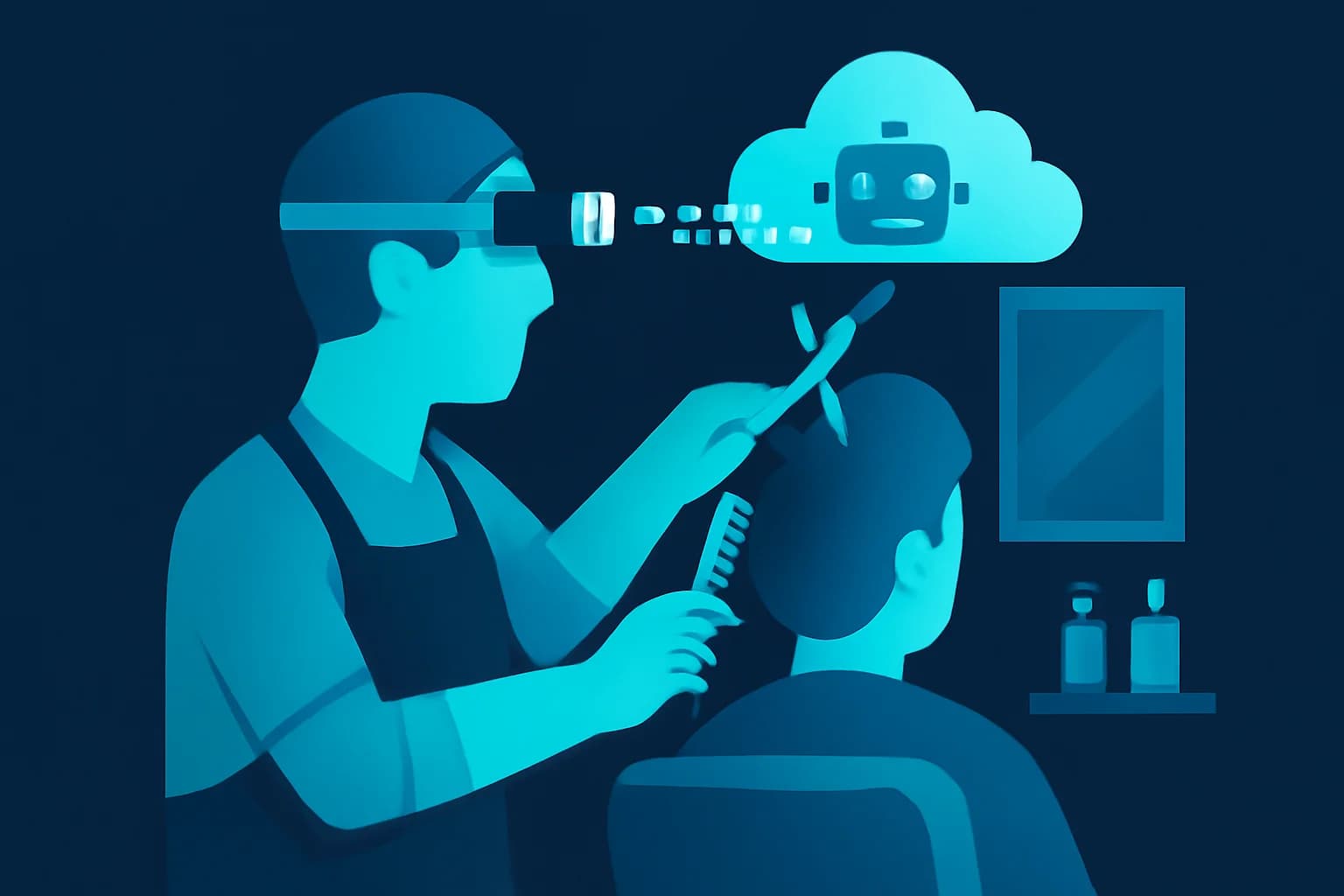
A clip of an Indian barber mounting a small camera above his mirror to record his own haircuts went viral for a simple reason: it looks like someone filming their own replacement. That instinct is closer to the truth than it sounds. Across India, hundreds of thousands of hours of first-person video, folding laundry, cooking, cutting hair, cleaning rooms, are being recorded every month and sold to AI labs building humanoid robots. The workers wearing the cameras usually know what they signed up for. The customers sitting in the chair, walking through the frame, or standing at the counter almost never do.
This guide breaks down exactly who is running India's AI training-data pipeline, whether recording customers this way holds up under the DPDP Act 2023, and what a shop, salon, or platform should actually do before that footage leaves the building.
Faces in the clip above have been blurred with BGBlur before publishing - exactly the step this guide argues should happen to every bystander in this kind of footage.
TL;DR: Is This Legal, and What Should You Do?
| Question | Answer |
|---|---|
| Is recording yourself for AI training legal in India? | Yes, if you consent to it as the worker. |
| Is recording customers/bystanders in that footage legal? | Not without their separate, specific consent - a real gap in most of this data collection. |
| Which law applies? | DPDP Act 2023 - video of an identifiable person is personal data. |
| Who is investigating this industry? | MeitY (Ministry of Electronics and IT), per multiple 2026 reports. |
| Maximum penalty for non-compliant data fiduciaries? | Up to ₹250 crore per breach. |
| What fixes the bystander problem right now? | Blur every non-consenting face before handing off footage - tools like BGBlur do this automatically. |
Why Are Workers Across India Suddenly Wearing Head Cameras?
Robots that fold laundry, cook, or cut hair need to learn from watching humans do it first, and the industry term for that footage is egocentric data: first-person, head- or wrist-mounted video of someone performing a physical task, paired with motion and sometimes force-sensor data. AI labs feed this footage into what are increasingly called Large Behaviour Models, systems that learn to map human hand and body movement into robot instructions.
India has become the center of this data-collection boom for reasons that have little to do with robotics and everything to do with labor economics: a huge low-wage informal workforce, existing outsourcing infrastructure from two decades of BPO work, and - until recently - light regulatory attention on what "consent" means when a camera is strapped to someone's forehead. According to the MIT Technology Review report on gig workers training humanoid robots, workers in India, Nigeria, and Argentina are now filming themselves doing ordinary chores at home and submitting the footage to platforms that pay by the hour of usable video.
The barber example is a small, visible version of a much bigger operation. In April 2026, footage of textile workers at a factory in the Delhi NCR region wearing head-mounted cameras went viral for the same reason - it made an invisible industry suddenly visible, as Inc42's investigation into India's robot-training economy documented.
Who Is Actually Paying for This Footage?
This isn't one company - it's a small but fast-growing supply chain of Indian data-collection startups selling into US and global robotics labs. Here's who's confirmed to be operating in this space as of late 2026:
| Company | What they do | Where they source footage |
|---|---|---|
| Human Archive | Founded by UC Berkeley/Stanford researchers; raised $8.2M seed funding; pays workers roughly $1/hour; over 1,000 active headsets deployed | Home services, hotels, restaurants - largely inside private homes and small businesses |
| Micro1 | Hires contract "AI trainers" across 50+ countries, including India | Workers mount iPhones on head rigs to record chores like laundry, dishes, and cooking |
| Scale AI | Established AI data-labeling giant; has gathered an estimated 100,000 hours of robotics-training footage globally | Recruits data recorders through its own platform across multiple countries |
| Awign | India's large on-demand gig-work fulfillment platform | Captures up to roughly 1,000 hours of 4K footage per day from India |
| Objectways | India/US data-labeling firm, Amazon SageMaker partner, Fortune 500 clients | Pays household and textile workers ₹250/hour to wear sensor devices |
| Egolab.AI | Founded January 2026 by two teenage founders; calls itself "India's largest first-person POV data aggregator" | Garment factory workers, using lightweight head cameras |
✅ Why Barbershops and Salons Specifically Matter Here
Salons and barbershops are attractive to this industry for the same reason kitchens and laundry rooms are: they involve fine hand-eye coordination robotics labs badly want to model - trimming, shaping, precise small movements around a person's head. That last detail is exactly what makes the customer-privacy problem sharper than in a factory: a haircut is physically impossible to film without capturing the customer's face, at close range, for several continuous minutes.
Is Recording Yourself and Your Customers for AI Training Actually Legal in India?
Short answer: recording yourself, yes; recording the person in your chair without asking them, no. Under India's Digital Personal Data Protection Act, 2023, video that identifies a person - a face, a voice, a distinctive tattoo - counts as personal data, and any business or platform collecting or processing it for a stated purpose becomes a "data fiduciary" the moment it starts recording. That status comes with obligations, not just to the worker wearing the camera, but to every identifiable person the camera happens to capture.
For a full breakdown of how the Act treats faces and identifying footage more broadly, see our DPDP Act video privacy compliance guide.
What Counts as "Separate and Specific" Consent for AI Training?
This is the detail most of this industry gets wrong. Consent obtained for one purpose - say, a salon's CCTV notice about "security monitoring" - does not extend to a completely different purpose like selling footage to a robotics lab. The DPDP Act requires consent that is free, specific, informed, and tied to a clearly stated purpose; bundling "we may use footage to improve our services" with an unrelated sale to a third-party AI company does not meet that bar. A worker agreeing to wear a camera for pay is one consent. A customer sitting in that worker's chair, who was never told a camera was recording at all, has given none.
Why Is MeitY Investigating These Companies?
Regulatory scrutiny arrived almost as fast as the funding did. Shortly after Human Archive's $8.2 million seed round made headlines, reporting on the resulting privacy probe confirmed that India's Ministry of Electronics and Information Technology (MeitY) is examining the consent mechanisms of startups recording home-service and gig workers before selling that footage on to robotics labs. Two of India's largest gig-work platforms, Urban Company and Pronto, have reportedly declined to partner with Human Archive specifically over these privacy concerns - a signal that even companies inside the gig economy see the consent gap as real, not theoretical.
What Happens to the Customer Who Never Agreed to Be Filmed at All?
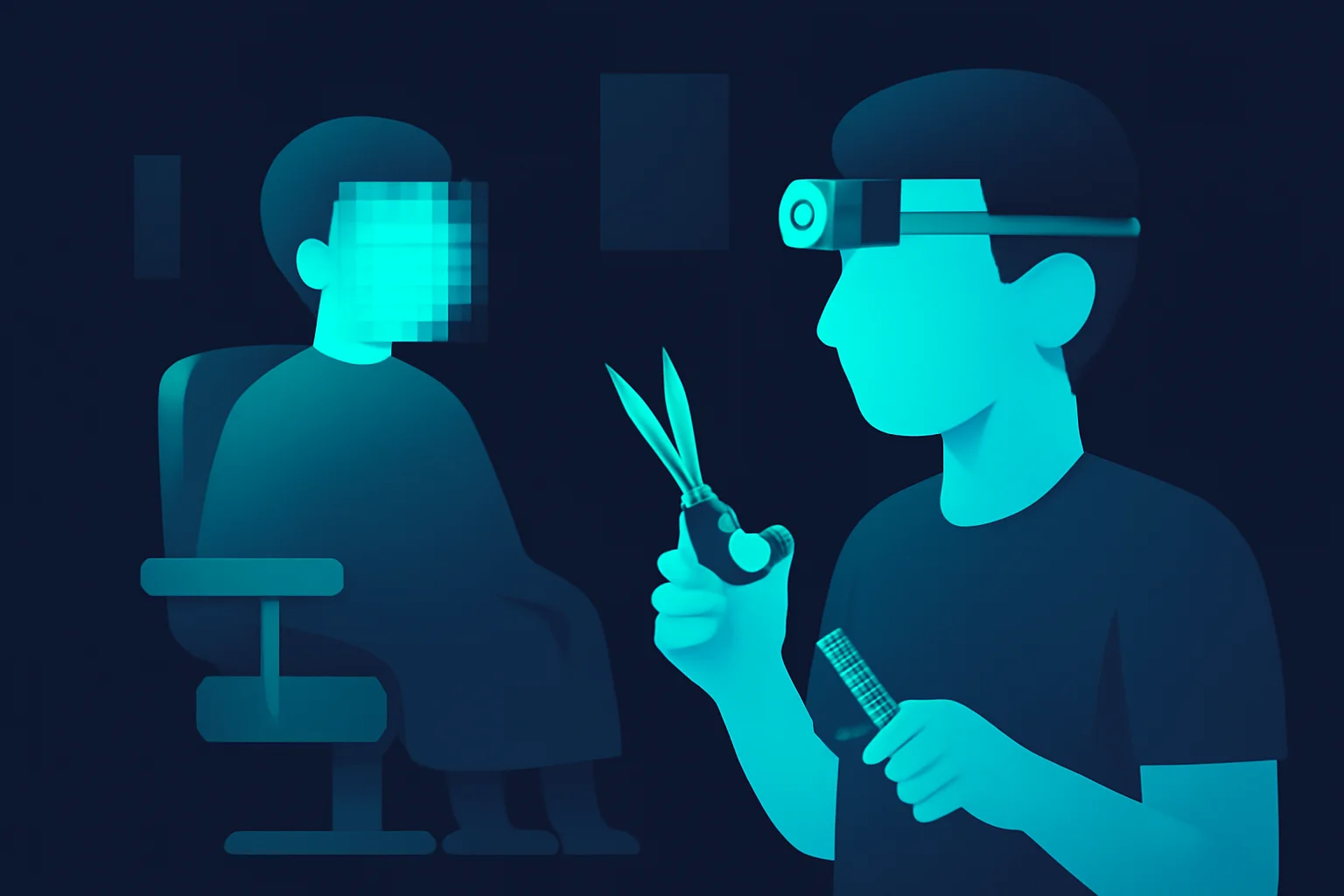
This is the part almost none of the coverage of this industry addresses head-on: the worker chose to wear the camera. The customer in the chair, the coworker walking past, the family member in the next room during an in-home shoot, did not. They are what privacy law calls incidental or bystander subjects, people captured on camera without being the intended subject and without ever being asked.
Human Archive has said publicly that its footage is anonymized with faces blurred and that its contracts comply with the DPDP Act. That claim matters, but it also isn't independently verifiable by the person sitting in the chair, and workers interviewed for the TechCrunch investigation into Human Archive's India operations said they had no visibility into how the resulting recordings would actually be stored, shared, or used once sold on to a robotics buyer. A privacy promise made three steps down a data supply chain is not the same thing as consent given by the actual person on camera.
If you're the one being recorded rather than doing the recording, our guide on what to do if you've been recorded without consent in India walks through the exact laws and complaint process that apply, separate from the AI-training angle covered here.
How Should a Shop or Platform Actually Handle This Before Footage Leaves the Building?
The fix isn't complicated, but it has to happen before the footage is handed to a data broker, not after. Here's the sequence that actually holds up under the DPDP Act:
Step 1: Get Written, Purpose-Specific Consent From Every Worker
Before any camera is switched on, the worker needs a plain-language notice stating exactly what is being recorded, who is buying it, and what it will be used for - "to train AI/robotics systems" is a required, specific line, not something folded into a generic employment or service agreement.
Step 2: Post Visible Notice for Anyone Entering the Frame
Customers and bystanders need a clear, visible sign that recording for AI/data-collection purposes is underway - the same principle as CCTV signage, but naming the actual purpose rather than a vague "premises are monitored."
Step 3: Get Affirmative Consent From Anyone Who Will Be Clearly Identifiable
If a customer's face will be in frame for more than an incidental moment - which, in a haircut, it will be for the entire session - get their explicit sign-off before recording starts, not a chance to opt out afterward.
Step 4: Blur Every Non-Consenting Face Before the Footage Ever Leaves the Shop
For anyone who didn't or couldn't consent - a customer who declined, a child accompanying a parent, a passerby caught through a window - run the footage through an AI face-blurring tool like BGBlur's face blur before it is uploaded to any platform or handed to any buyer. BGBlur's motion-tracked AI detects and blurs faces automatically across the full clip, processes the file in-browser, and deletes it within 24 hours, so the shop isn't left holding a permanent, unredacted copy of every customer who walked in that month.
✅ Why Blurring, Specifically, Solves the Legal Exposure
Anonymized data - data from which a specific individual can no longer reasonably be identified - falls outside several of the DPDP Act's stricter personal-data obligations. Irreversible AI blurring is a recognized anonymization method precisely because it removes the identifying feature rather than just labeling or restricting access to it. That's a meaningfully different, and stronger, protection than a promise buried three parties down the data chain that "faces are blurred somewhere in the pipeline." For more on how blurring stacks up against other anonymization approaches, see our comparison of AI face anonymizer tools: blur vs. synthetic replacement.
Manual Redaction vs. AI Blurring: Why This Matters at the Volume This Industry Operates At
| Approach | Manual frame-by-frame redaction | BGBlur (AI motion-tracked blur) |
|---|---|---|
| Speed for a 10-minute haircut clip | Hours of manual editing | Minutes, fully automated |
| Consistency across head movement | Breaks down as the subject moves | Tracks motion automatically |
| Scale for platforms processing 1,000+ hours/day | Not viable | Designed for batch processing |
| Original footage retention | Often kept indefinitely by default | Processed copy deleted within 24 hours |
At the volume this industry actually operates at - Awign alone reportedly captures roughly 1,000 hours of 4K footage per day - manual redaction of every bystander in every clip simply isn't realistic. That gap is exactly why automated tools need to sit inside the workflow from day one, not as an afterthought applied to a handful of flagged clips.
Who Else Needs to Think About This Beyond Barbershops
Home-service platforms: Any gig platform whose workers enter customers' homes to film chores needs consent from every adult household member visible on camera, not just the worker doing the task.
Restaurants and hotels: Kitchen and front-desk footage sold for AI training routinely captures coworkers and guests who never agreed to be part of a training dataset.
Small retail and salon owners: If a data-collection platform approaches your business directly, the legal exposure sits with you as the data fiduciary at the point of recording, not solely with the platform buying the footage afterward.
Journalists and researchers covering this industry: Footage or interviews gathered for reporting purposes should still blur any bystander who appears incidentally and hasn't consented to appearing in published material.
The Bottom Line
India's AI-training-data economy is real, it's growing fast, and it is already large enough to have drawn a formal government inquiry. Workers choosing to wear a camera and get paid for their own labor is a separate question from whether the person in front of them, at a salon chair, a kitchen counter, or a hotel front desk, ever agreed to anything at all. Right now, most of that footage leans on a downstream promise of anonymization rather than upfront, verifiable consent - and that gap is exactly where the DPDP Act's ₹250 crore penalty exposure lives.
The fix costs a business almost nothing: post the notice, get the consent, and blur every face that doesn't have one attached to it before the footage goes anywhere. Try BGBlur's face blur tool to anonymize any clip in minutes, directly in your browser, before it becomes someone else's training data.