Colonoscopy Recording Lawsuit: Patient Rights [2026]
When a Virginia man's phone accidentally kept recording through his colonoscopy, it captured his anesthesiologist mocking him — and became the evidence that won him $500,000. Here's what the case actually established about recording rights, medical malpractice, and protecting sensitive audio.
A phone left recording by accident became the deciding evidence in a $500,000 medical malpractice and defamation verdict. A Virginia man set his phone to record his doctor's post-op instructions before a 2013 colonoscopy, then forgot to switch it off. The device sat in his pants pocket under the operating table for the entire procedure — and captured his anesthesiologist mocking him, threatening to falsify his medical chart, and making remarks about his body that he was never meant to hear.
The case resurfaces online every few years because it touches something most people have wondered about but rarely tested: what a device left running by accident is actually allowed to capture, whether that recording holds up as evidence, and what it means for professionalism when a patient can't hear or respond. This guide walks through what actually happened, what the law says about recording your own medical care, and how to handle sensitive audio responsibly if you're ever in a similar situation.
TL;DR: The Colonoscopy Recording Case at a Glance
| Question | Answer |
|---|---|
| What happened? | A patient's phone accidentally recorded his entire colonoscopy, capturing staff mocking him while sedated |
| Where and when? | Fairfax County, Virginia, procedure in April 2013, verdict reached in 2015 |
| How much did the jury award? | $500,000 total — $100,000 defamation, $200,000 malpractice, $200,000 punitive damages |
| Was the recording legal? | Yes — Virginia is a one-party consent state, so the patient's own recording of his own conversation was lawful |
| Would this hold up everywhere? | Not automatically — two-party consent states require every participant's knowledge |
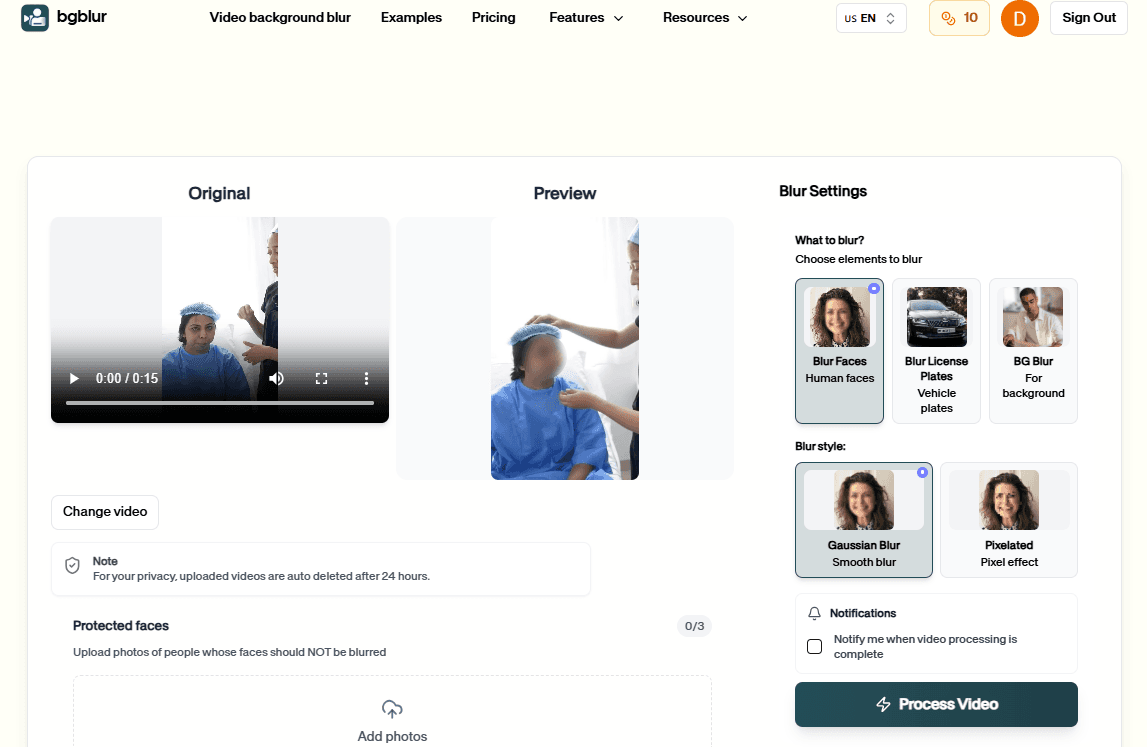
| Does BGBlur relate to this? | Yes — for redacting sensitive audio/video before sharing beyond the people who need to see or hear it |
What Actually Happened During the Procedure
The patient, who sued anonymously, had set his phone to record his physician's pre-procedure and aftercare instructions — a common practice for anyone who wants to remember discharge instructions given while still groggy from sedation. He forgot the recording was still running when he was wheeled in for the colonoscopy itself.
The phone, tucked into a pocket of his pants under the operating table, kept recording through the entire procedure. When he played it back afterward expecting to hear his own post-op instructions, he instead heard the anesthesiologist, Dr. Tiffany Ingham, and other staff discussing him while he was unconscious. The recording included remarks about his medical history, mockery of his alma mater, and a joke about firing a gun into his body. It also captured Dr. Ingham saying she wanted to "punch him in the face" after their pre-op conversation, and — critically for the defamation claim — a comment about falsely noting on his chart that he had hemorrhoids, a condition he didn't have.
He sued the anesthesiologist and three other members of the surgical team, though the other three were released from the case before trial. At trial in 2015, the recording was played for the jury, and it became the central piece of evidence supporting both the malpractice and defamation claims. The jury didn't need to weigh conflicting accounts of what was said — they heard it directly.
Was It Legal to Record the Procedure Without Anyone Knowing?
This is the question that makes the case relevant far beyond one Virginia operating room, and the answer depends entirely on where you are.
One-Party Consent States
Virginia — where this case took place — is a one-party consent state. Under this rule, a recording of a conversation is legal as long as one person taking part in it consents, even if every other person in the room has no idea it's happening. The patient was a participant in the room, even while sedated, and Virginia law didn't require him to notify the surgical staff. That's what made the recording both legal to make and admissible as evidence. Roughly two-thirds of U.S. states follow some version of one-party consent.
Two-Party (All-Party) Consent States
States like California, Florida, Illinois, Pennsylvania, and Washington require all parties to a conversation to consent before it can be recorded. In one of these states, a patient recording a procedure without telling anyone in the room could itself violate state wiretapping law — potentially exposing the patient to civil or even criminal liability, regardless of what the recording captured. Before recording any medical encounter, checking your specific state's consent statute is a real prerequisite, not a formality.
Why This Distinction Mattered for the Verdict
Because Virginia only required the patient's own consent, the recording was clean evidence from a legal-admissibility standpoint. The jury never had to rule on whether the recording itself was lawfully obtained — only on what it proved. That single fact of geography is why this case became a landmark example rather than getting thrown out on a technicality. For a deeper look at how consent law varies and what to do if you're on the other side of an unwanted recording, see our guide on being recorded without consent, which covers a different jurisdiction but the same underlying consent-law logic.
Why the Jury Awarded Both Malpractice and Defamation Damages
Most medical malpractice claims turn on a battle of experts and competing accounts of what happened in the room. This case was different because the jury had a verbatim recording, which changed what they were able to award damages for.
Medical malpractice ($200,000): The malpractice claim centered on the standard of care during the procedure itself, informed by what the recording revealed about the team's conduct and attentiveness.
Defamation ($100,000): Defamation claims require a false statement of fact, communicated to someone, that damages the subject's reputation. The recorded threat to falsely document a diagnosis the patient didn't have — hemorrhoids — met that bar directly, because it was a specific, false, recorded statement about to be entered into his permanent medical record.
Punitive damages ($200,000): Punitive damages are awarded specifically to punish conduct a jury finds particularly reckless or malicious, separate from compensating actual harm. The tone and content of the recorded remarks — mockery made about a sedated, non-consenting patient who couldn't hear or respond in the moment — is what pushed the jury toward punitive damages on top of compensatory awards.
The combination illustrates something worth sitting with: the recording didn't just support the malpractice claim, it created an entirely separate cause of action that wouldn't have existed — or would have been nearly impossible to prove — without direct audio evidence.
What This Case Means for Patient Dignity and Professional Conduct
The recurring discussion around this case isn't really about the legal mechanics — it's about what it reveals when people believe no one is listening. Sedation doesn't remove a patient's dignity or their legal standing; it just removes their ability to hear and respond in the moment. The verdict effectively established that professional conduct standards don't pause when a patient is unconscious.
For healthcare teams, the practical takeaway isn't "assume every room has a hidden microphone" — it's that the standard of respectful, professional conduct toward a sedated patient is the same standard that applies when they're awake and can hear every word. For patients, the case is a reminder that recording your own care, where legally permitted, is a real option for documenting what happens to you when you can't consciously observe it.
How to Handle Sensitive Recordings Responsibly
If you find yourself holding a recording — of your own care, a workplace incident, or anything else — that captures other identifiable people saying things they didn't intend to be shared, how you handle it afterward matters almost as much as the recording itself.
Step 1: Preserve the Original Unedited File
Before doing anything else, back up the raw recording exactly as captured. This is your primary evidence if you pursue a legal claim, and courts and attorneys will want the unaltered original, not a redacted version.
Step 2: Consult a Lawyer Before Sharing It Widely
An attorney can tell you whether your state's consent law protects the recording, whether it's admissible, and how to introduce it properly rather than risking it being excluded on a technicality.
Step 3: Redact Before Sharing Beyond Your Legal Team
If you need to share the recording with people outside your immediate legal case — a journalist, a review board, or a support group — strip out identifying detail for anyone whose voice or face doesn't need to be public. BGBlur's voice anonymization distorts identifiable voices while keeping the substance of what was said intact, and face blur handles any video component the same way — tracking faces through motion so a redacted copy can be shared without exposing people who aren't the point of the story.
Step 4: Keep the Redacted and Original Versions Separate
Use the unedited file for legal and administrative purposes, and the redacted version for anything more public. Mixing the two up risks either underprotecting someone's identity or undermining your evidence with an altered file.
Who This Case Is Actually Relevant To
Patients considering recording their own care: Check your state's one-party vs. two-party consent rule before you record anything, even instructions meant for your own benefit.
Healthcare compliance and risk management teams: The case is a concrete argument for reinforcing professionalism standards regardless of whether a patient is conscious, and for auditing what staff assume is "off the record."
Malpractice and personal injury attorneys: The verdict is a useful precedent for how direct audio evidence can support a defamation claim layered on top of a standard malpractice case.
Journalists and researchers covering the story: If you're producing content about the case and want to include audio or video clips, redact any real patient or staff audio you don't have explicit rights to publish — our guide on showing faces without consent covers the publication side of this same problem.
Frequently Asked Questions
Is it legal to record your own medical procedure without telling staff? It depends on your state's consent law. Virginia, where this case occurred, is a one-party consent state, so the patient's own consent was enough. Two-party consent states require everyone in the room to know.
What actually happened in the colonoscopy recording case? A Virginia man's phone kept recording after he used it to capture his doctor's post-op instructions, picking up his anesthesiologist mocking him during the procedure. A jury awarded him $500,000 in 2015.
Why did the jury award defamation damages on top of malpractice? The recording captured a threat to falsely document a diagnosis the patient didn't have — a specific false statement about to enter his medical record, which supported a separate defamation claim.
Can a recording like this be used as evidence in court? Yes, if it was made lawfully under the applicable state consent law. In this case, Virginia's one-party consent rule made the recording admissible.
Does HIPAA prevent staff from being recorded during a procedure? No. HIPAA governs how covered entities handle patient health information — it doesn't regulate a patient's own recording of their own care or protect staff conversations from it.
What should I do if a recording captures other identifiable people? Preserve the original as evidence, consult a lawyer before sharing it widely, and redact identifying voices or faces before sharing any copy beyond your legal team.
Are hospitals required to disclose if a room is being recorded? There's no federal requirement. Disclosure rules depend on the state and on whether the facility or the patient is the one recording — check your specific state's law.
Conclusion
The colonoscopy recording case is remembered less for its legal novelty than for what it exposed: professional conduct doesn't get a pass just because a patient is sedated and can't hear it happening. A recording made almost by accident — meant only to capture post-op instructions — became the evidence that proved it, and a jury backed that up with a $500,000 verdict spanning malpractice, defamation, and punitive damages.
If you're holding a sensitive recording of your own, the priority order is the same regardless of the situation: preserve the original, get legal advice before sharing it, and redact anyone else's identity before it goes beyond the people who need to see or hear it. BGBlur handles that last step — voice anonymization and face blur that let you share a redacted copy while your original stays intact as evidence.
Related Resources
- Healthcare Video Privacy: HIPAA Patient Face Blur Guide — When patient video counts as protected health information
- Audio Anonymization & Voice Distortion Guide — How voice redaction works before sharing sensitive audio
- Recorded Without Consent: Rights and Steps — What to do if you're on the other side of an unwanted recording
- Is It Illegal to Show Faces in YouTube Videos Without Consent? — Publication-side rules for identifiable people in video
- Top 10 Tools for Healthcare & Medical Video Content — Broader healthcare video privacy tooling
Last updated: August 2, 2026