Secretly Recorded in Germany? Your GDPR Rights [2026]
If someone secretly recorded you in Germany, you're protected by overlapping constitutional, criminal, and data protection law — not just one statute. This guide explains the Grundgesetz, GDPR, StGB Sections 201 and 201a, the KUG, and NetzDG, plus the exact steps to report the recording, demand deletion, and seek compensation.
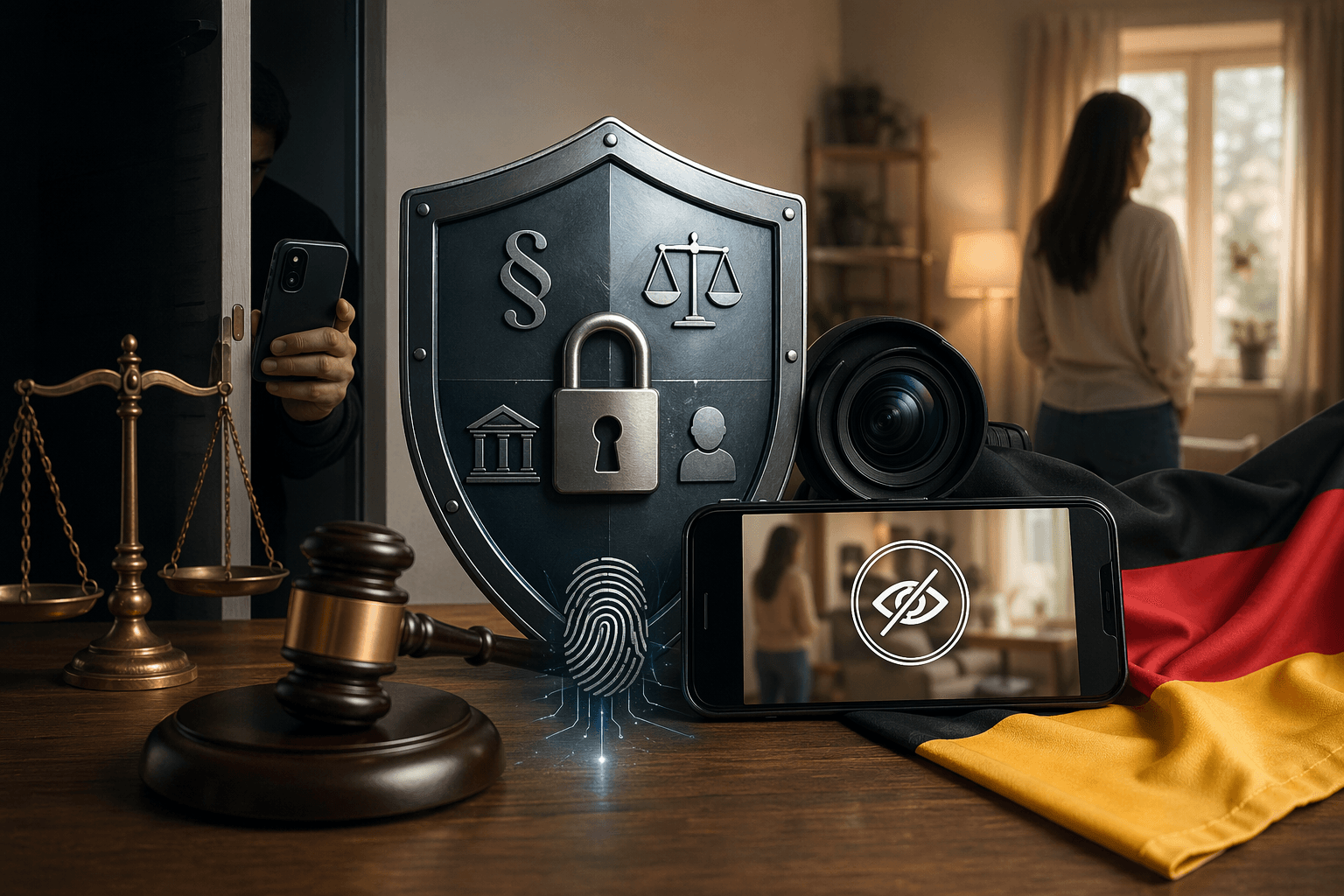
Is Secret Recording Illegal in Germany?
Yes, and German law treats it seriously. Germany has one of the strongest privacy frameworks in the world. Secretly recording someone in a home, workplace, or any private space can expose the person who did it to criminal charges, heavy fines, and civil liability. Most victims do not know where to start. This guide breaks it down simply and covers the same ground as our broader GDPR video content compliance guide applied specifically to a secret recording scenario.
| Question | Answer |
|---|---|
| Is secret recording a crime in Germany? | Yes — StGB Sections 201 and 201a, up to 5 years for intimate footage |
| Does GDPR also apply? | Yes — fines up to €20 million or 4% of global turnover |
| Who do I report it to? | Police (criminal) and your state Datenschutzbehörde (regulatory) |
| Can I demand it be deleted? | Yes — GDPR Article 17 and the KUG both support deletion requests |
| Is legal help free? | Yes — Prozesskostenhilfe and Verbraucherzentralen offer free guidance |
The Laws That Apply
German Basic Law (Grundgesetz) Articles 1 & 2
The constitution guarantees every citizen's right to human dignity and informational self-determination. You have a constitutional right to control information about yourself, including recordings of your voice and image. This is the foundation everything else builds on.
General Data Protection Regulation GDPR
Under the GDPR, any photo, video, or audio recording that identifies you is personal data. Anyone who collects, stores, or shares it without your explicit consent is in direct violation. Fines can reach up to 20 million euros. You have the right to access, correct, and permanently delete any data held about you. Enforcement is handled by Germany's state-level Data Protection Authorities (Datenschutzbehörden) and the Federal Commissioner (BfDI).
German Criminal Code StGB Sections 201 & 201a
Section 201 criminalises recording private conversations without consent up to three years imprisonment. Section 201a criminalises capturing images of someone in a private space such as a bedroom or bathroom, and sharing them penalties reach up to five years if the content is intimate or shared online.
Right to One's Own Image Kunsturhebergesetz (KUG)
Every person has a legal right to control how images of them are published or distributed. Sharing someone's image without consent allows them to file civil claims for damages and demand content removal immediately.
Network Enforcement Act NetzDG
If your recording was shared on Facebook, Instagram, WhatsApp, or TikTok, this law requires platforms to remove clearly unlawful content within 24 hours of a complaint. Platforms that fail face fines up to 50 million euros.
Why These Laws Matter
Secret recording is not a private matter to handle quietly it is a criminal act under multiple simultaneous laws. The person who recorded you faces prosecution, regulatory fines, and civil damages. You hold the rights. A single complaint to a Datenschutzbehörde can trigger a formal investigation and an order for immediate content deletion without waiting for a criminal trial. Filing a complaint also creates a formal record that protects others from the same person. For a state-by-state breakdown of enforcement culture, see our Germany BDSG video privacy guide, which covers the workplace and employee-monitoring provisions that sit alongside these criminal protections.
How to Report a Secret Recording, Step by Step
Step 1: Preserve the Evidence
Before contacting anyone, save screenshots, links, timestamps, and any messages referencing the recording. Do not delete your own copies — you need them for the police report and the Datenschutzbehörde complaint even after you request the original be taken down.
Step 2: File a Criminal Complaint
Report to your local police (Polizei) under StGB Sections 201 or 201a. This is free, does not require a lawyer, and starts the criminal process independently of any civil or regulatory action.
Step 3: Complain to Your State's Datenschutzbehörde
Each German state has its own data protection authority. A GDPR complaint can trigger an investigation and an order for deletion, often faster than waiting for the criminal case to resolve.
Step 4: Request Platform Takedown Under NetzDG
If the footage was posted to social media, submit a NetzDG removal request. Platforms must act on clearly unlawful content within 24 hours.
Step 5: Consult Free Legal Aid
Prozesskostenhilfe and your local Verbraucherzentrale can advise on pursuing civil damages under GDPR Article 82 and the KUG once the immediate takedown is underway.
How bgblur Keeps You Protected
bgblur protects your images before they can be misused — not after.
Metadata removal — bgblur strips invisible location, device, and time data from every photo before you share it, so it cannot be traced back to you.
Background blurring — Backgrounds reveal your home, workplace, and neighbourhood. bgblur automatically blurs them so your environment stays private. The same AI face blurring engine processes faces and backgrounds in seconds, entirely in your browser.
Consent documentation — bgblur documents that consent was given when sharing images of others, satisfying GDPR and KUG requirements directly.
Conclusion
German law gives you real, powerful protection. The GDPR, the StGB, the KUG, and the NetzDG together mean one violation can trigger criminal, regulatory, and civil consequences simultaneously for the person who wronged you. Preserve your evidence, file your complaint with the police and your state's Datenschutzbehörde, and seek legal help much of it is free. Your rights are already there. This guide helps you use them.
Frequently Asked Questions
Is secretly filming someone in a bedroom illegal in Germany? Yes. Section 201a of the StGB criminalises it, with penalties up to five years if the footage is intimate or shared.
What does the GDPR cover? Any personal data including photos, videos, and audio recordings of you. Fines for violations reach 20 million euros.
What if someone posted my video online? Report to the platform under NetzDG for removal within 24 hours. Then file a complaint with your Datenschutzbehörde and a criminal complaint with the police.
Can I get compensation? Yes. Civil damages claims under the GDPR, KUG, and German civil law can run alongside criminal and regulatory complaints.
Is free legal help available? Yes. Legal aid (Prozesskostenhilfe) and consumer advice centres (Verbraucherzentralen) in each state offer free or low-cost guidance.
How long does a Datenschutzbehörde investigation take? Timelines vary by state, but a formal complaint typically gets an initial response within weeks and can lead to a deletion order well before any criminal trial concludes.
Does deleting the recording count as evidence tampering? No — preserve your own copy (screenshots, links, timestamps) before requesting deletion from the platform. A takedown request under GDPR Article 17 does not destroy the evidence you keep for the police and Datenschutzbehörde.
Update — August 6, 2026: If it's a neighbor's doorbell or home security camera that caught you, rather than a stranger's phone, see our guide on doorbell and security camera GDPR bystander footage rules for how retention limits and deletion requests work in that specific situation. For a comparable case in another jurisdiction, see your rights if you were secretly recorded in Spain.