KAIST SweepLED: AI Hidden Camera Detector on Phone [2026]
Researchers at KAIST unveiled SweepLED, a smartphone attachment that sweeps LED light across suspicious objects while AI analyzes lens-specific reflection patterns — detecting concealed cameras in under five seconds with about 94% accuracy on everyday hotel-room items. This guide explains how it works, what it cannot catch, and how detection pairs with face blur when you publish video.
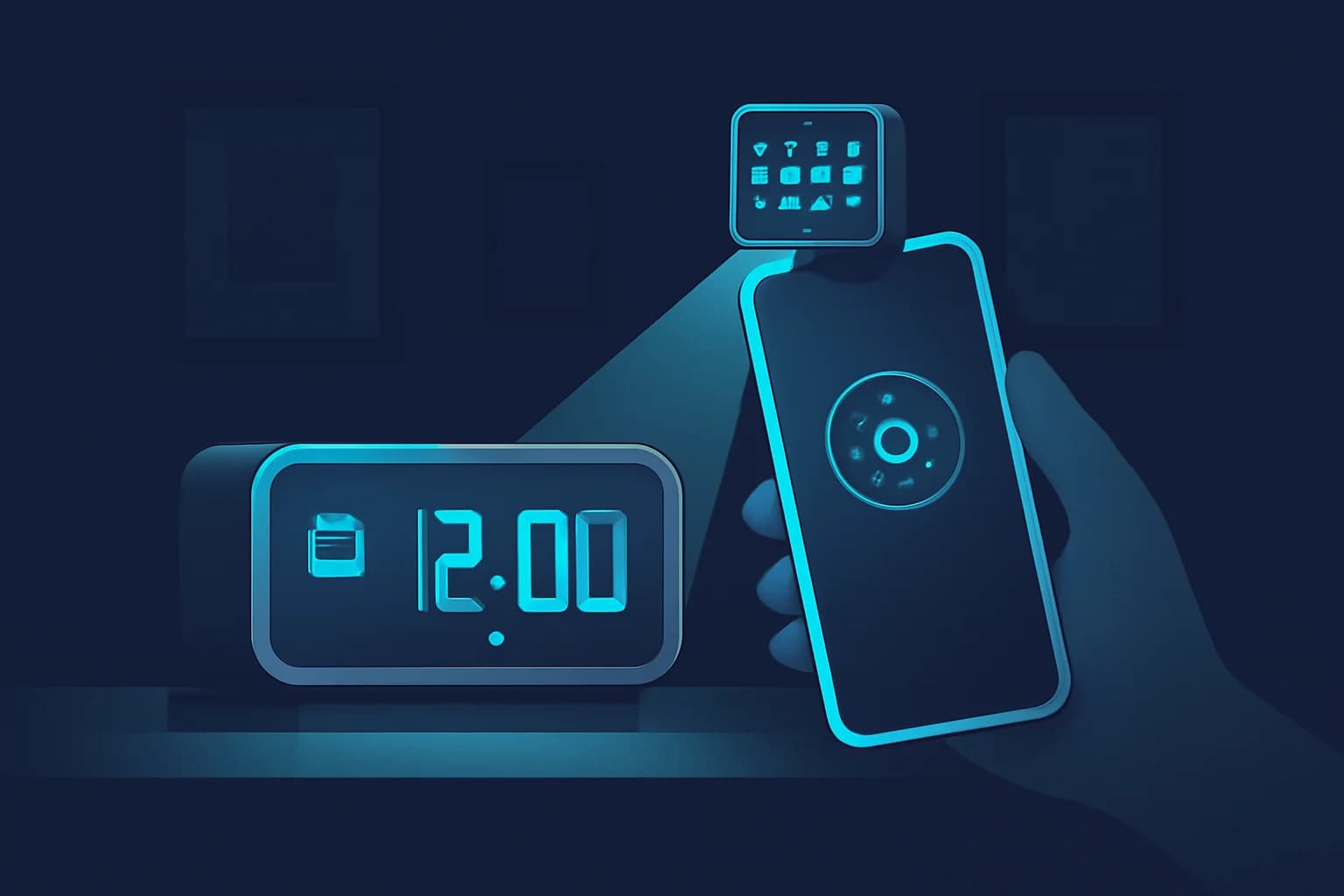
Illegal hidden cameras in hotels, short-term rentals, restrooms, and offices are a global privacy crisis — and South Korea knows that better than most. On August 30, 2026, KAIST announced SweepLED: attach a roughly 10,000 won (~$7) LED case to your smartphone, hold the phone still, and AI analyzes reflection patterns to flag concealed camera lenses in under five seconds with about 94% accuracy on everyday objects.
The story hit front pages from The Chosun Ilbo to Hacker News because it promises what manual flashlight sweeps never delivered: fewer false alarms from glossy clock faces and a result a non-expert can trust. This guide explains how SweepLED works, where skeptics on HN are right to push back, and how detection before your stay pairs with BGBlur face blur before you publish — two different layers of the same privacy problem.
What Is SweepLED and Who Built It?
SweepLED (Hide-and-Sweep) is a hidden-camera detection system from Professor Jun Han's team at KAIST's School of Computing, with collaborators at the National University of Singapore and Singapore Management University. Lead author Jonghyuk Yun presented the work at ACM MobiSys 2026 on June 20, 2026 — paper title: Hide-and-Sweep: Detecting Concealed Cameras via LED Illumination Sweeps.
Hardware is deliberately cheap: a PCB LED array in a modular phone case, core components under $7, designed as a future smartphone accessory rather than a $200 specialty detector. EurekAlert's release quotes Professor Han: illegal hidden cameras "seriously threaten personal safety and privacy in everyday spaces," and low-cost hardware plus AI could let non-experts scan hotel rooms and rentals without carrying lab equipment.
That matters in Korea, where molka (hidden-camera) crimes shaped national law — and worldwide, where Airbnb guests routinely report clock and smoke-detector cams. Detection tech will not replace law enforcement, but it lowers the bar for a first-line check.
How Does SweepLED Work When a Flashlight Fails?
It separates where the camera looks from where the light points — then AI reads the reflection movie. Old portable detectors shine one angle and ask humans to spot a bright speck. Metal vents, glass picture frames, and glossy plastic fake you out constantly.
SweepLED's insight is decoupled illumination sweeps:
- Phone camera fixed — user holds the device steady on a suspicious object (alarm clock, USB charger, décor).
- LED direction changes — the case sweeps light across angles automatically.
- Reflections evolve over time — ordinary glossy surfaces often move or vanish as light shifts.
- Camera lenses behave differently — internal lens stacks, apertures, and sensors produce stable, lens-specific glint patterns under multi-angle light.
- Deep learning classifies the pattern — the model scores the whole temporal signature, not one pixel-bright dot.
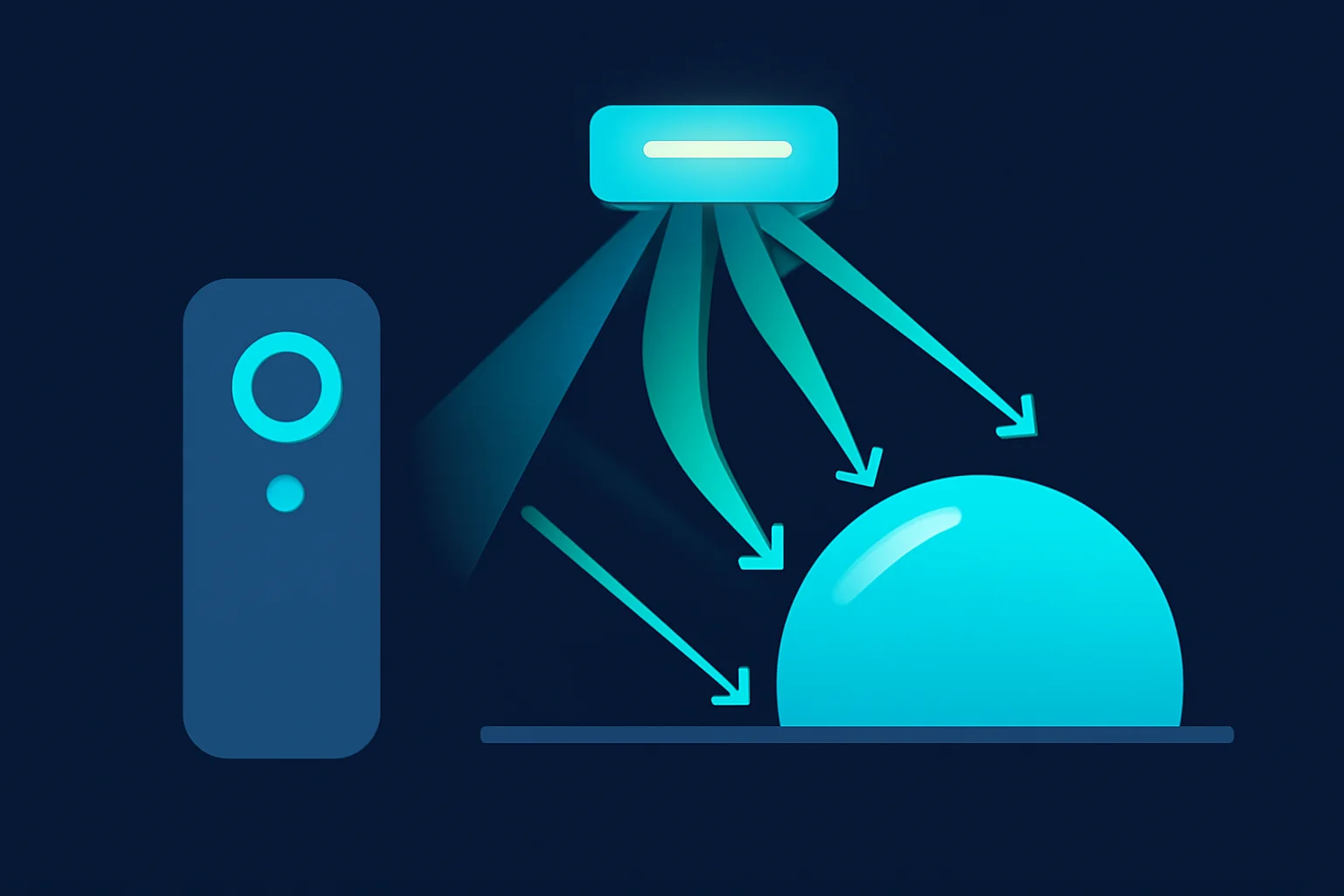
KAIST Breakthroughs describes this as changing only illumination while keeping the viewing position constant — richer data than walking around with a torch. Herald Business reports trials on 30 real-world objects with ~94% accuracy and under 5 seconds per object.
What the numbers mean — and do not mean
94% is strong for a $7 accessory compared to untrained human glint-spotting. It is not "scan the whole suite once and sleep soundly." The evaluation set includes 12 hidden-camera objects and 18 reflective non-camera items in realistic settings — per the ACM paper abstract — not every adversarial placement Internet commenters invent.
Does SweepLED Really Work? Hacker News Skepticism, Answered
When the Chosun story reached Hacker News, engineers asked fair questions. Here is the honest map:
Cameras behind mesh, fabric, or extreme angles
Partially valid limit. A lens recessed behind dark fabric or aimed through a pinhole may reflect less detectably. SweepLED assumes a lens surface participates in the sweep. No optical detector catches 100% of conceivable mounts — perfect is the enemy of good at 94% for consumer use.
Lensless or computational sensors
Possible future gap. Research cameras using coded apertures or lensless designs could change reflection physics. Today's commercial hidden cams in clock radios and chargers overwhelmingly use small conventional lenses — SweepLED's target class.
Infrared and phone camera filters
Different tradeoff. HN users noted IR could hide visible glints — but phone cameras block most IR, and many surveillance cams use IR intentionally (sometimes detectable when filters are weak). SweepLED uses visible LED sweeps compatible with commodity phone sensors — a practical choice, not the theoretical optimum every physicist wants.
Smart glasses and wearables
Different threat model. Meta smart glasses are often visually obvious; concealed cams in objects are not. SweepLED targets the latter. Wearable covert recording is a publish-side and venue-policy problem — blur bystanders when you share footage; venues ban obvious recorders.
Microphones
Correct — out of scope. SweepLED finds lenses, not audio bugs. Microphone detection needs acoustic or RF methods. Pair visual scans with situational awareness; no single gadget covers all spy tech.
Cameras turned off during the scan
Edge case. Reflection-based detection assumes optics are present; a powered-down cam may still expose glass, but internal shutters could matter. Re-scan after room occupancy changes if you are truly worried.
Bottom line: SweepLED is a major step up from manual guessing, not magic. Use it on suspicious objects, not as sole proof of safety.
When Should You Scan — Hotels, Airbnb, and Korea's Molka Context
Run a sweep when privacy stakes are high and objects look wrong. Professor Han cites hotels, short-term rentals, and changing rooms — the same spaces Korea's Article 14 sexual-crimes provisions and PIPA target when footage leaks.
If you are traveling in Korea specifically, read secretly recorded in Korea — what the law says before you need it: reporting paths, erasure rights, and the Digital Sex Crime Victim Support Center. SweepLED is prevention; molka law is remedy.
Practical scan checklist:
- Alarm clocks, chargers, smoke detectors, décor facing the bed or shower line-of-sight
- Hold phone steady — SweepLED needs the decoupled sweep, not a shaky pan
- Rescan after housekeeping or device repositioning
- If you find a device — photograph for police, do not touch evidence chains needlessly, contact property and authorities
Step-by-step when SweepLED ships as an accessory
Until a consumer app is widely available, the research workflow described at ACM MobiSys 2026 is the reference: attach the LED case, aim at one object at a time, keep the rear camera locked on the surface, let the sweep complete (~5 seconds), read the AI verdict, then move to the next suspicious item. Whole-room safety is the aggregate of per-object scans — not one pan across the ceiling.
You Found a Camera — What About Video You Post Afterward?
Detection and publishing are different legal moments. Victims understandably want to warn others. Posting raw footage can re-victimize bystanders, expose staff faces, or reveal room numbers tied to ongoing investigations.
Before uploading a warning clip, reaction video, or news tip:
- Blur every face not essential to the story — staff, guests caught in frame, neighbors.
- Blur license plates if you filmed outside or through windows.
- Avoid doxing exact room numbers if police asked you not to.
BGBlur runs AI face and plate detection with motion tracking in the browser; uploads delete within 24 hours. For broader consent-safe publishing norms, see unauthorized filming and face blurring and AI video blur for privacy.
SweepLED answers: "Is something filming me here?" BGBlur answers: "Am I about to film someone else without protecting them?"
How SweepLED Fits Next to Other Privacy Tech in 2026
The August news cycle also featured adversarial shirts that fool YOLO person boxes — useless for finding lenses, relevant for understanding how narrow AI demos are. See digital camouflage vs face detection for that thread.
| Tool / approach | Privacy moment | Limit |
|---|---|---|
| SweepLED | Pre-stay object scan | Lenses, not mics; not 100% |
| Manual flashlight | Quick glint check | High false positives |
| BGBlur | Pre-publish anonymization | Does not find hidden cams |
| Venue smart-glass bans | Live social spaces | Policy, not tech |
| Molka / GDPR law | After illegal filming | Remedy, not prevention |
Defense in depth beats any single product: scan on arrival, cover cameras if you find them, report legally, blur responsibly if you broadcast.
What's Next for SweepLED?
KAIST positions SweepLED as consumer-accessory ready — small case, companion app, no separate detector bag. Commercialization timing is not announced; MobiSys publication is the maturity signal researchers trust.
When it ships, expect pairing with travel checklists the way tourists already scan Wi-Fi and door peepholes. Until then, the research is public: multi-angle LED sweeps plus AI beat single-flash human eyeballing for lens discovery.
The Takeaway
KAIST SweepLED is real, peer-reviewed, and priced for normal travelers — about 94% on everyday concealed-camera objects, under five seconds, roughly $7 in hardware. It does not replace police, catch microphones, or guarantee a clean room with one pass.
If you create or share video — travel warnings, journalism, rental reviews — pair detection with BGBlur: find lenses when you can; blur faces and plates when you publish. That is how privacy tooling covers both sides of the lens.
Try BGBlur free at bgblur.com before your next upload.
Sources: KAIST Breakthroughs — SweepLED · EurekAlert · ACM DOI — Hide-and-Sweep · Herald Business