BGBlur Face Anonymization Guide 2026 for Video Privacy
A practical breakdown of face anonymization AI in 2026 blur, face swap, and synthetic generation and which approach fits journalists, healthcare teams, researchers, and everyday creators. Covers how the technology works, the GDPR pressure driving adoption, and where BGBlur fits in.
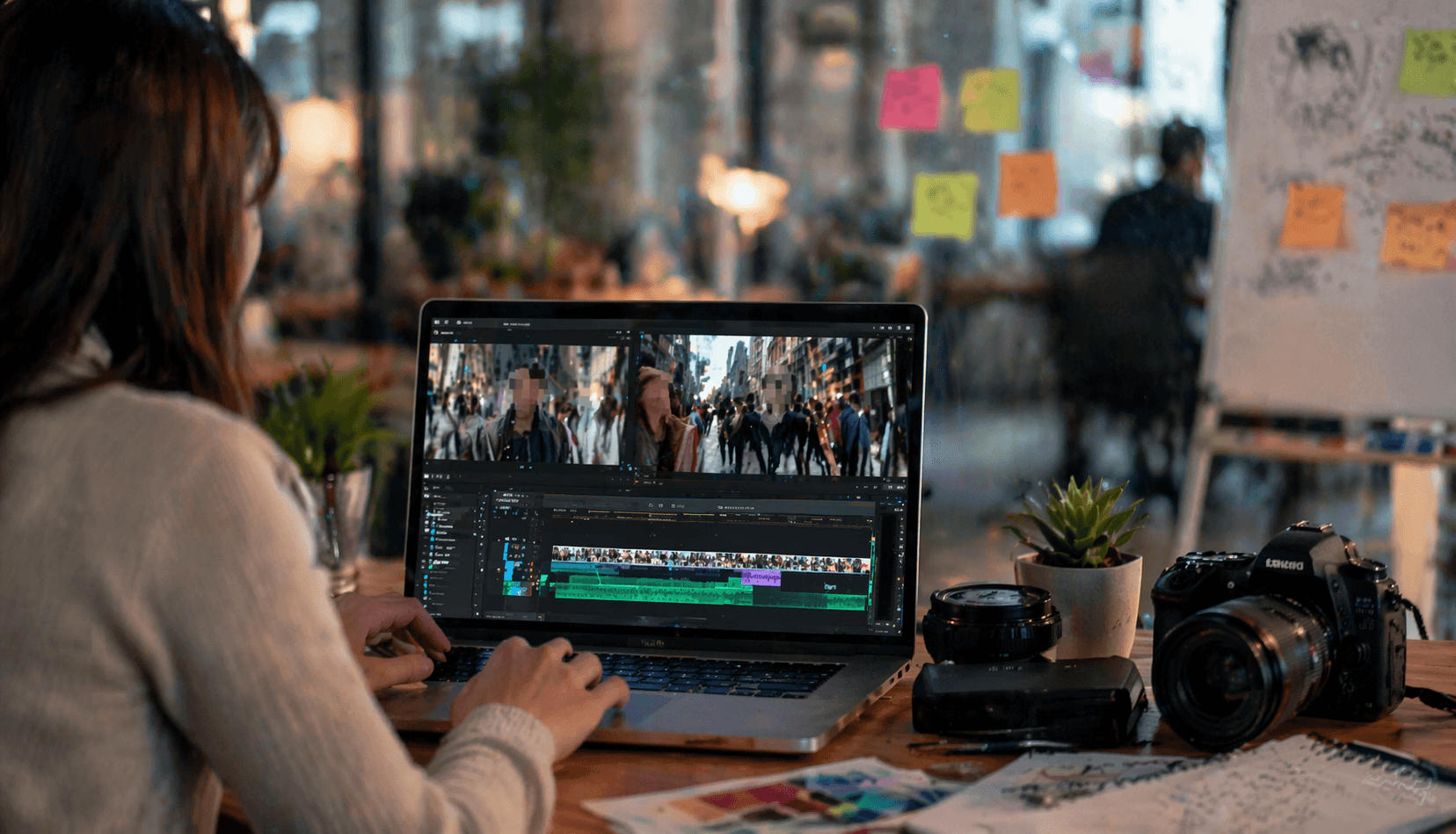
Imagine posting a video of your neighborhood protest, your child's school recital, or a whistleblower interview and having every face in the frame automatically hidden before you hit "publish." That's not science fiction. In 2025, face anonymization AI makes this possible in seconds, for free, from your browser.
We live in a paradox: cameras are everywhere, yet so is the demand for privacy. Journalists need to protect sources. Researchers must comply with data ethics boards. Parents don't want their children's faces indexed by facial recognition systems. And everyday creators simply want to share content without accidentally exposing bystanders.
Enter face anonymization a fast-growing class of AI tools that detect and obscure human faces in images and video. Whether you're a security professional, a content creator, or just someone who values privacy, understanding these tools is no longer optional. It's essential.
What Exactly Is Face Anonymization AI?
Face anonymization AI refers to software that uses machine learning specifically computer vision and deep learning to detect human faces in media and automatically conceal them. The concealment can take several forms: pixelation, blurring, replacement with a synthetic face, or complete masking.
The technology stack typically involves a face detection model paired with a replacement or obfuscation pipeline. Modern systems process faces in real time, even in fast-moving video streams, with accuracy rates exceeding 97% in controlled environments.
"Face anonymization isn't about hiding wrongdoing it's about asserting the fundamental right to exist in public without being catalogued, tracked, or identified without consent."
What makes 2025 different from earlier years is the sheer accessibility of these tools. Tasks that once required a video production studio can now be accomplished with a free face anonymization tool that runs entirely in the cloud no software installation required.
The Big Three Techniques: Blur, Swap, and Generate
Not all face anonymization methods are created equal. Depending on your use case, you'll want to understand the three dominant approaches on the market today for a deeper side-by-side, see our face anonymization vs. face blur comparison.
1. AI Face Blur and Background Blur (bgblur)
The simplest and most widely used technique is blur-based anonymization. Tools in this category often marketed under keywords like bgblur, ai face blur, or video background blur apply a blur effect directly over detected face regions or, in some cases, the entire background except the subject.
Bgblur technology has become a staple in video conferencing platforms, but its use in anonymization goes further. Applied precisely to face regions rather than backgrounds, bgblur-style processing is the fastest, lightest-weight anonymization approach available. It's ideal for bulk processing of surveillance footage or user-generated content where speed matters more than visual aesthetics.
The limitation? A heavily pixelated or blurred face is an obvious signal that something has been hidden which can sometimes draw more attention than the face itself.
2. AI Face Swap Video
Far more visually sophisticated is the face swap approach. Rather than simply blurring a face, AI face swap video technology replaces detected faces with entirely different ones generated synthetically or drawn from a dataset of consented donor faces.
The result is a video that looks completely natural to the viewer. Conversations flow normally, head movements track correctly, and lighting conditions are matched to the replacement face. The original identity is protected, but the footage remains fully watchable.
Platforms offering faceswap video capabilities for anonymization as distinct from the entertainment-focused face swap video apps you may have seen on social media are increasingly used in medical research, documentary filmmaking, and legal depositions where witness identity must be protected.
Looking for face swap video free options? Several open-source projects and web-based tools offer basic versions of this capability, though quality and processing speed vary significantly.
3. Synthetic Face Generation
The third approach and arguably the most powerful involves using an AI face generator to create entirely new faces that never existed in reality. Rather than swapping one real face for another, a face generator model synthesizes a photorealistic face from scratch.
The generated face can be matched to the demographic characteristics of the original subject approximate age, skin tone, gender presentation while sharing no biometric data whatsoever. This approach is increasingly favored in academic datasets, where researchers need realistic training data without the legal risks of using real faces.
Who Actually Needs Face Anonymization AI?
The honest answer: far more people than you'd expect. Here are the most common real-world use cases driving adoption in 2025.
Documentary filmmakers use face anonymization to protect sources and bystanders in footage from conflict zones, protests, or sensitive investigations. Healthcare and research institutions anonymize patient video for training datasets, clinical studies, and telehealth analysis in compliance with HIPAA and GDPR. Law enforcement and legal teams redact faces from evidence footage before sharing with juries or publishing in public records. Content creators use it to post street photography, travel vlogs, and event footage without inadvertently exposing strangers. Enterprise security teams process CCTV footage for analytics while maintaining compliance and employee privacy standards. And journalists rely on it to safely publish images from whistleblower meetings, undercover reporting, and coverage of at-risk communities.
Top Free & Paid Face Anonymization Tools in 2025
The market for face anonymization AI tools has expanded rapidly. Here's a practical overview of what's available from professional-grade platforms to free face anonymization tool options that won't cost you a cent.
BG.Blur / bgblur is best for quick video face blur with real-time bgblur processing and a free tier available. DeepPrivacy2 is an open-source option suited for research and bulk processing, powered by a GAN-based face generator. Reface and similar AI face swap video apps are aimed at creators and offer real-time face swap video on a freemium model. Deface (Python) is a command-line faceswap video tool designed for developers handling batch video, available as open source. Brighter AI and VISPR are enterprise-grade platforms offering synthetic face generator capabilities at scale, available on paid plans.
When evaluating a free face anonymization tool, consider whether it processes your video locally or uploads to a server, what happens to your footage after processing, and whether it handles partial faces, side profiles, and faces in motion not just straight-on headshots. For a closer look at how blur-based tools stack up against synthetic replacement, read our AI face anonymizer tools comparison.
The Regulatory Landscape: Why GDPR Is Driving AI Face Swap Video Demand
It's no accident that interest in face anonymization AI has surged in parallel with global privacy regulation. GDPR in Europe, CCPA in California, and the emerging AI Act all treat facial data as a special category of biometric information one that requires explicit consent to collect or process. For the full legal breakdown of what counts as biometric data and when anonymization is required, see our GDPR video compliance guide for face and license plate blurring.
For organizations operating CCTV networks, collecting customer footage, or building AI training datasets, the compliance math is simple: it's far cheaper to anonymize faces proactively than to manage consent frameworks retroactively. A face anonymization AI pipeline removes the biometric signature entirely, putting the footage outside the scope of most personal data regulations.
This regulatory pressure has also accelerated the use of AI face swap video technology in corporate training datasets. Rather than licensing real human faces expensive and legally complex AI teams are increasingly turning to synthetic face generators to produce training data that is photorealistic but entirely fictitious.
"An AI face generator doesn't just protect individuals it creates a legal firewall between your organization and the ever-tightening web of biometric privacy law."
How AI Face Swap Video Is Generated: A Plain-English Explainer
When you upload footage to an AI face swap video platform, here's what happens behind the scenes no computer science degree required.
Step 1 — Detection. A face detection neural network scans every frame of your video. It draws bounding boxes around each face it finds, noting position, size, angle, and confidence score. Modern detectors handle faces as small as 10×10 pixels.
Step 2 — Landmark mapping. Facial landmark models identify key points on each face: the corners of the eyes, the tip of the nose, the outer edges of the lips. These landmarks are used to align faces precisely across frames, even when the subject moves.
Step 3 — Replacement or obfuscation. Depending on the tool, one of three things happens: the face region is blurred using a bgblur approach, replaced with a donor face warped to match the landmarks via face swap, or filled with a synthetically generated face from a face generator model.
Step 4 — Blending. The replaced region is color-corrected and seamlessly blended into the surrounding frame. Advanced systems model skin tone, lighting direction, and shadow to make the result photorealistic. This is what separates professional AI face swap video from cheap consumer apps with obvious artifacts.
Step 5 — Output. The processed video is exported in its original resolution and format. This entire pipeline what we call AI Face Swap Video Generated output takes anywhere from seconds per frame on GPU-accelerated cloud systems to minutes per frame on consumer hardware.
Frequently Asked Questions
Is there a truly free face anonymization tool that handles video, not just images? Yes. Several open-source tools handle video anonymization at no cost. Deface (available on GitHub) is a Python-based command-line tool that blurs or replaces faces in video files without any subscription. For a browser-based option, some platforms offer limited free tiers for short clips. Quality varies, so test with a short clip before committing to a large batch job.
What's the difference between face swap video for entertainment and face anonymization AI for privacy? The underlying technology is similar both use AI face swap techniques but the intent and output differ. Entertainment-focused face swap video apps typically replace your face with a celebrity or character for fun. Anonymization-focused tools replace or obscure faces specifically to remove biometric data, using synthetic faces from an AI face generator or blur methods like bgblur, with no intent to impersonate anyone.
How does video background blur differ from face anonymization? Video background blur (bgblur) blurs everything behind the subject it's primarily used in video calls to hide your surroundings. Face anonymization does the opposite: it keeps the background intact and obscures only detected faces. Some tools offer both, and the terms are sometimes used interchangeably in consumer marketing, so it's worth checking what a specific tool actually does.
Can I use an AI face generator to create training datasets legally? Generally yes this is one of the primary legitimate use cases driving face generator adoption. Synthetic faces created by an AI face generator contain no real individual's biometric data, which means they fall outside the scope of most biometric privacy laws. However, consult legal counsel for your specific jurisdiction before building large-scale datasets.
How accurate is face anonymization AI on faces in motion or partially obscured? Top-tier face anonymization AI platforms report detection rates above 94% even on partially obscured or profile-angle faces in video. Consumer-grade tools typically struggle below 85% in challenging conditions. For high-stakes applications journalism, legal, medical always review output manually for missed detections.
Does face anonymization AI work on live video or only pre-recorded footage? Most face anonymization tools, including BGBlur, are built for pre-recorded footage uploaded from your device, which lets the AI analyze surrounding frames for higher-accuracy blending. Some enterprise platforms offer real-time anonymization for live streams, but accuracy and processing cost both increase under live constraints. For most creators and journalists, uploading a finished clip produces cleaner results than a live pipeline.
Is face anonymization required under GDPR for publicly shared video? GDPR treats facial images as biometric data once they can identify a person, so publishing footage that shows identifiable bystanders without consent can trigger compliance obligations under Article 9. Anonymizing faces before publication removes the personal data risk entirely. See our GDPR video compliance guide for the specific legal thresholds and enforcement examples.
In Summary: Film Freely, Share Safely
We are living through a pivotal moment in the relationship between technology and personal identity. Facial recognition systems are becoming more pervasive but so are the tools that can counter them. Face anonymization AI is no longer a niche research topic; it is a practical, accessible, and increasingly essential technology for anyone who creates, shares, or analyzes video content.
Whether you reach for a quick free face anonymization tool for a one-off project, integrate a full AI face swap video pipeline into your production workflow, or generate entire datasets with an AI face generator, the principles remain the same: protect identities, respect privacy, and publish with confidence.
The next time you hit record, know that the technology to protect every face in that footage yours, your subjects', even bystanders in the background is already here, it's already good, and much of it is already free.
Update — August 7, 2026: For a healthcare-specific look at anonymizing multiple subjects — patients, staff, and family members — in one clip, see our top 10 tools for healthcare and medical video content guide.
For more on AI-powered video tools, check out our guide on how to blur the background of an existing video and explore how AI tools are improving brand visibility across social platforms.