تصوير كاميرا الجسم لإعادة إنفاذ القانون
Police body-worn camera redaction: blur faces, minors, victims, medical info, and sensitive scenes for public records compliance.
Body-worn cameras (BWCs) are standard in 80% of large U.S. police departments, but public records laws require redaction before release: victim privacy, juvenile protection, medical scenes, and undercover officer safety all demand careful blur before FOIA fulfillment.
Redact body camera footage for FOIA and public records in three steps
Built for police departments, public records officers, and law enforcement agencies managing high-volume redaction requests.
Ingest BWC footage
Import body-worn camera recordings requiring public release or court submission.
Apply blur and manual review
Run automatic face blur, then manually review for minors, victims, medical info, and interior scenes per state law.
Export redacted version
Download the redacted file with audit log and retain the unredacted original per retention schedule.
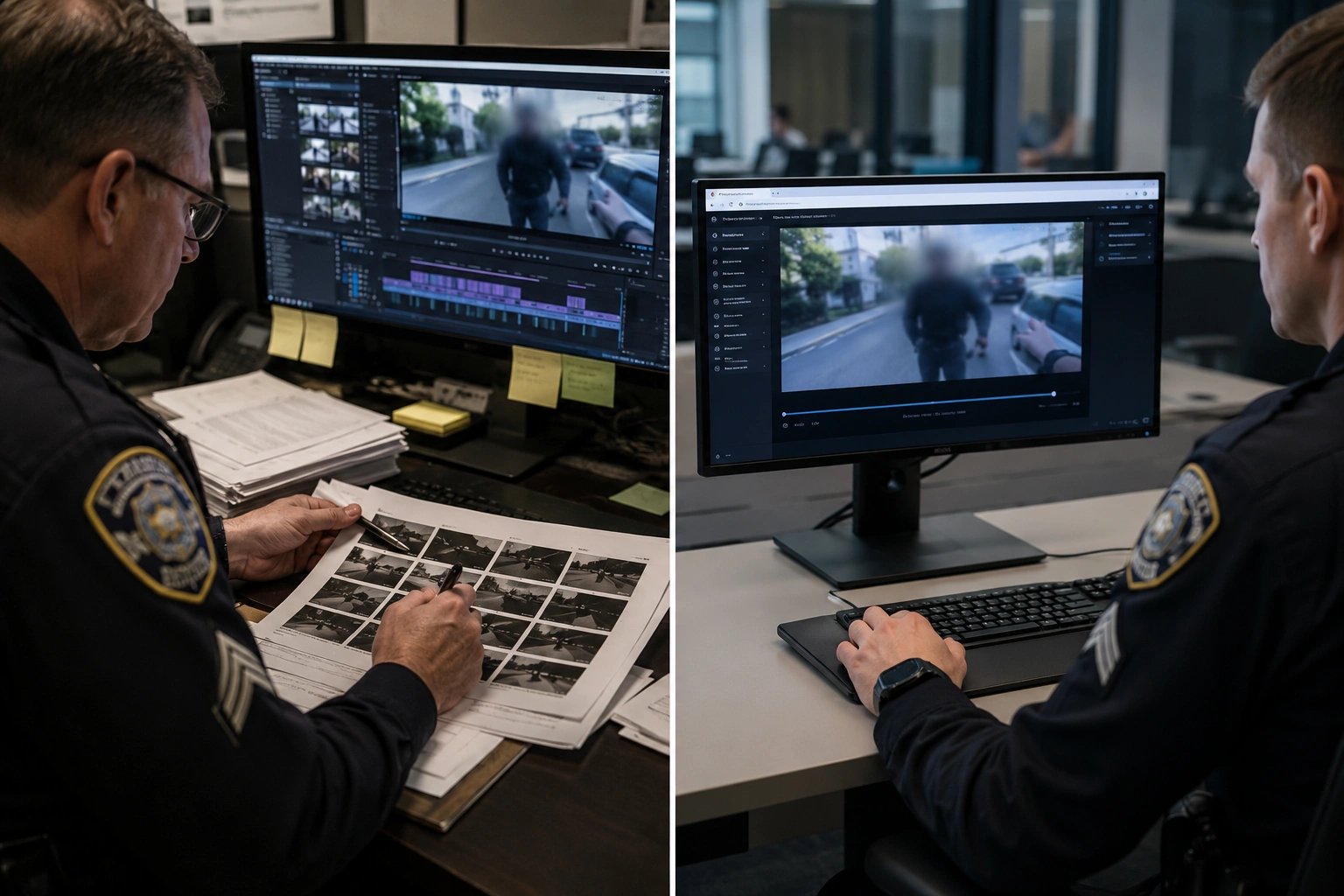
What this example demonstrates
Manual redaction averages 8:1 time ratio (8 hours of work per 1 hour of footage)—unsustainable for departments facing hundreds of requests annually. AI-assisted blur reduces that to 1:1 or better for routine cases.
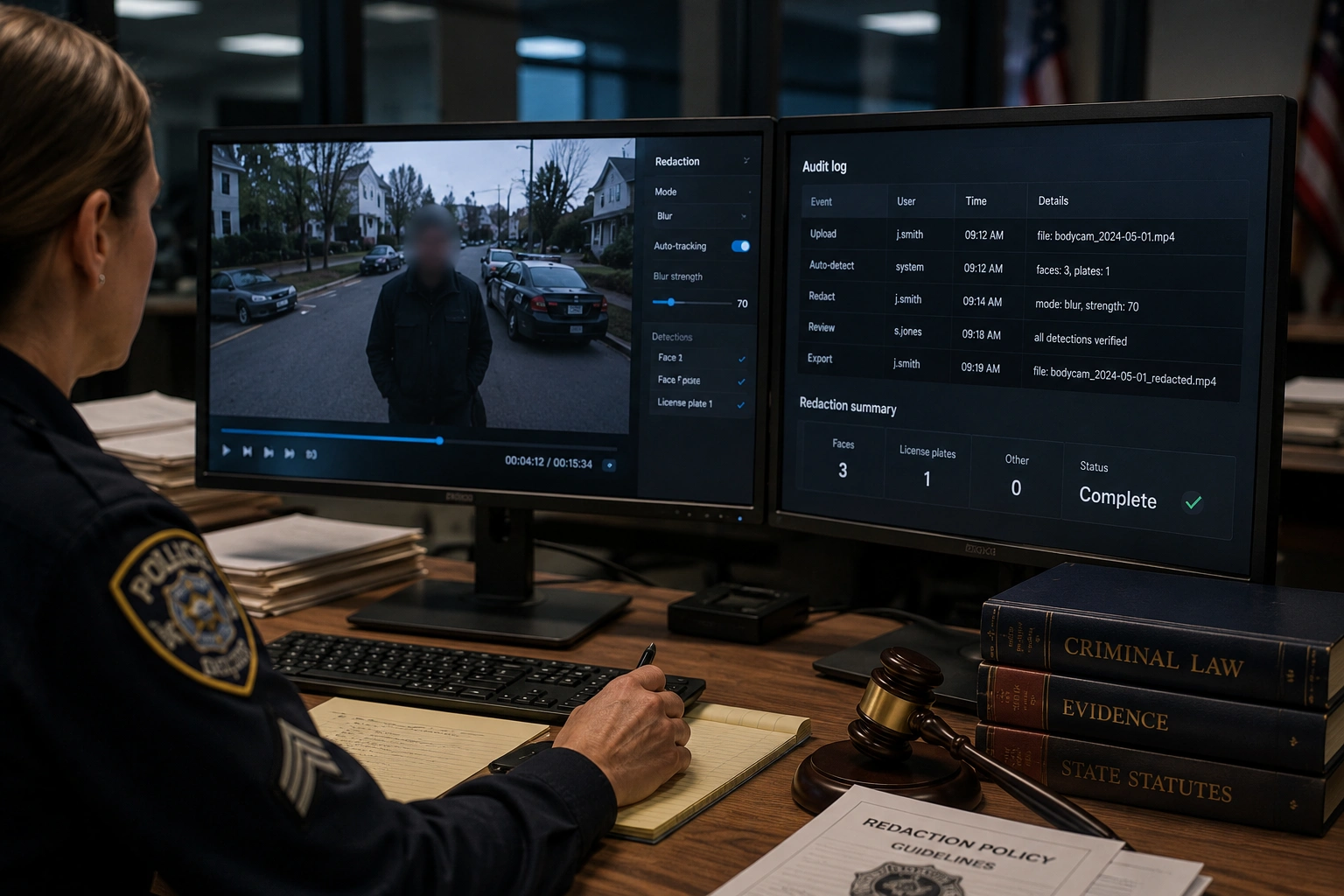
Why teams use this pattern
Proper redaction balances transparency with privacy: over-blur erodes public trust, under-blur violates state laws and exposes victims. Consistent, auditable workflows are essential for accountability.
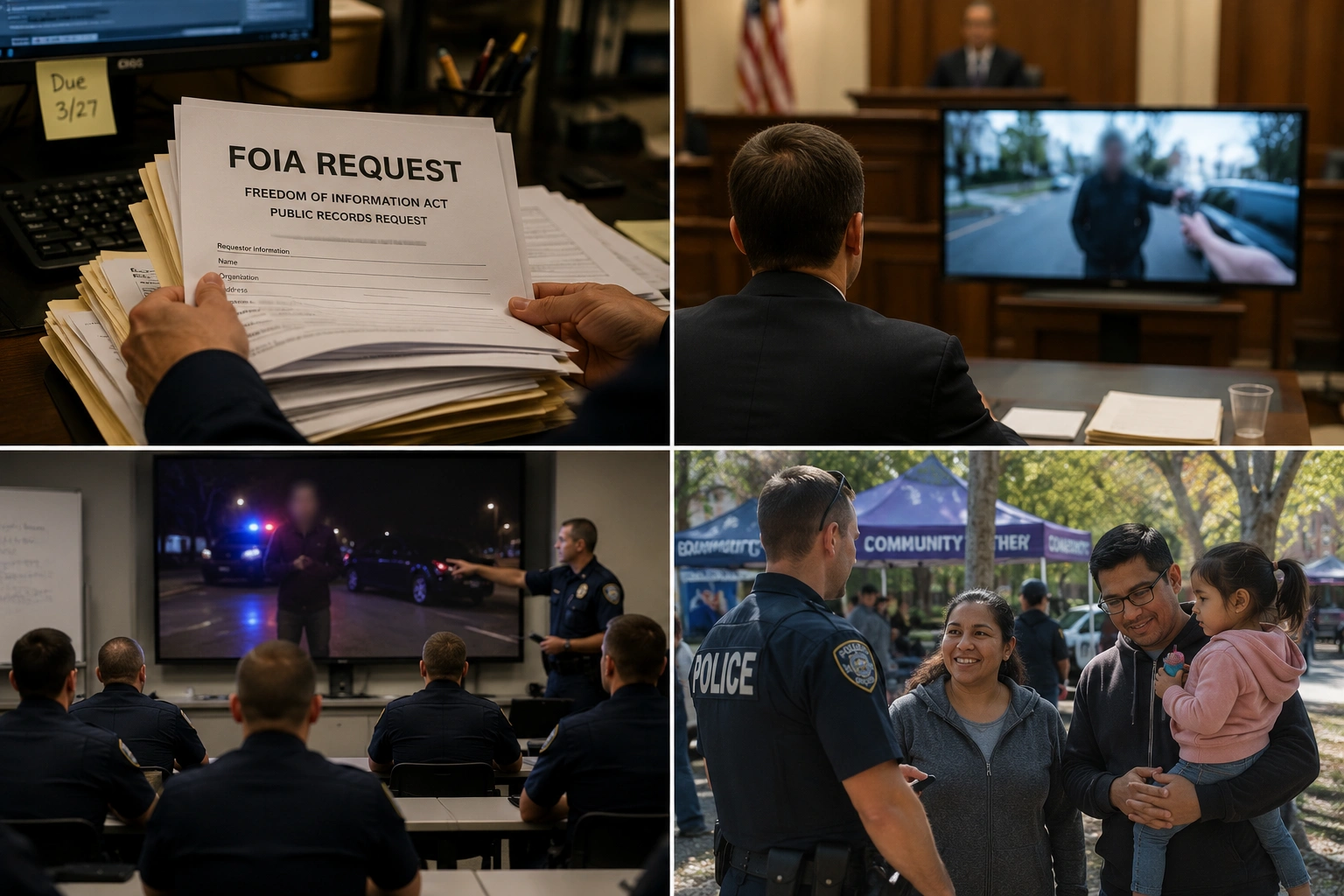
Common use cases
Teams reach for this workflow when foia public records requests for incident footage; court evidence with witness identity protection; training videos with sensitive subject matter; community engagement releases showing police interactions. BGBlur automates detection so these scenarios stay publishable without days in a timeline.
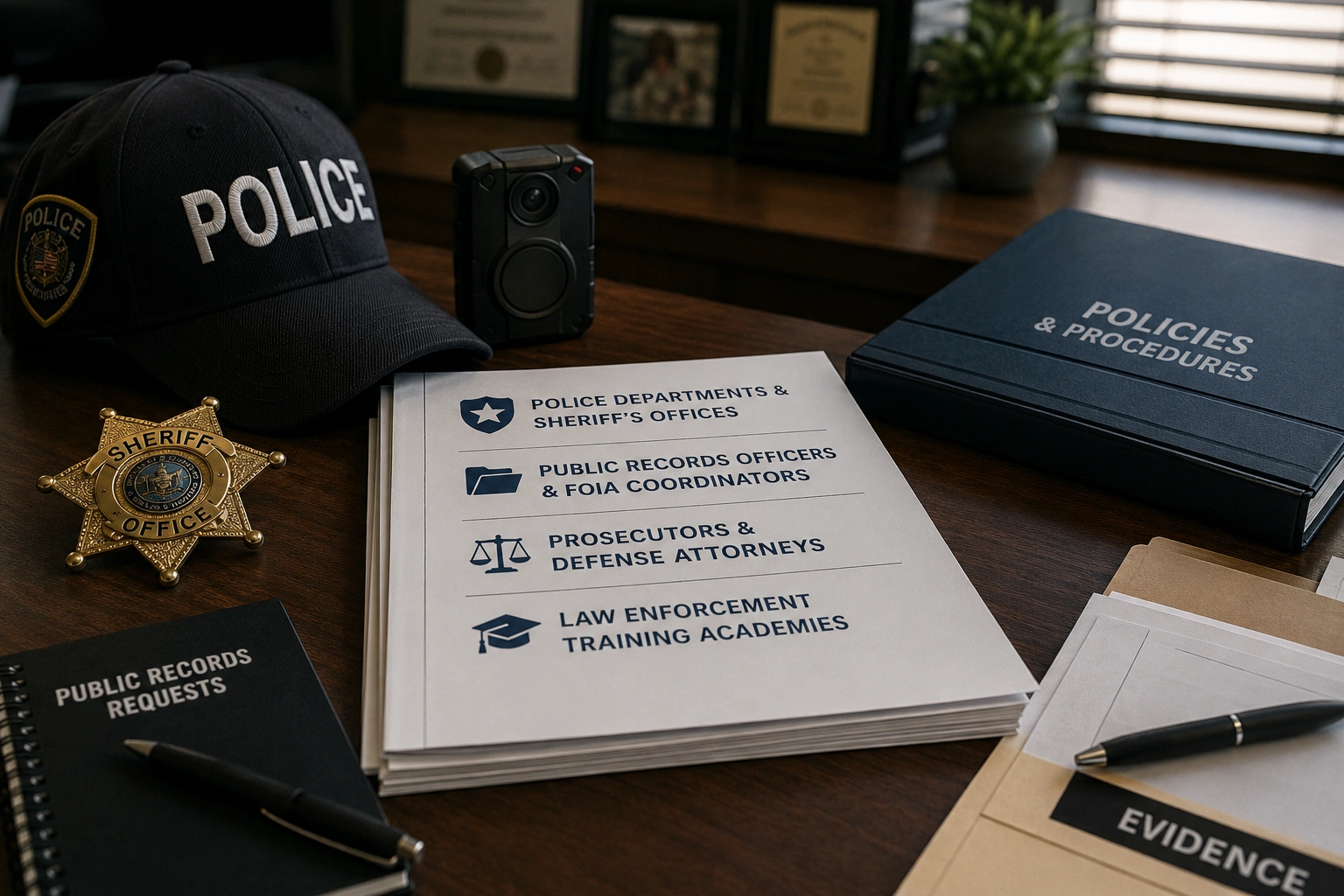
Built for Police departments and sheriff's offices and Public records officers and FOIA coordinators
Ideal audiences include Police departments and sheriff's offices, Public records officers and FOIA coordinators, Prosecutors and defense attorneys, Law enforcement training academies. Pair this example with your policy review when footage is sensitive or public-facing.
حالات الاستخدام
- FOIA Public records requests for incident footage
- الأدلة المقدمة من المحكمة لحماية هوية الشهود
- أشرطة فيديو تدريبية ذات مواضيع حساسة
- إطلاقات المشاركة المجتمعية التي تبين تفاعلات الشرطة
لمن هذا
- إدارات الشرطة ومكاتب الشريف
- موظفو السجلات العامة ومنسقو الشؤون المالية
- المدعين العامين ومحامي الدفاع
- أكاديميات التدريب على إنفاذ القانون
المزيد من أمثلة تعتيم الفيديو
استكشف سيناريوهات مماثلة مع نفس مقاطع الفيديو التجريبية وإرشادات خطوة بخطوة.
تمويه وتنقيح الفيديو للامتثال للائحة GDPR
تمويه فيديو متوافق مع خصوصية الاتحاد الأوروبي للوجوه واللوحات والبيانات الشخصية، مع تدابير تقنية تدعم تقليل البيانات وفق المادة 5 من GDPR.
تمويه الوجوه في فيديوهات الحديث المباشر
اكتشاف تلقائي للوجوه وتمويهها في المقابلات والبودكاست ومدونات الفيديو، مع تتبع الحركة للحفاظ على حماية الهويات.
أنماط الكشف الوثائقي للأنباء
حماية الشهود والأشخاص الضعفاء مع الحفاظ على السياق التحريري - غير واضح والتسمية في خط واحد.
تمويه أي شيء: الشعارات والنصوص والمناطق المخصصة
استهدف مناطق محددة مثل الشعارات على الملابس أو العناوين الظاهرة على الشاشة أو اللافتات، مع تحديد دقيق بمساعدة الذكاء الاصطناعي.
الأسئلة الشائعة
- ما الذي يجب أن يعاد تصنيعه في لقطات كاميرات الجسد؟?
- وتختلف قوانين الدولة، ولكن الشروط المشتركة تشمل وجوه الأحداث، وضحايا الجرائم، والمشاهد الصحية الطبية/الطبية، والمخبرين السريين، والداخليات الداخلية تتشاور مع مستشاري وكالاتكم.
- هل يمكن لـ (إيه آي) أن تحل محل إعادة النظر البشري؟?
- وتعجل منظمة " لا آي " بالكشف، غير أن استعراض الإنسان إلزامي بالنسبة للدفاع القانوني، والحالات الحافة، والامتثال للسياسة العامة؛ وميزانية الفترة 10-20 في المائة من الوقت اليدوي الأصلي للشركة.
- كيف نتعامل مع إعادة التدوير الصوتي إلى جانب عدم وضوح الفيديو؟?
- ويحتاج العديد من الولايات القضائية إلى إعادة ترتيب سمعي (الأسماء، العناوين، المعلومات الطبية)؛ والمناولة غير واضحة بالفيديو لا تستخدم سوى أكاذيب صوتية منفصلة أو أدوات للتنبيه الصوتي.
هل أنت مستعد لتجربة هذا على الفيديو الخاص بك؟
قم بتحميل MP4 أو MOV أو M4V وقم بتطبيق نفس أوضاع التعتيم الموضحة في هذا المثال.
جرب BGBlur مجانًا