Körperkamera Footage Redaction für die Strafverfolgung
Police body-worn camera redaction: blur faces, minors, victims, medical info, and sensitive scenes for public records compliance.
Body-worn cameras (BWCs) are standard in 80% of large U.S. police departments, but public records laws require redaction before release: victim privacy, juvenile protection, medical scenes, and undercover officer safety all demand careful blur before FOIA fulfillment.
Redact body camera footage for FOIA and public records in three steps
Built for police departments, public records officers, and law enforcement agencies managing high-volume redaction requests.
Ingest BWC footage
Import body-worn camera recordings requiring public release or court submission.
Apply blur and manual review
Run automatic face blur, then manually review for minors, victims, medical info, and interior scenes per state law.
Export redacted version
Download the redacted file with audit log and retain the unredacted original per retention schedule.
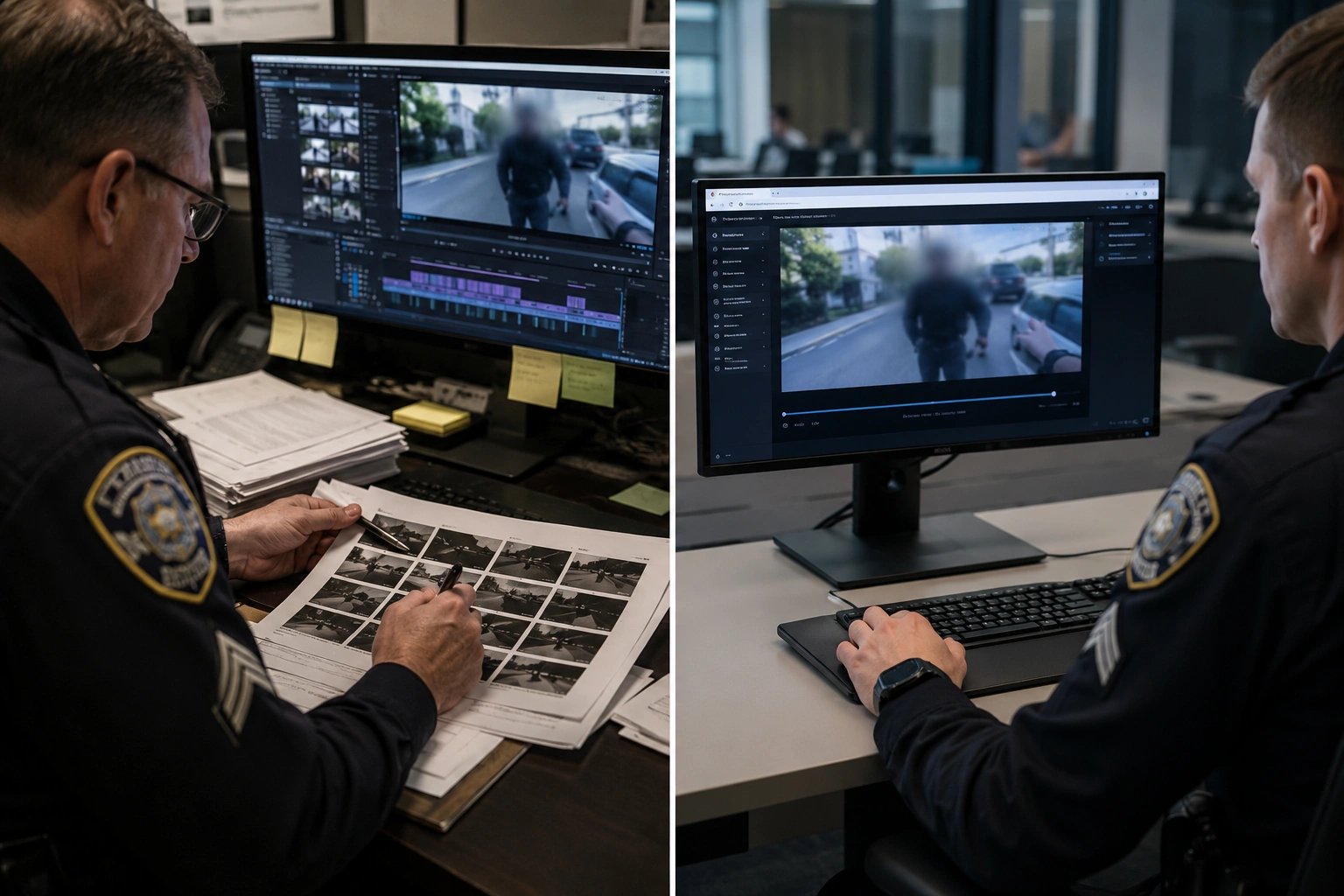
What this example demonstrates
Manual redaction averages 8:1 time ratio (8 hours of work per 1 hour of footage)—unsustainable for departments facing hundreds of requests annually. AI-assisted blur reduces that to 1:1 or better for routine cases.
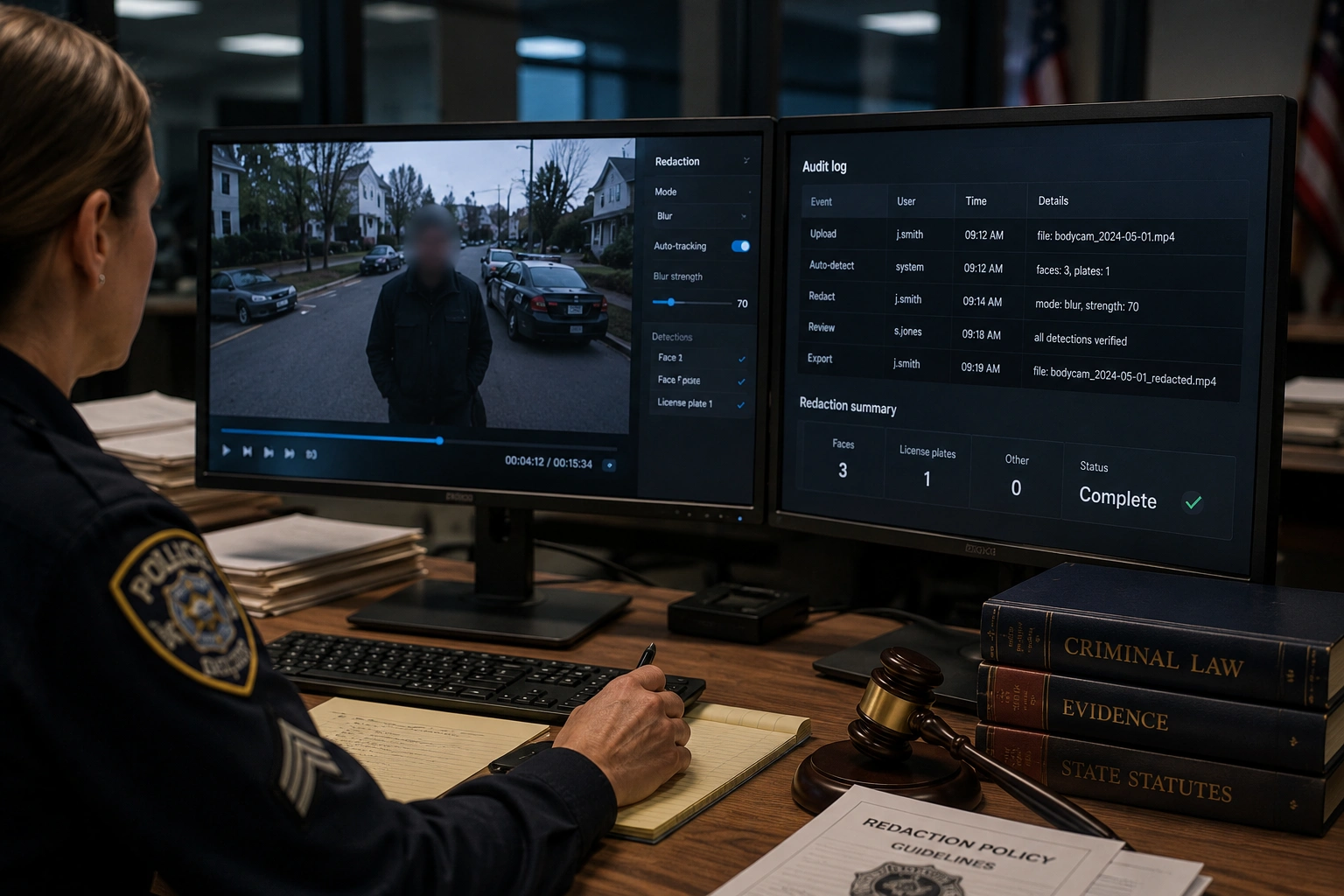
Why teams use this pattern
Proper redaction balances transparency with privacy: over-blur erodes public trust, under-blur violates state laws and exposes victims. Consistent, auditable workflows are essential for accountability.
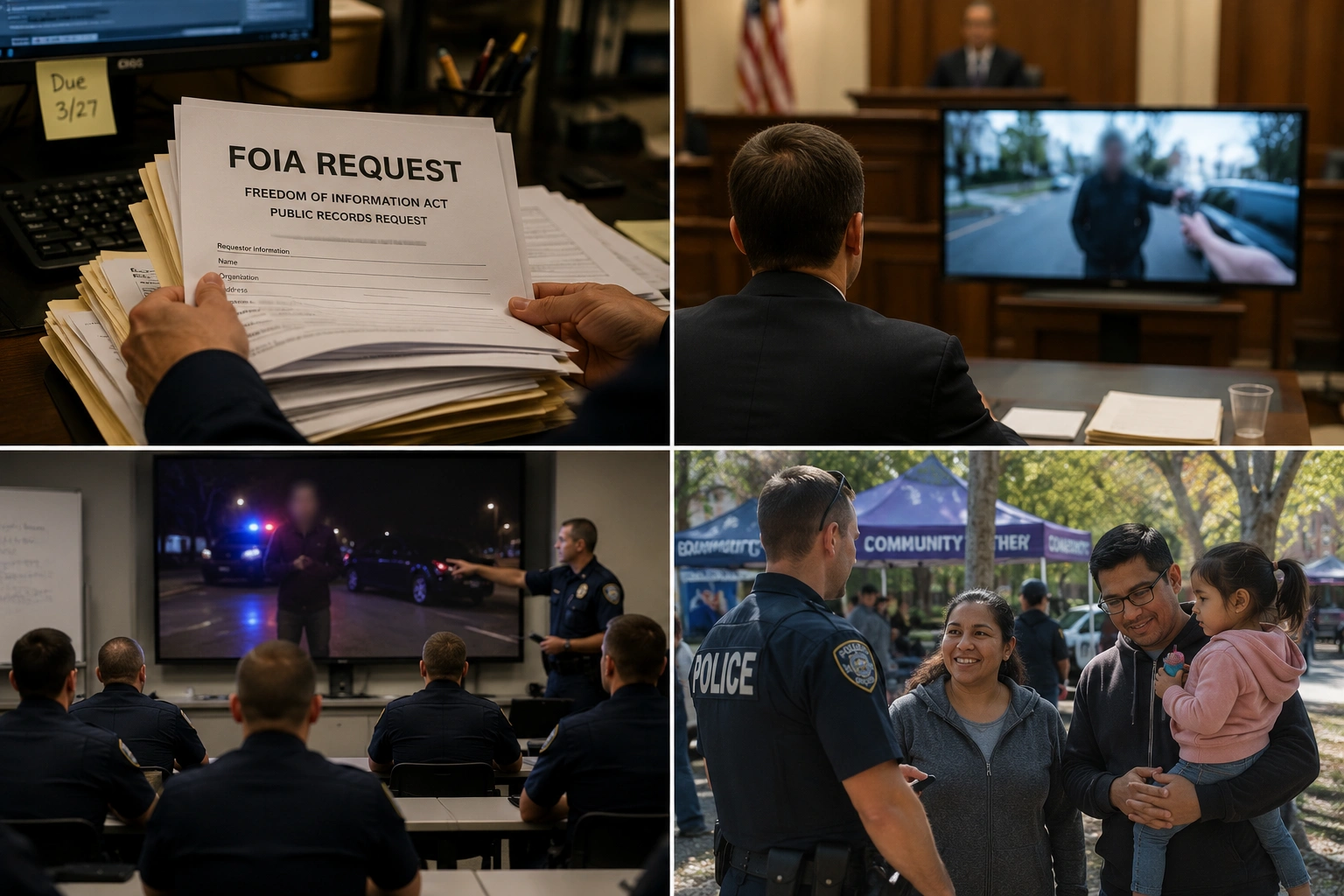
Common use cases
Teams reach for this workflow when foia public records requests for incident footage; court evidence with witness identity protection; training videos with sensitive subject matter; community engagement releases showing police interactions. BGBlur automates detection so these scenarios stay publishable without days in a timeline.
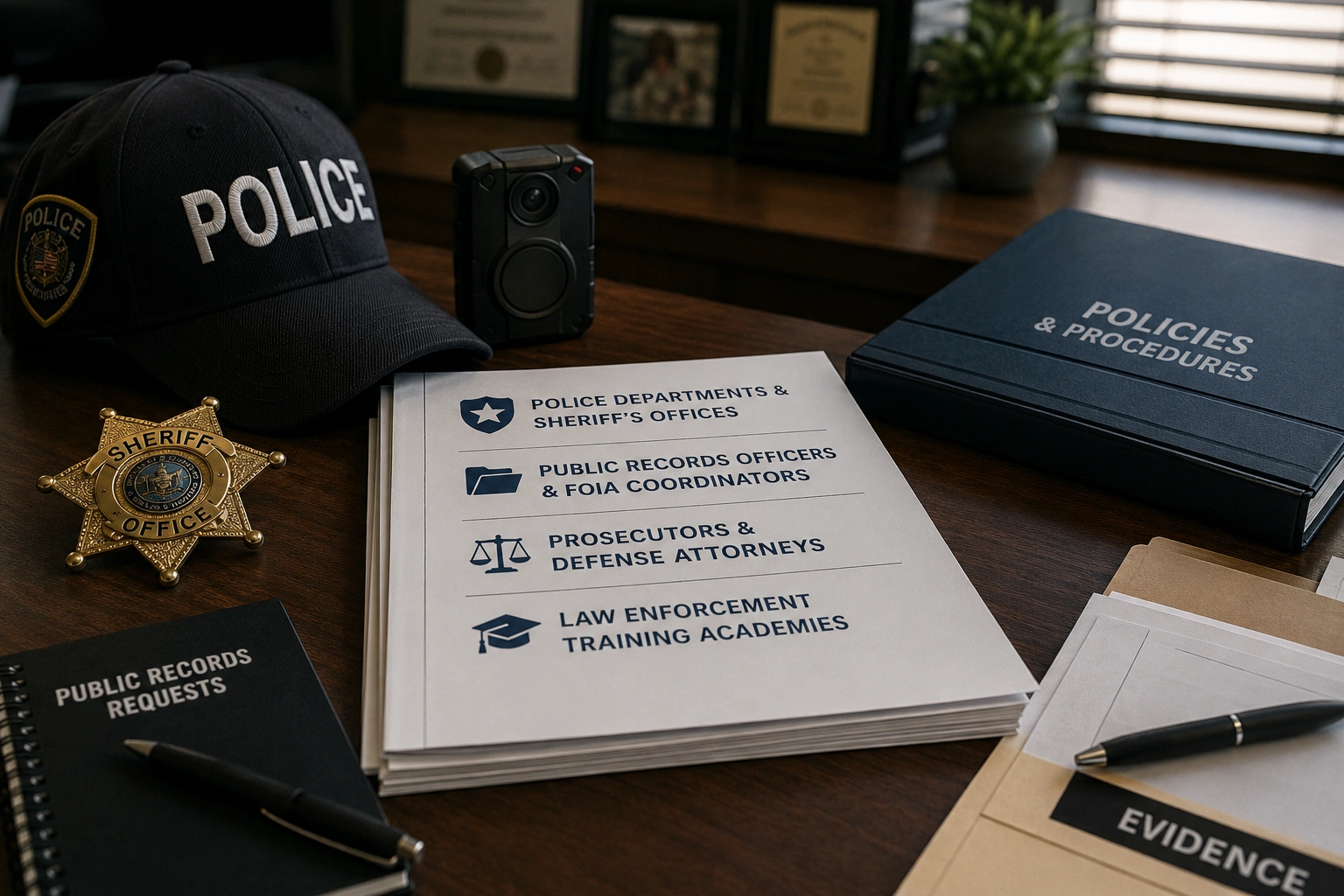
Built for Police departments and sheriff's offices and Public records officers and FOIA coordinators
Ideal audiences include Police departments and sheriff's offices, Public records officers and FOIA coordinators, Prosecutors and defense attorneys, Law enforcement training academies. Pair this example with your policy review when footage is sensitive or public-facing.
Anwendungsfälle
- FOIA öffentliche Aufzeichnungen Anträge auf Vorfallmaterial
- Gerichtsbeweise mit Zeugenidentitätsschutz
- Trainingsvideos mit sensiblem Thema
- Community-Verlobungsmeldungen, die Polizeiinteraktionen zeigen
Für wen es gedacht ist
- Polizei und Sheriffs Büros
- Beamte und Koordinatoren der FOIA
- Staatsanwälte und Verteidigungsanwälte
- Ausbildungsakademien für die Strafverfolgung
Weitere Video-Weichzeichner-Beispiele
Erkunden Sie ähnliche Szenarien mit denselben Demo-Clips und Schritt-für-Schritt-Anleitungen.
DS-GVO-Video-Compliance blur & redaction
EU-Datenschutz-konformes Videoschwimmer für Gesichter, Teller und PII – technische Maßnahmen zur Unterstützung der DSGVO Art. 5 Datenminimierung.
Gesicht verschwimmt im Sprechkopf Video
Automatische Gesichtserkennung und Blendung für Interviews, Podcasts und Vlogs – bewegte sich so, dass Identitäten geschützt bleiben.
News & Dokumentarische Anonymisierungsmuster
Schützen Sie Zeugen und verletzliche Subjekte, während Sie den redaktionellen Kontext bewahren – Verleumdung und Anonymisierung in einer Pipeline.
Blur alles: Logos, Text & benutzerdefinierte Regionen
Target willkürliche Bereiche – Logos auf Hoodies, On-Screen-Adressen, Signage – mit präziser AI-gestützter Auswahl.
Häufig gestellte Fragen
- Was muss in Körperkameraaufnahmen neu gemacht werden?
- Staatliche Gesetze variieren, aber gemeinsame Anforderungen umfassen jugendliche Gesichter, Kriminalität Opfer, medizinische/mentale Gesundheits-Szenen, vertrauliche Informanten und Innenräume - immer konsultieren Sie Ihre Agentur Beratung.
- Kann KI die menschliche Rezension für Redaction ersetzen?
- Nein-AI beschleunigt die Erkennung, aber die menschliche Überprüfung ist obligatorisch für rechtliche Verteidigung, Randfälle und politische Compliance; Budget 10-20% der ursprünglichen manuellen Zeit für QC.
- Wie behandeln wir Audio-Rotation neben Video-Blut?
- Viele Jurisdiktionen erfordern Audio-Rotation (Namen, Adressen, medizinische Informationen); Video-Blauer-Handgriffe nur Pixel – verwenden Sie separate Audio-Schrubben oder Piep-Tools für Sprach-Rotation.
Bereit, dies mit Ihren eigenen Aufnahmen zu versuchen?
Laden Sie MP4, MOV oder M4V hoch und wenden Sie dieselben Weichzeichnungsmodi wie in diesem Beispiel an.
BGBlur kostenlos testen