Hide License Plates in Photos and Videos: Privacy Guide [2026]
This guide breaks down when hiding license plates in photos and videos is legally required versus optional, covering commercial content, social media, and law enforcement exceptions, plus how AI tools make blurring effortless at scale.
Introduction
The question of whether to hide license plates in pictures and videos has evolved from optional privacy courtesy to essential digital safety practice. As privacy awareness increases and legal requirements strengthen globally, content creators, businesses, and casual users must understand when, why, and how to protect license plate information in their visual content.
This comprehensive guide examines the compelling reasons why hiding license plates has become a best practice, the situations where it's legally required, and the practical methods for implementing effective privacy protection across all your visual content.
The Case for Always Hiding License Plates
Universal Privacy Protection Benefits
Adopting a universal approach to license plate hiding eliminates the need to make case-by-case decisions about privacy protection while ensuring comprehensive coverage across all content types. This systematic approach prevents accidental privacy violations that can occur when applying selective privacy protection.
Consistency in privacy practices builds audience trust and demonstrates professional content creation standards that support long-term credibility and reputation management. Viewers increasingly expect responsible privacy practices from content creators they follow and engage with.
Future-proofing considerations favor comprehensive privacy protection that anticipates regulatory changes and evolving platform policies rather than reactive approaches that might become insufficient as requirements strengthen.
Legal Risk Mitigation
Global legal compliance requires understanding multiple jurisdictions' privacy requirements, which can be complex and constantly evolving. Universal license plate hiding provides comprehensive protection that satisfies the strictest applicable standards across all relevant jurisdictions—see our detailed breakdowns of GDPR compliance for face and license plate blurring and CCPA requirements for California video privacy for the specific rules that apply to your content.
Civil liability protection becomes increasingly important as privacy tort law expands and individuals become more aware of their privacy rights. Proactive privacy protection demonstrates good faith efforts that can provide legal advantages in any potential privacy litigation.
Business licensing and professional requirements increasingly include privacy protection standards that favor comprehensive approaches over selective implementation, making universal privacy protection advantageous for professional development and commercial opportunities.
Specific Scenarios Requiring License Plate Protection
Commercial and Business Content
Any content created for commercial purposes, including social media marketing, advertising, promotional videos, and sponsored content, requires comprehensive privacy protection to avoid legal liability and platform policy violations.
Corporate communications, training videos, and internal business content need privacy protection to comply with employment law requirements and corporate privacy policies that often extend beyond legal minimums.
Real estate photography and videography must protect license plates to avoid privacy violations that could affect property sales and expose real estate professionals to legal liability from affected property owners or neighbors.
Social Media and Public Sharing
Viral content potential makes privacy protection essential even for content initially intended for limited sharing, as viral spread can expose privacy violations to millions of viewers and create significant legal and ethical problems.
Platform monetization programs increasingly require demonstrated privacy compliance, making comprehensive license plate hiding essential for creators seeking revenue generation through social media content.
Live streaming and real-time content creation require proactive privacy protection since post-publication editing cannot address privacy violations that occur during live broadcasts.
Educational and Training Content
Institutional privacy policies typically require comprehensive privacy protection in educational content to protect students, staff, and community members who might appear in background elements of instructional videos.
Professional training content used across multiple organizations must meet the strictest applicable privacy standards to ensure broad usability without privacy compliance issues.
Online course creation and educational content distribution require privacy protection that satisfies global audience requirements and platform policies across multiple distribution channels.
Documentation and Recording
Event photography and videography must protect attendee privacy through comprehensive license plate blurring, as event participants expect reasonable privacy protection even in public or semi-public settings.
Security footage and surveillance recording sharing require privacy protection to comply with surveillance law requirements and avoid creating additional privacy violations when sharing security information. For dashcam footage specifically, our guide on blurring faces and license plates in dashcam videos covers the workflow in detail, and law enforcement teams working with body-worn cameras can reference our comparison of top body cam redaction tools.
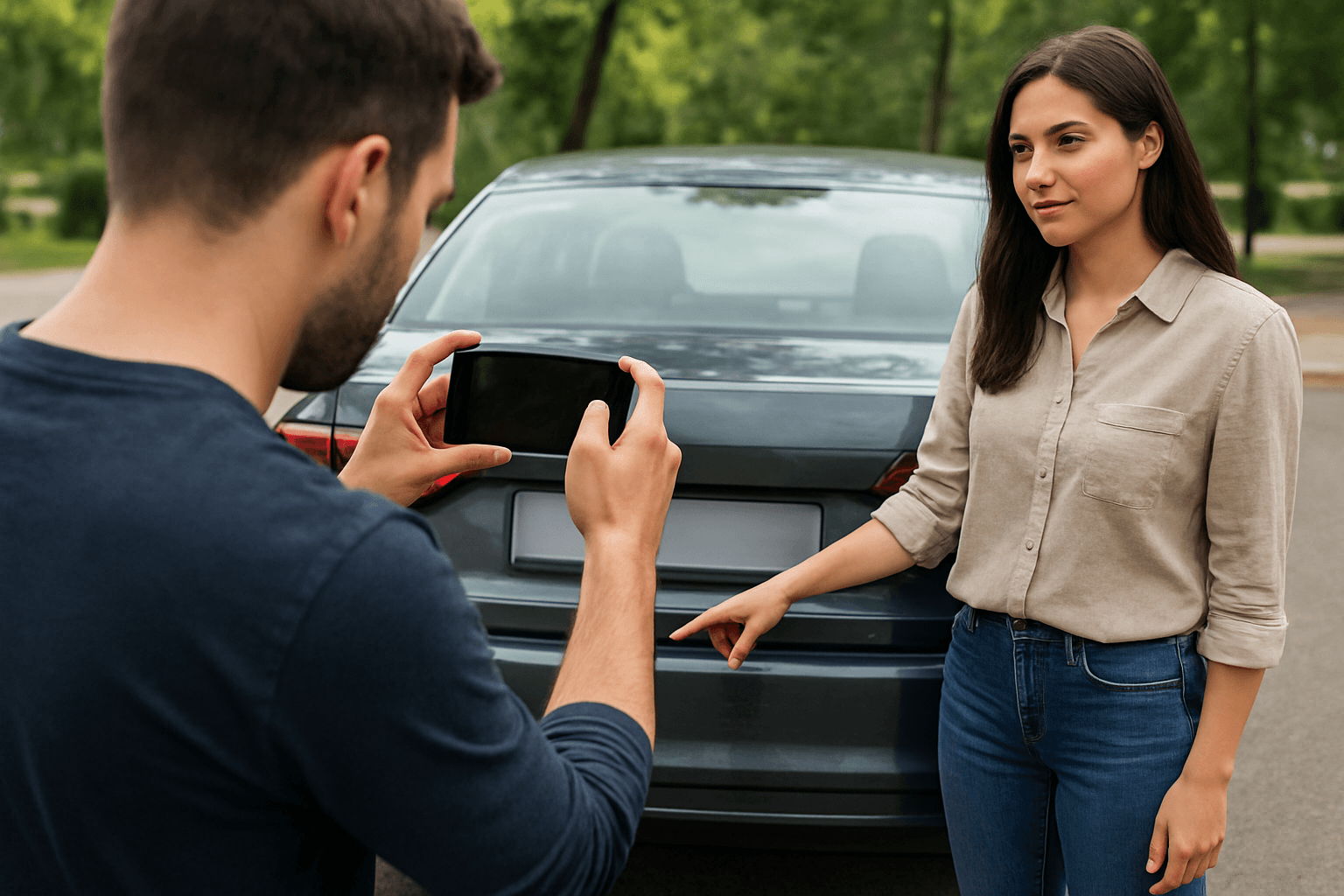
Insurance documentation and accident reporting benefit from privacy protection that prevents potential misuse of personal information while maintaining the evidentiary value of visual documentation.
Situations Where Hiding May Not Be Required
Law Enforcement and Legal Documentation
Official law enforcement activities may require visible license plates for evidentiary purposes, but even these contexts often benefit from privacy protection when sharing documentation publicly or with parties not directly involved in legal proceedings.
Court proceedings and legal evidence may specifically require unredacted license plate information, but consultation with legal counsel ensures appropriate privacy protection for any public or shared documentation.
Journalism and News Reporting
Public interest journalism may qualify for privacy protection exceptions in some jurisdictions, but professional news organizations typically implement comprehensive privacy protection as standard practice regardless of legal requirements.
Documentary filmmaking with public interest justifications may receive legal protection for license plate disclosure, but these exceptions require careful legal analysis and often demand additional editorial standards.
Explicit Consent Scenarios
When explicit written consent exists from all affected license plate owners, privacy protection may not be legally required, but comprehensive privacy protection often remains advisable for practical and ethical reasons.
Model releases and consent agreements should specifically address license plate visibility to ensure valid consent covers all privacy elements rather than just facial recognition or general appearance rights.
Implementation Best Practices
Automatic Detection and Protection
AI-powered license plate detection tools like BGBlur provide comprehensive privacy protection without requiring manual identification and editing of each license plate, ensuring consistent results across large content volumes. Readers outside the US should also check jurisdiction-specific requirements, such as our guide to UK GDPR and Data Protection Act rules for video privacy or Germany's BDSG requirements for face and license plate blurring.
Batch processing capabilities support efficient privacy protection workflows that can handle multiple files simultaneously while maintaining consistent quality standards and complete coverage.
Real-time processing options enable immediate privacy protection for live content creation and rapid publication schedules without compromising privacy protection quality or completeness.
Quality and Professional Standards
Professional-grade blur effects maintain visual content quality while ensuring complete information privacy protection, avoiding the obvious editing artifacts that can detract from content professionalism.
Consistent visual treatment across all privacy-protected elements ensures uniform presentation standards that support professional content creation and brand consistency requirements.
Color and texture matching capabilities create natural-looking privacy protection that integrates seamlessly with original content without drawing attention to privacy protection measures.
Workflow Integration
Seamless integration with existing content creation workflows eliminates privacy protection bottlenecks that could delay content publication or create production inefficiencies.
Cloud-based processing eliminates software installation and maintenance requirements while providing access to continuously updated detection algorithms and processing capabilities.
Mobile compatibility supports on-the-go content creation and immediate privacy protection for social media posting and real-time content sharing requirements.
Cost-Benefit Analysis
Protection Benefits vs. Implementation Costs
Modern AI-powered privacy protection tools provide comprehensive license plate hiding at minimal cost compared to potential legal liability, platform penalties, and reputation damage from privacy violations.
Time investment in privacy protection implementation pays dividends through reduced legal risk, enhanced professional credibility, and improved audience trust that supports long-term content creation success.
Professional development benefits include staying current with industry best practices and legal requirements that support career advancement and commercial opportunities in content creation fields.
Long-term Value Considerations
Privacy protection investments provide cumulative value through reduced legal exposure, enhanced professional reputation, and improved content longevity that maintains relevance as privacy requirements evolve.
Brand protection advantages include demonstrating privacy consciousness that appeals to privacy-aware audiences and commercial partners who increasingly prioritize privacy compliance in business relationships.
Future opportunity preservation ensures content creation practices remain viable as privacy requirements strengthen and platform policies become more stringent regarding privacy protection.
Technology and Future Trends
AI Detection Advancement
Machine learning improvements continue enhancing license plate detection accuracy while reducing false positive rates, making automated privacy protection increasingly reliable and efficient for professional content creation.
Processing speed improvements eliminate workflow delays while maintaining comprehensive privacy protection, making privacy compliance seamless regardless of content creation volume or production timeline requirements.
Integration opportunities with major platforms and editing software will streamline privacy protection workflows, potentially making comprehensive privacy protection automatic for all content creation activities.
Legal and Regulatory Evolution
Privacy law trends indicate continued expansion of license plate protection requirements across additional jurisdictions, making early adoption of comprehensive privacy protection strategically advantageous for content creators.
Platform policy development increasingly emphasizes privacy protection, with future requirements likely making comprehensive privacy protection mandatory for monetization and content distribution eligibility.
Frequently Asked Questions
Is it legal to show license plates in photos or videos? It depends on jurisdiction and context. In the EU, GDPR generally treats a legible license plate as personal data when it can identify a vehicle owner, requiring consent or a legitimate legal basis before publishing. In the US, requirements vary by state, and commercial use faces more restrictions than editorial or documentary use. Law enforcement and court evidence are common exceptions. When your content is commercial, monetized, or widely shared, hiding license plates is the safer default regardless of the exact legal minimum.
Do I need to blur license plates on social media? Not always legally, but it's strongly recommended. Viral content potential means even posts intended for limited sharing can expose privacy violations to millions of viewers once they spread. Platform monetization programs increasingly expect demonstrated privacy compliance, and live streaming carries extra risk since there's no post-publication editing window. Blurring license plates before posting protects you from takedown requests, platform penalties, and potential legal claims from vehicle owners.
Are there exceptions where license plates do not need to be hidden? Yes. Official law enforcement documentation, court evidence, and journalism with a genuine public-interest justification can qualify for exceptions in some jurisdictions. Even then, sharing that footage publicly or with uninvolved parties often still calls for redaction. If you have explicit written consent from the vehicle owner covering license plate visibility specifically, that also removes the legal requirement, though many creators still blur it out of caution and professional practice.
How can I blur license plates quickly across many videos? AI-powered detection tools like BGBlur automatically identify and blur license plates without manual frame-by-frame editing, including plates at odd angles or in low light. Batch processing lets you run multiple clips through the same workflow, which matters for dashcam archives, real estate listings, or event footage where dozens of vehicles may appear. This cuts what used to be hours of manual masking down to a few minutes per video.
Does blurring license plates reduce video quality? Not when done with proper tools. Professional-grade blur effects target only the plate region and preserve the surrounding footage at full resolution, so the rest of the frame looks untouched. Poor manual blurring—mismatched intensity, visible edges, or inconsistent tracking—is what creates an obviously edited look. AI tools that match color and texture around the blurred region produce a cleaner result than hand-applied pixelation.
What happens if I publish monetized content with visible license plates? Consequences range from platform demonetization or takedown to civil liability, depending on the jurisdiction and how the footage is used. Some platforms treat unredacted personal information, including plates, as a privacy policy violation subject to strikes or reduced distribution. Vehicle owners in stricter privacy jurisdictions may also have grounds for a complaint. Blurring proactively during editing is far cheaper than dealing with a takedown or legal claim after publication.
Conclusion
The question of whether you should hide license plates in pictures and videos has a clear answer: yes, comprehensive privacy protection has become essential for responsible content creation. The combination of strengthening legal requirements, evolving platform policies, and increasing privacy awareness makes license plate hiding a fundamental best practice rather than an optional consideration.
BGBlur provides the professional-grade, AI-powered solution required for efficient and effective license plate privacy protection across all content types. By implementing universal privacy protection proactively, content creators ensure comprehensive legal compliance while building audience trust and maintaining professional standards that support sustainable success in the evolving digital content landscape.
The future of content creation demands privacy consciousness as a core competency, not an afterthought. License plate hiding represents a critical component of this privacy framework that enables creators to focus on content quality while maintaining the legal compliance and ethical standards necessary for long-term success in today's privacy-conscious world.
Ready to protect the license plates in your own footage? Try BGBlur for AI-powered, automatic license plate blurring—free to start, no software installation required.